

Table of Contents
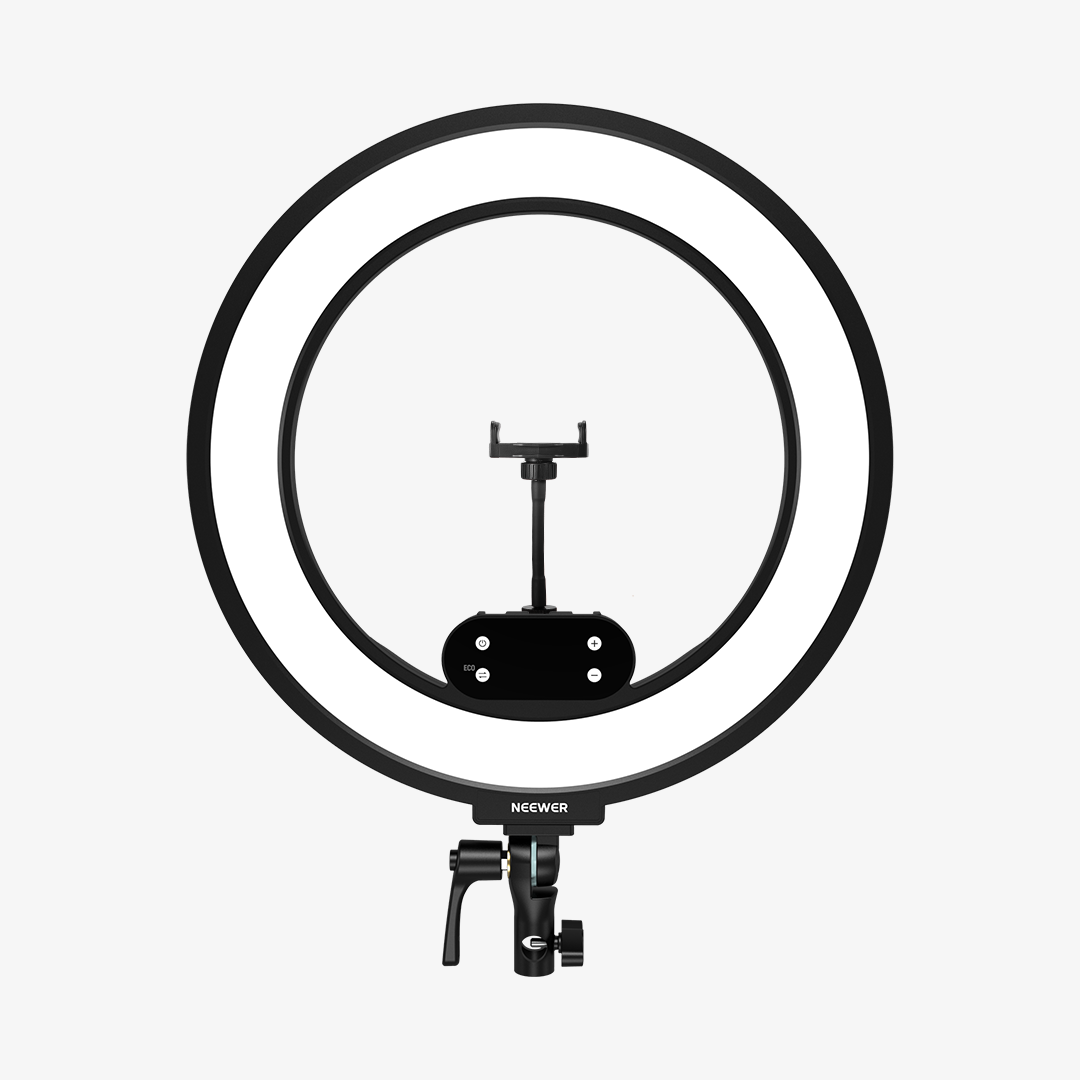
Many creators start with a ring light because it’s affordable, easy to set up, and works well for close-up face content. But for portraits, product photography, or daily Zoom calls, many eventually switch to a softbox or a monitor-mounted desk light for more natural-looking results and easier long-term setups.
A ring light is not a universal studio light. It works well for close-up face content — beauty tutorials, makeup demos, simple face-forward videos — where even, flat front-facing illumination is exactly what you need. For product photography, a softbox almost always gives better results because directional light shows surface texture and depth that a ring light flattens out. And if you need stable lighting for daily desk video or Zoom calls, a compact desk light or LED panel is often more practical than either.
Quick Answer: Ring Light vs Softbox vs LED Panel vs Desk Light
If you came here searching for a ring light, check the other columns — one of them may be a more direct fit for what you’re actually trying to solve.
|
|
Ring Light |
LED Panel |
||
|
Light shape |
Circular, front-facing |
Rectangular, directional |
Flat panel, even spread |
Compact panel, monitor-mounted |
|
Shadow quality |
Very flat, minimal shadows |
Soft shadows, adds depth |
Adjustable — soft to direct |
Soft, even |
|
Catchlights |
Circular ring in eyes |
Natural, rectangular |
Natural, rectangular |
Natural, subtle |
|
Best subject distance |
Close-up (under 3 ft) |
Flexible |
Flexible |
Desk distance |
|
Setup |
Fast — floor stand, |
Slower — assembly + stand |
Moderate |
Very fast — clips to monitor |
|
Best for |
Beauty, |
Product photos, portraits, |
Streaming, studio video, YouTube |
Daily Zoom, |
When a ring light is the right choice
A ring light works because of its geometry: the circular LED sits in the same plane as the camera lens and sends light forward from every point simultaneously, producing even, shadow-free illumination with no directional gradient. For close-up face content — beauty tutorials, makeup demos, face-forward social video — that’s exactly what you want. It’s fast to set up, consistent session to session, and doesn’t require any knowledge of light positioning.
Outside of face-forward content, those same properties become limitations. The circular shape mirrors back from any reflective surface as a visible ring — unavoidable when the light is front-facing, hard to remove in post. The flat illumination also removes the shadow gradient that gives objects shape and depth, which is why product shots lit with a ring light often look flat. And most 12–18" ring lights need a floor stand directly in front of the subject, which doesn't work in every desk or shared-space setup.
A Ring light works well for: beauty and makeup tutorials, face-forward YouTube and social content, livestreams and gaming streams, and small matte-surface product demos at close range.
When a softbox gives you more control
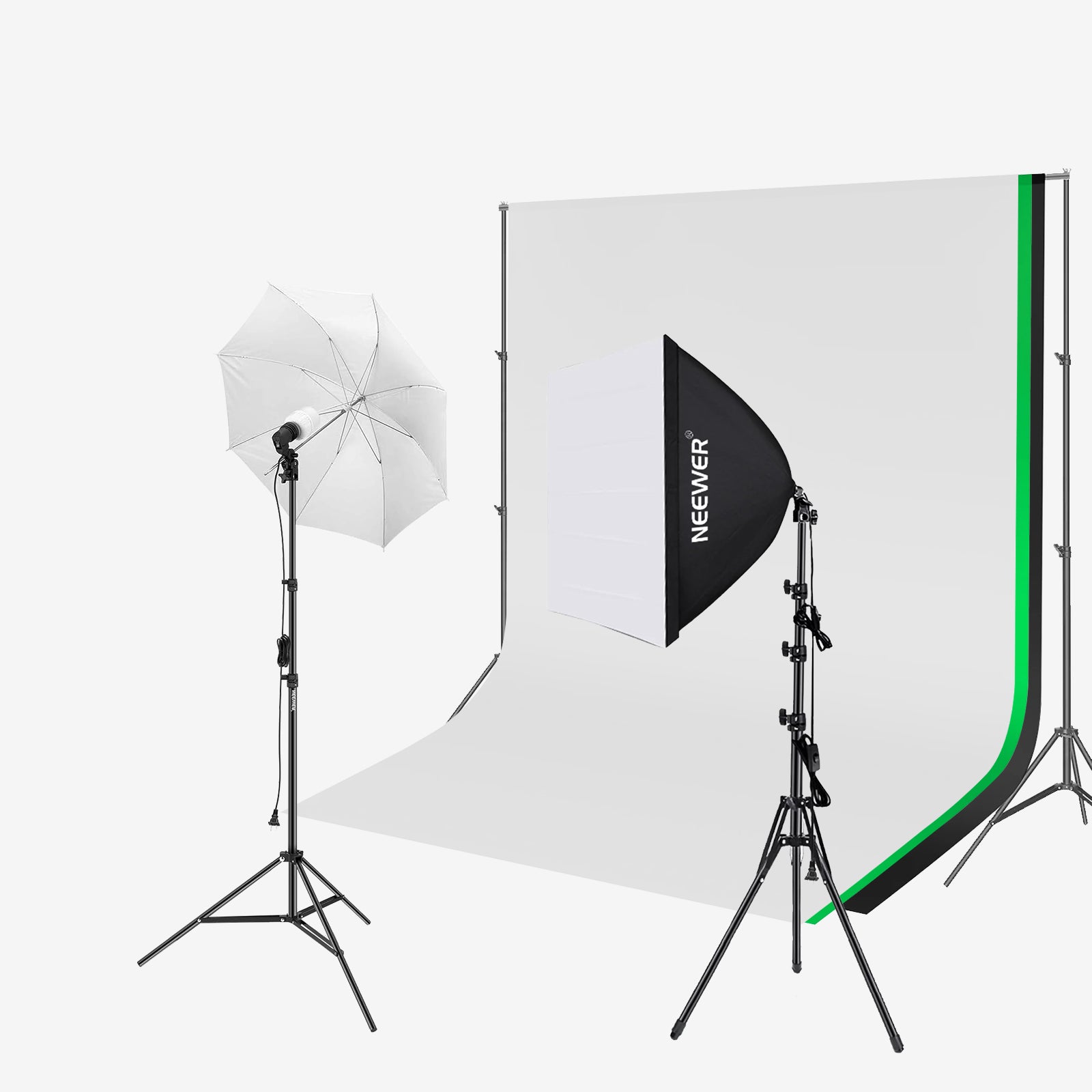
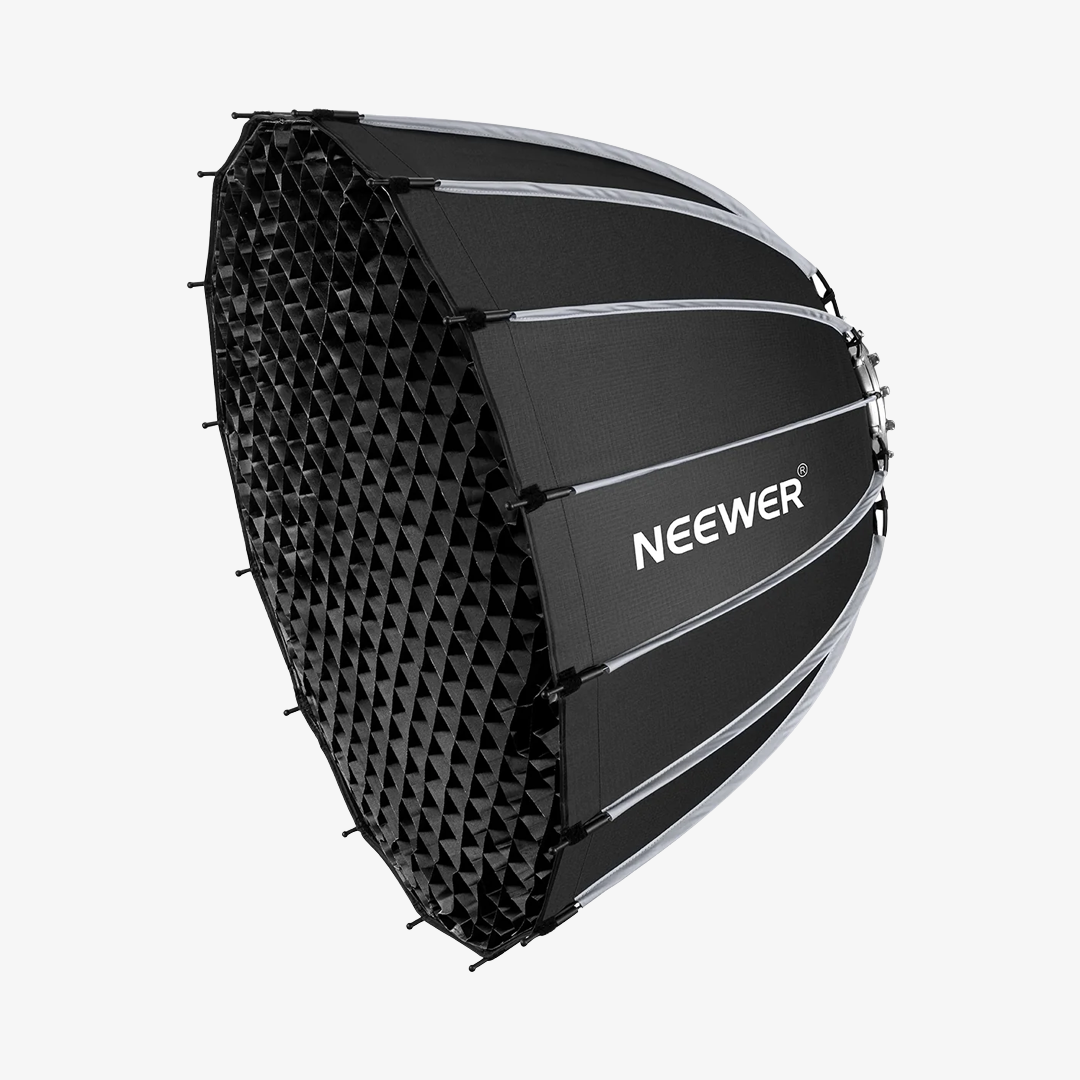
A softbox positioned 30–45 degrees to the side creates a gradient of light and shadow across the subject — the difference between a face or product that looks three-dimensional and one that looks flat. The diffusion panel also gives you a rectangular reflection that can be angled off-frame entirely, which is the standard approach for shiny surfaces in product photography. For portrait or interview work, the off-axis light sculpts the face more naturally and produces a catchlight shape that reads as less artificial than a ring.
Of the three common modifier options, bare light is the harshest — direct output with sharp shadows and visible hotspots. A shoot-through umbrella softens that output and sets up faster than a softbox, but spreads light in a wider, less controlled pattern that's harder to keep light off the background in a small room. A softbox gives the same soft quality with more directional control: the rectangular shape is easier to angle off-frame on reflective surfaces, and the diffusion panel removes hotspots without losing the shadow gradient that gives portraits and products their shape.
NEEWER NK103 Softbox Kit: Best for Softer Product or Portrait Light

The Breakdown
The NEEWER NK103 is a two-light kit with two 60×60cm softboxes, adjustable stands, and a 2.4G remote that controls both lights simultaneously. It covers a complete key-and-fill setup without additional purchases — practical for flat lays, headshots, and interview-format video where shaped, dimensional light makes a visible difference to the result.
|
Spec |
Detail |
|
Softbox size |
24×24 in / 60×60 cm (×2) |
|
Bulbs |
45W bi-color LED (×2) |
|
Color temperature |
2900K–7000K |
|
Max illuminance |
1,400 lux at 1m |
|
CRI |
95 |
|
Stand height |
Up to 83 in / 210 cm |
|
Lamp socket |
E26 |
|
Control |
2.4G remote |
Pros
- Two-light setup ready out of the box — key and fill covered without additional purchases
- Large diffusion panel produces soft, even light that removes hot spots from glossy surfaces
- Bi-color range and remote control make it easy to match the ambient room lighting session to session
Cons
- Requires assembly before each shoot — frame, rods, diffusion panel
- Occupies more floor space than a ring light or desk light
- Less portable; best suited to a fixed studio or photography area
Best for: portrait photography beginners building a first two-light kit, product photography, ecommerce flat lays, interview-format video.
Also worth considering (Bowens-mount setups only): the NEEWER SB-BW6090 (60×90cm rectangular softbox, $49.99). The 23.6"×35.4" panel with silver interior lining and dual diffusers (inner + outer) produces a broader, softer spread than a square softbox — useful for wider subjects or two-person setups. Includes a carrying bag.
Common Beginner Softbox Mistakes
The most common beginner mistake is placing the softbox too far away from the subject. Soft light becomes noticeably harsher as distance increases, even with a large modifier.
Another issue is placing the softbox directly in front of the face like a ring light. Positioning it 30–45 degrees to the side usually creates more natural depth and facial shape.
In small rooms, oversized softboxes can also become awkward surprisingly quickly — especially around desks, shelves, or microphone arms.
Why a Desk Light Is More Practical for Daily Video Calls
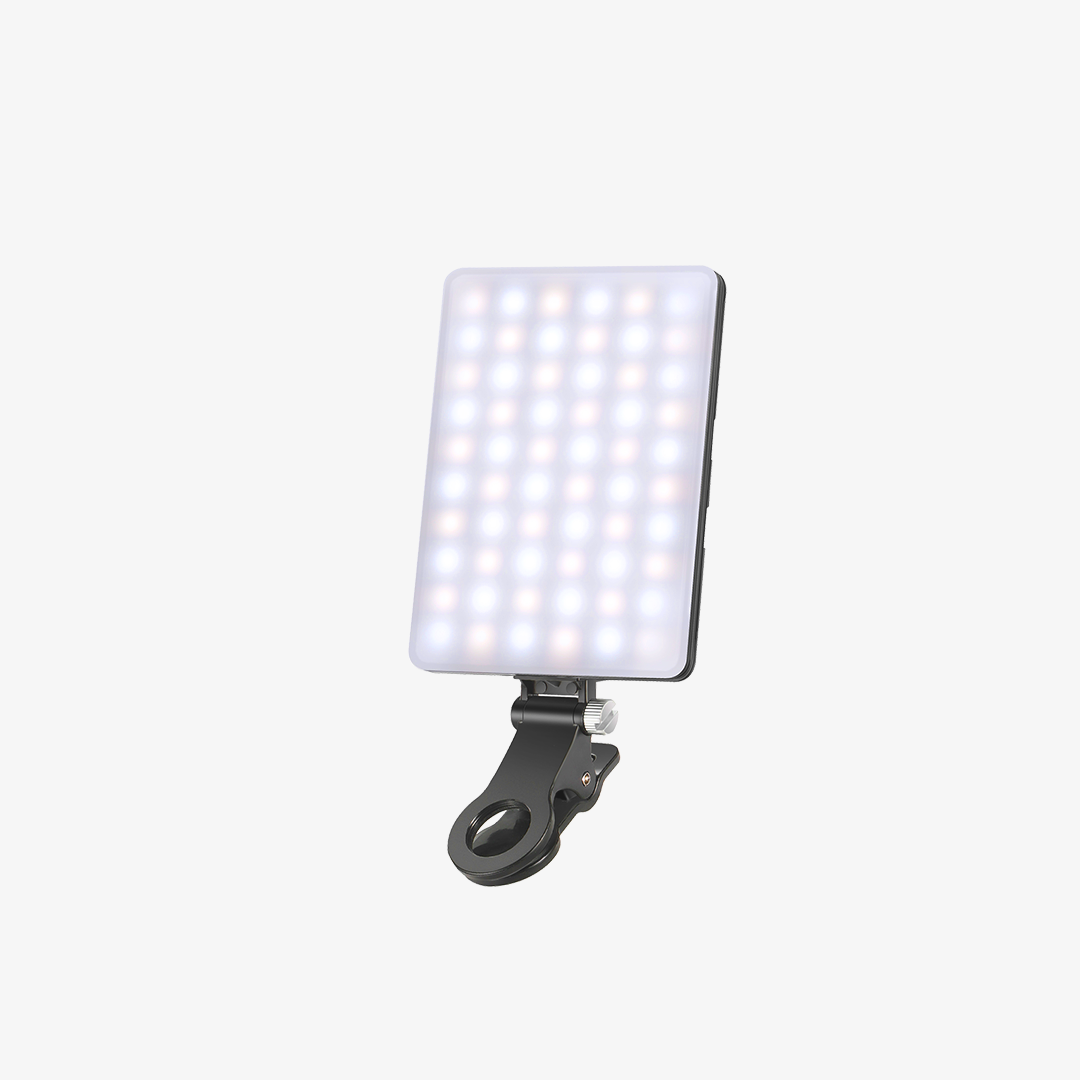
For video work where you need consistent, adjustable output without the assembly of a softbox or the floor-stand of a ring light, a bi-color LED panel or monitor-mounted desk light is often the most practical starting point. For a permanent desk setup — daily Zoom calls, streaming, or a shared home office — a desk light that stays in place removes the friction a floor-stand creates every session.
A full-screen mini light or monitor-mounted desk light is often more practical than a ring light for daily video calls because it stays attached to the monitor permanently and doesn't require a floor stand.
NEEWER NL10: Best Desk Light Alternative for Video Calls

The Breakdown
The NEEWER BASICS NL10 is a 5"×5" edge-lit panel that clips directly to a monitor, laptop, or curved screen — no floor stand required. It runs on USB power, stays in position permanently, and the memory function recalls your last color temperature and brightness settings at each power-on.
|
Spec |
Detail |
|
Power |
10W (USB 5V/2A) |
|
CRI / TLCI |
95 / 98 |
|
Color temperature |
3000K / 3500K / 4300K / 5600K / 6000K |
|
Dimensions |
5"×5" / 12.7×12.7cm |
|
Tilt/rotation |
180° tilt, 360° horizontal rotation |
|
Mounting |
Monitor clip or desktop stand |
|
Price |
From $25.99 |
Pros
- Mounts directly to monitor or laptop — no floor stand required, no floor space used
- USB-powered from any laptop port or USB charger
- CRI 95 / TLCI 98 ensures accurate skin tone on modern webcam sensors
Cons
- 10W output is suited to close-range desk work; not a substitute for room-scale lighting
- 5"×5" panel size means coverage narrows beyond desk distance
- Not suitable for product photography or full-body portrait work
Best for: daily video calls (Zoom, Teams, Google Meet), desk streaming, home office content creators who want permanent, zero-setup lighting.
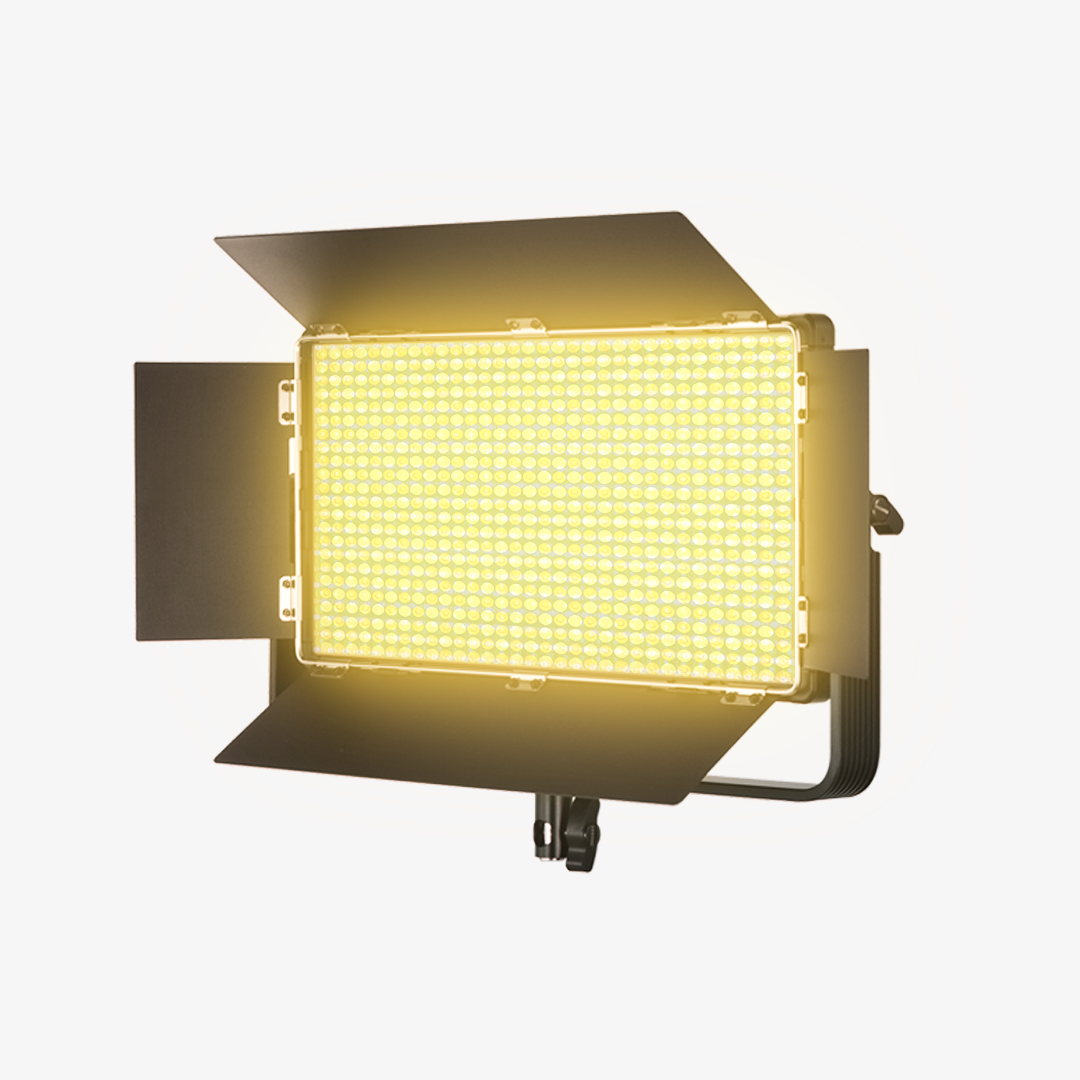
For wider-frame YouTube setups, backdrops, or greater subject distances, the NEEWER NL660 is the step up — it includes barndoors and a white diffuser, and delivers flicker-free output that holds consistent color temperature across long streaming sessions.
Product photography: ring light vs softbox side by side

The most visible difference is the reflection pattern. A ring light produces a circular reflection on any glossy, metallic, or glass surface — unavoidable front-facing, hard to remove in post. A softbox placed off-axis can be repositioned until its reflection falls outside the frame entirely. Side-lit softbox light also creates the highlight-shadow gradient that communicates surface texture and depth; front-facing ring light removes most of that shadow information and makes objects look flat.
|
Scenario |
Works better with |
Why |
|
Small matte cosmetics, close-up demos |
Ring light |
Close distance, matte surfaces keep reflection minimal |
|
Glossy packaging, electronics, and metal surfaces |
Softbox (off-axis) |
Reflection can be positioned off-frame; |
|
Apparel, textiles, soft goods |
Softbox or |
Side light reveals fabric texture that front-facing light flattens |
|
Flat lay/tabletop photography |
Softbox or |
Overhead or 45° light creates shadow gradient on flat surface |
Video calls and streaming: what actually holds up day to day
Image placeholder: webcam view comparison — NL10 monitor-mounted light (left) vs 18-inch ring light on floor stand (right), same home office desk.
Video call lighting comparison — NEEWER NL10 desk-mounted monitor light versus 18-inch ring light on stand for home office Zoom setup.
For a daily setup, the ring light's floor stand is a recurring friction point — it needs to be positioned before each session and moved after. A desk-mounted light removes that entirely: stays in position with no setup decision required, no circular reflection visible in the eyes on a Zoom or Teams call.
|
Use case |
Works well with |
Notes |
|
Daily Zoom / |
NL10 |
Stays on desk permanently, |
|
Part-time streaming from shared desk |
Ring light or NL10 |
Ring light if more output is needed; NL10 if space is limited |
|
Dedicated YouTube or streaming room |
larger LED panel |
Higher output, barndoors for shaping, includes diffusion |
|
Interview/podcast recording |
Softbox |
Dimensional light, |
For small studio or shared room setups, lighting footprint matters alongside output. A ring light requires a floor stand directly in front of the subject; a softbox needs side clearance for the stand and diffusion panel. For tight desk setups, a monitor-mounted desk light or compact LED panel is often easier to leave in place between sessions without disrupting the space.
FAQs
Is a ring light or a softbox better for product photography?
A softbox is almost always the better choice. Ring lights produce a circular reflection on any glossy, metallic, or glass surface — it's unavoidable when the light is placed front-facing, and it’s difficult to remove in post. A softbox can be positioned off-axis so its reflection falls outside the frame entirely, and the directional light reveals surface texture and depth that a ring light flattens.
What are common beginner mistakes when using a softbox?
The most common: placing the softbox too far from the subject (output drops quickly with distance — keep it close), positioning it front-facing instead of 30–45° to the side (kills shadow depth), and not feathering the light (pointing the edge of the softbox rather than the center gives softer, more even coverage). Assembly errors — loose rods, uneven diffusion panel — also cause uneven output that's hard to fix in post.
Is a ring light good for Zoom calls?
It works, but a monitor-mounted desk light is more practical for a permanent setup. A full-size ring light on a floor stand takes up space that needs to be cleared when you're not filming. A full-screen monitor clip light like the NEEWER NL10 clips to the monitor, stays there permanently, and delivers the same front-facing illumination at desk distance without a stand or the ring artifact.
What should I use instead of a ring light?
Depends on the scenario. For product photography or portrait work, a softbox kit gives you shaped, off-axis light with control over where reflections fall. For a permanent desk or Zoom setup, the NEEWER NL10 clips to your monitor without a stand. For a YouTube or streaming room that needs more output, the NL660 handles the same front-facing function as a ring light with adjustable color temperature, included diffusion, and no circular catchlight.
Final Recommendation
Ring light for close-up face content where a quick, even, shadow-free setup is the priority. Softbox for product photography, portrait work, or interview video where dimensional light and surface detail matter. Desk light or LED panel for any setup where you need the light to stay in place between uses — daily Zoom, streaming, shared home office.
None of these requires a large investment to start. The right choice is the one that matches what you’re actually shooting, not the most common or most visible option.