

Table of Contents
COB lights are a popular choice for photography and video production, from home studio setups to professional shoots. They offer a concentrated light source that can be shaped with softboxes, reflectors, and other modifiers, making them useful for everything from portrait photography to video recording.
But what does COB actually mean, and how is a COB light different from an LED panel? Understanding the basics can help you choose the right lighting setup for your needs.
What Does COB Stand For?
COB stands for Chip on Board, a technology that mounts multiple LED chips closely together on a single substrate to create a compact light source.
Instead of spreading individual LEDs across a large surface, COB technology groups them into one concentrated area. This arrangement helps produce a focused beam of light that can be directed and shaped using compatible reflectors and lighting modifiers.
You'll find COB technology in various lighting applications, but this guide focuses on COB LED lights designed for photography, video production, and content creation.

What Is a COB LED Light and How Does It Work?
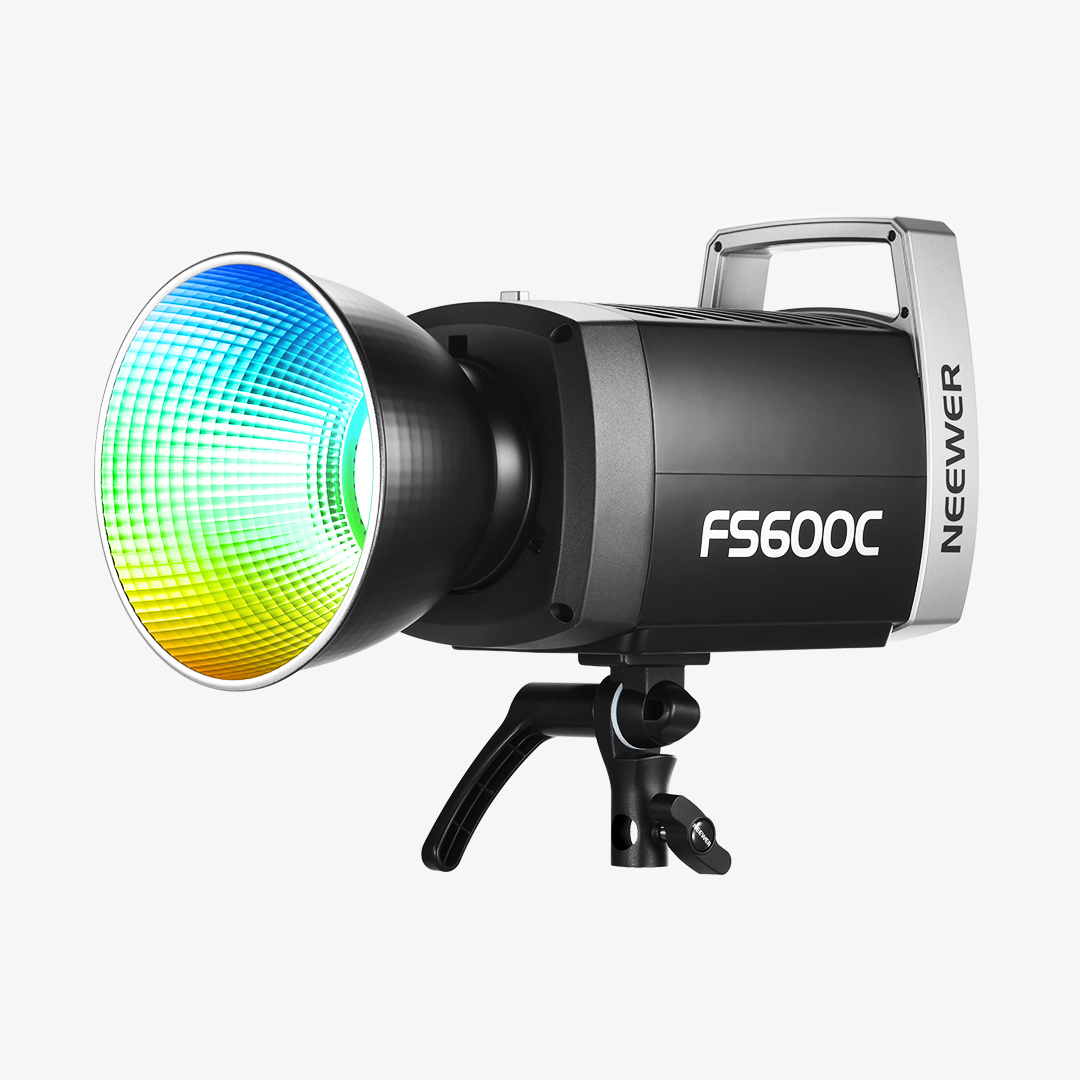
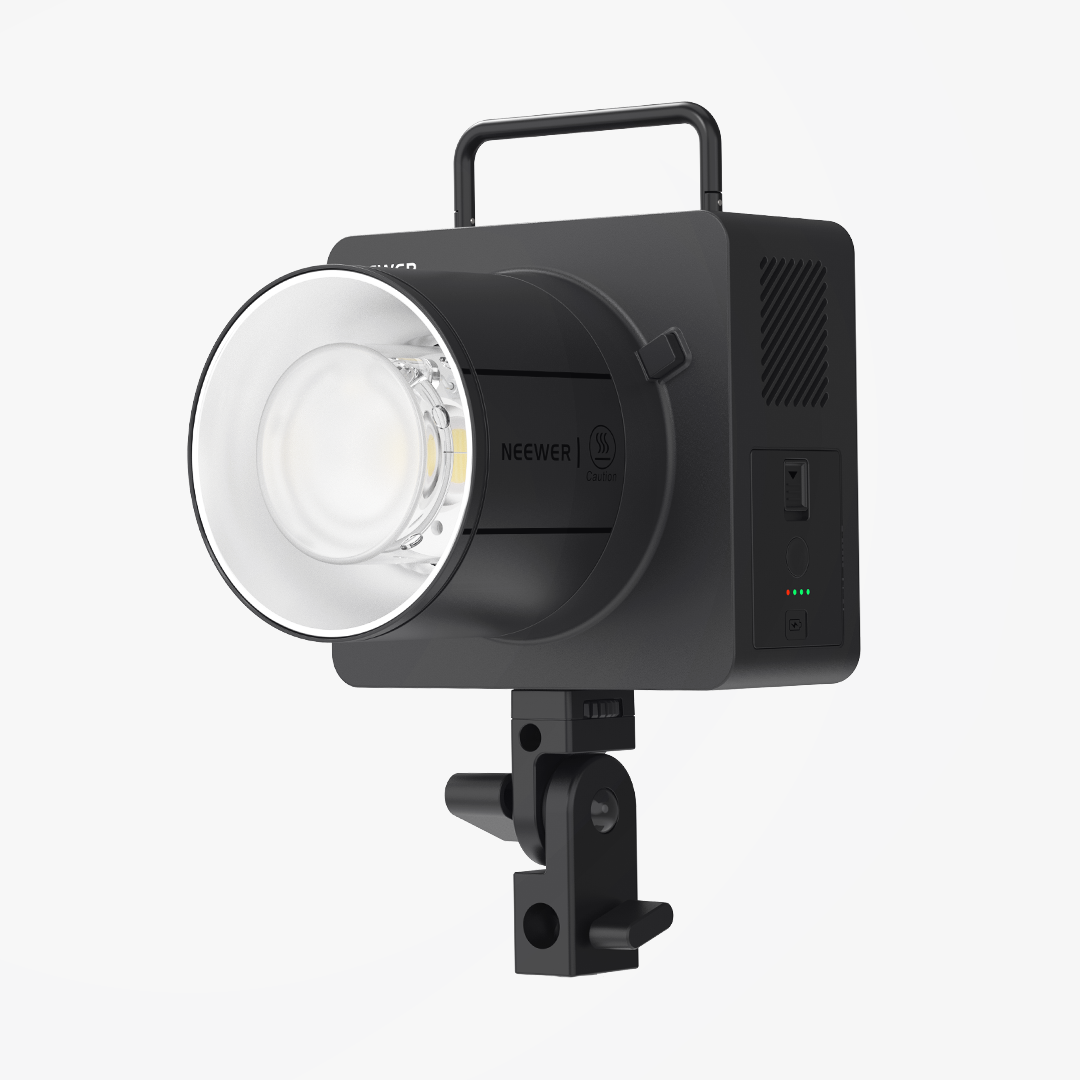
A COB LED light for photography is a continuous lighting fixture built around a compact cluster of LED chips. It provides a steady light output that lets you see how your subject will be illuminated before you take a photo or record a video.
It's different from a COB LED strip, which is a flexible strip of closely spaced LEDs commonly used for decorative, accent, or architectural lighting. A photography COB light is a complete lighting fixture designed to illuminate subjects, often with adjustable brightness, color temperature, and compatibility with light-shaping accessories.
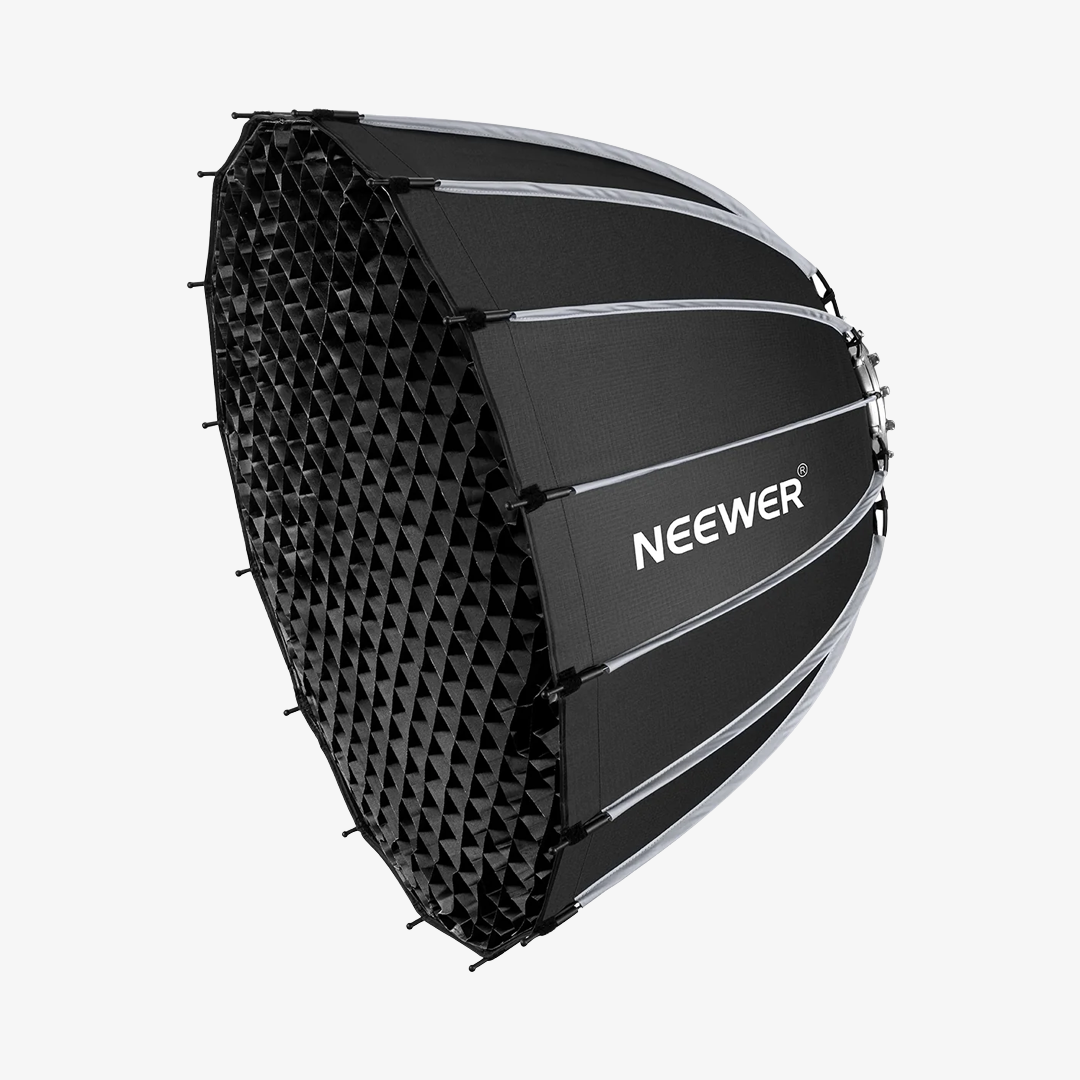
One of the main advantages of a COB light is its directional output. Used on its own with a reflector, it can produce relatively hard light with defined shadows. Add a softbox or another diffusion modifier, and the light becomes softer and more even. You can also use accessories such as snoots or reflectors to direct the beam toward specific areas.
Many COB lights offer adjustable color temperature, while RGB models provide additional colors and lighting effects. This makes them useful for both natural-looking illumination and more creative setups.
What Are COB Lights Used For?
COB lights are versatile enough for a range of photography and video applications. The best setup depends on the subject, the available space, and the type of lighting effect you want.
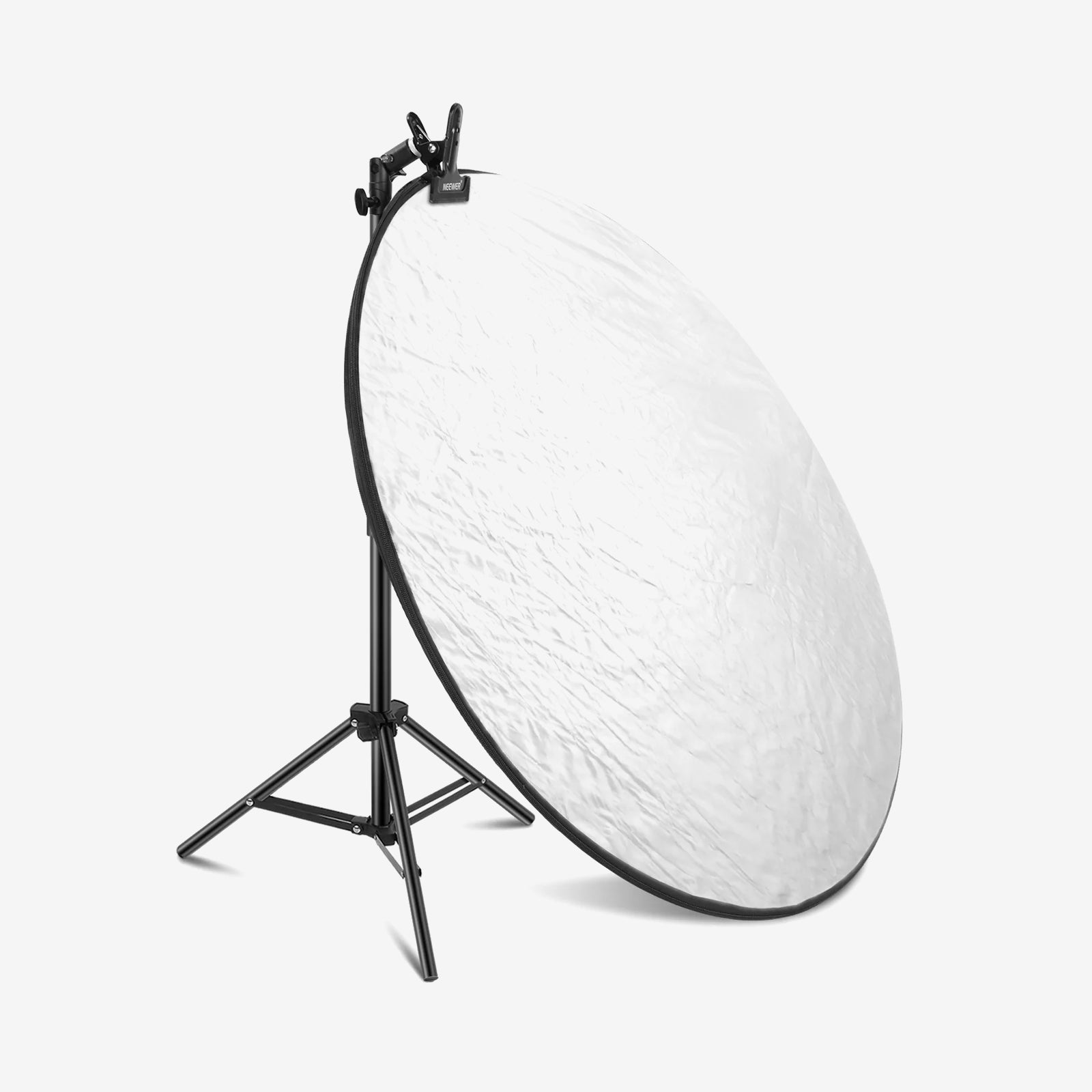
Portrait photography: Use a COB light with a softbox as your key light to create flattering illumination and control shadow intensity. A reflector on the opposite side can help fill in shadows without adding another light.
Product photography: A COB light lets you control the direction and intensity of light on products. Pair it with a softbox for broad, soft illumination or use a more focused modifier to emphasize texture, shape, and details.
Video recording and interviews: COB lights work well as key lights for YouTube videos, talking-head content, interviews, and short-form videos. A compatible softbox can soften the light and help keep your subject evenly illuminated.
Livestreaming and home studios: A COB light can provide consistent lighting for a fixed recording setup. Adjustable brightness and color temperature make it easier to balance the light with your room's ambient lighting.
Creative lighting and colored backgrounds: RGB COB lights let you introduce colored accents, rim lighting, or background effects. You can use these effects to create a particular mood without relying on a separate colored light for every look.
For most setups, the light itself is only part of the equation. The modifier, distance from the subject, and angle of the light all affect the final result.

COB Light vs. LED Panel: What's the Difference?
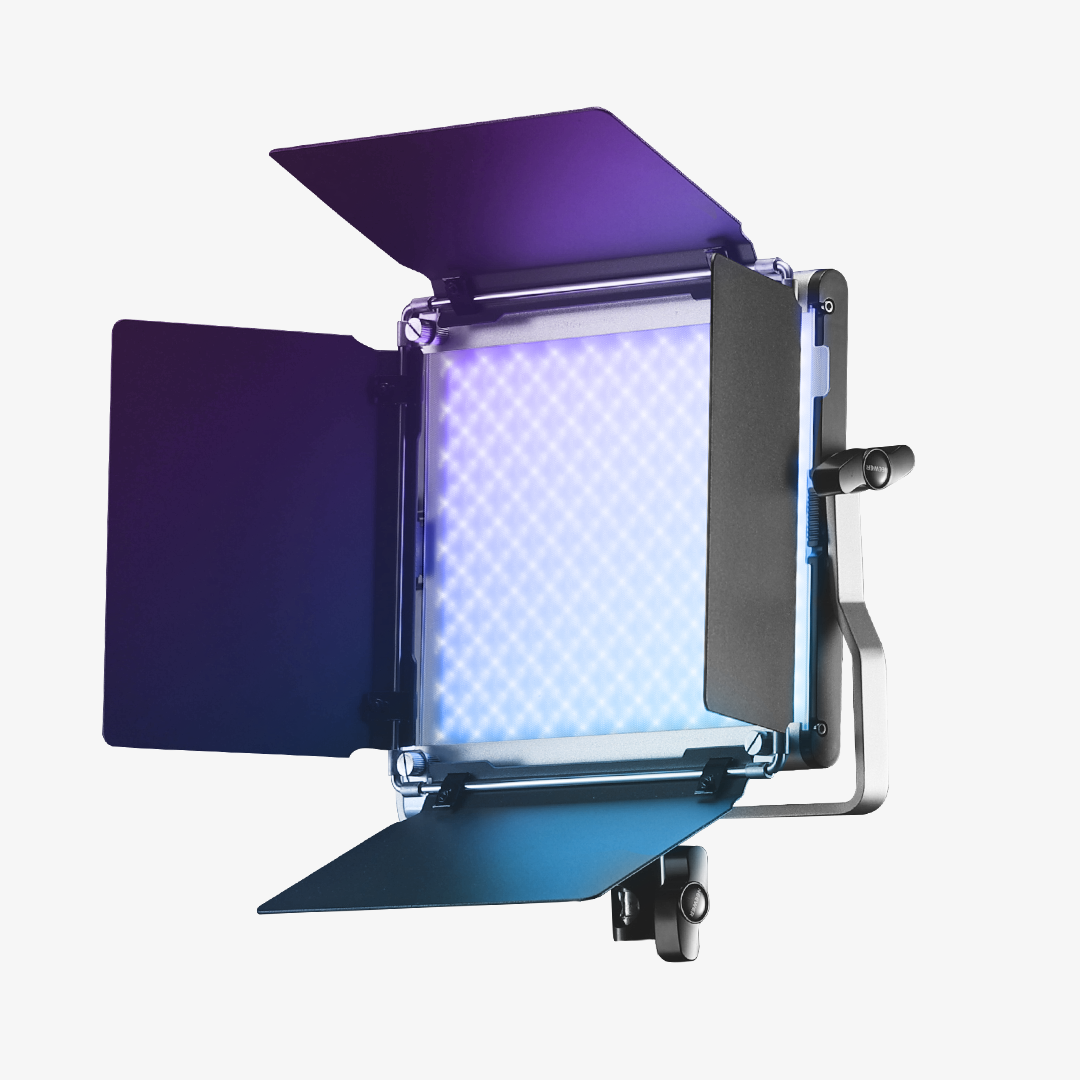
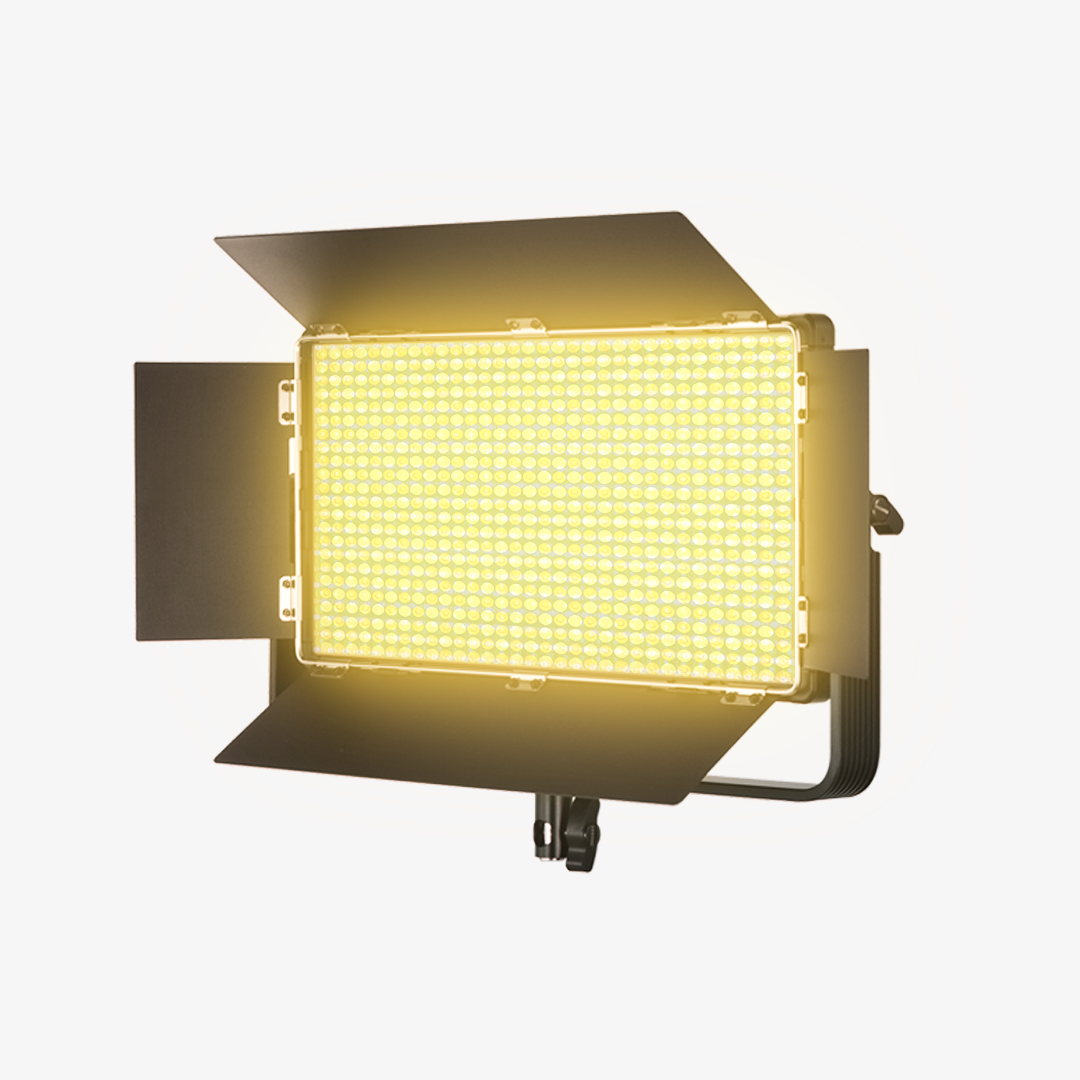
COB lights and LED panels can both work for photography and video, but they distribute light differently. A COB light creates a concentrated source that's easy to shape with compatible modifiers, while an LED panel spreads light across a wider surface for more even coverage.
|
Feature |
COB Light |
LED Panel |
|
Light source |
Concentrated cluster of LED chips |
LEDs distributed across a flat surface |
|
Light output |
Directional, especially with a reflector |
Broad and relatively even |
|
Light shaping |
Works with compatible softboxes, reflectors, snoots, and other modifiers |
Often used directly or with compatible diffusion accessories |
|
Setup |
May require a stand and separate modifier |
Often quick to position and use |
|
Best for |
Portraits, product photography, controlled key lighting, and video |
Interviews, fill lighting, livestreams, and wider coverage |
Neither type is automatically better for every situation. A COB light is a strong choice when you want more control over the direction and shape of the light. An LED panel can be more convenient when you need broad coverage and a quick setup without adding a modifier.
It's also worth remembering that a softbox is a light modifier, not a light source by itself. It can be paired with a compatible COB fixture to create a larger, softer apparent light source.
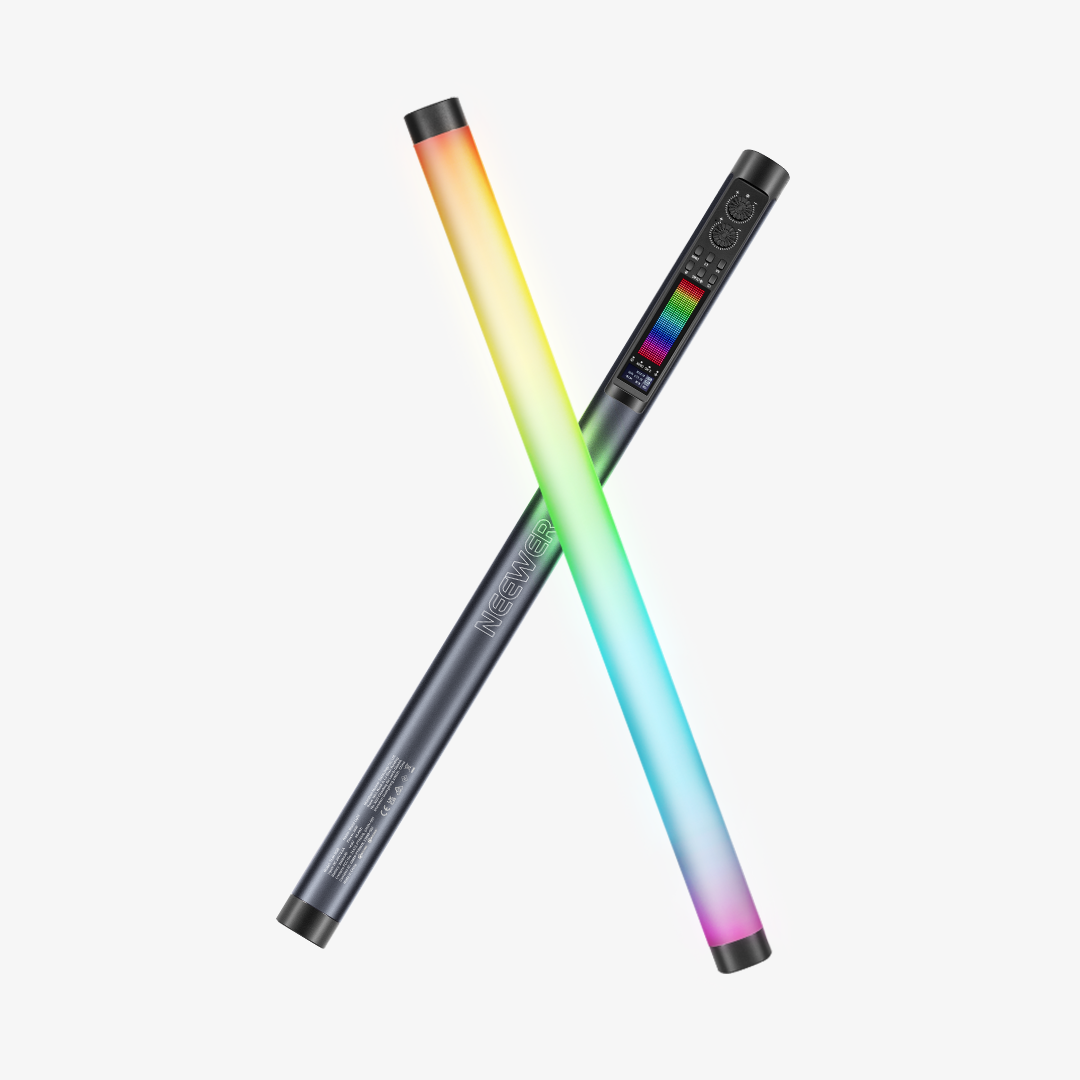
For a more detailed comparison, check our guide to [COB vs. LED panel vs. Tube].
COB Light Examples for Different Setups
The right COB light depends on where you shoot, how much output you need, and whether you want standard white light or creative color effects. Here are three examples for different types of setups.
NEEWER CB60B: Everyday Video and Studio Lighting

The NEEWER CB60B is a practical option for creators who need reliable lighting for YouTube videos, livestreams, interviews, or small studio shoots. Its adjustable color temperature makes it easy to switch between warmer and cooler lighting, while the Bowens mount lets you add a softbox or another compatible modifier to shape the light for different setups.
Pros:
· 70W output: Suitable for a range of everyday video and studio lighting setups.
· Adjustable color temperature: The 2700K–6500K range helps match different lighting environments.
· Bowens mount: Compatible with softboxes, reflectors, and other light-shaping accessories.
NEEWER HB80C: Portable Lighting for On-the-Go Creators

For creators who shoot outdoors or move between locations, the NEEWER HB80C combines a compact COB fixture with a built-in battery and full RGB color control. It's useful for mobile video setups, creative portraits, and shoots where access to a power outlet is limited.
Pros:
· Built-in 72Wh battery: Supports cordless shooting when working away from a power outlet.
· RGB lighting and adjustable color temperature: Offers a 2500K–7500K range plus creative color options and lighting effects.
· Bowens mount: Supports compatible modifiers for more flexible light shaping.
NEEWER FS150C: Creative Lighting for Studio Shoots

The NEEWER FS150C is suited to creators who want more control over both brightness and color. Its RGB lighting modes and adjustable color temperature make it useful for portrait photography, product shoots, interviews, and videos that call for more creative lighting effects.
Pros:
· 130W output: Provides up to 19,800 lux at 1m with the included reflector.
· Adjustable white light and RGB modes: The 2500K–7500K range and multiple color modes support different lighting styles.
· Bowens mount: Allows you to pair the light with compatible softboxes, reflectors, and other modifiers.
These examples illustrate three different priorities: everyday video lighting, portable creative lighting, and a more versatile studio setup. The best fit depends on your shooting environment and the amount of control you need.
How to Choose a COB Light
When choosing a COB light, start with the type of content you create and the conditions in which you shoot. A higher wattage or a longer feature list doesn't automatically mean a light is the best choice for your setup.
1. Consider Output and Shooting Distance
Think about how far the light will be from your subject and whether you'll use a modifier. A light used close to a face or small product has different requirements from one positioned farther away or shining through a large softbox. Wattage indicates power consumption or rated output, depending on the manufacturer's specification, but it doesn't tell the whole story. Illuminance measurements, such as lux at a stated distance, can help you compare output when the measurement conditions are similar.
2. Choose the Right Color Temperature
Color temperature, measured in Kelvin (K), affects whether the light appears warm or cool. A bi-color COB light lets you adjust between warmer and cooler white light to match ambient lighting or create a particular look. If you frequently shoot interviews, portraits, or product videos, adjustable white light can be more useful than you might expect.
3. Decide Whether You Need RGB
Standard white-light COB fixtures are well suited to everyday key lighting. RGB models add the ability to create colored backgrounds, accent lighting, and more stylized effects. If most of your work involves natural-looking portraits or straightforward video recording, adjustable white light may be enough. If you regularly create music videos, creative portraits, or colorful social content, RGB functionality can offer more flexibility.
4. Check Modifier Compatibility
A COB light can be much more versatile when it supports the modifiers you want to use. Softboxes can soften shadows, reflectors can concentrate output, and other accessories can help direct light more precisely. Check the fixture's mount before buying accessories. A Bowens mount is widely used across photography lighting equipment, but compatibility should still be confirmed for the specific fixture and modifier.
5. Think About Power, Portability, and Noise
For a permanent home studio, an AC-powered fixture may be convenient. For outdoor shoots or locations without reliable power, a light with a built-in battery can be more practical. If you record dialogue close to the light, fan noise is another consideration. Check whether the fixture offers a quiet or low-noise operating mode, and consider how close the light will be to your microphone.
Ultimately, choose a COB light that fits your actual shooting needs, rather than paying for features you may rarely use.
FAQs
What does COB mean in LED lighting?
COB stands for Chip on Board. It refers to a technology in which multiple LED chips are mounted closely together on a single substrate, forming a compact light source.
Are COB lights good for photography?
Yes. COB lights are useful for portrait, product, and other types of photography because their directional output can be shaped with compatible modifiers. A softbox can soften the light, while a reflector or more focused accessory can create stronger direction and contrast.
Is a COB light better than an LED panel?
It depends on your needs. A COB light is often better when you want directional output and flexible light shaping with modifiers. An LED panel can be more convenient for broad, even illumination, interviews, and quick fill lighting. Neither is universally better.
Do COB lights need a softbox?
No. A COB light can be used with its reflector or other compatible accessories without a softbox. However, a softbox is useful when you want softer light and smoother shadow transitions, particularly for portraits, interviews, and product photography.
Are COB lights the same as COB LED strips?
No. COB technology can be used in different lighting products, but the products serve different purposes. COB LED strips are flexible strips commonly used for decorative or architectural lighting, while photography COB lights are complete fixtures designed to illuminate subjects for photography and video production.