

Table of Contents
A monopod offers a practical way to support your camera without carrying a full tripod. It helps reduce the weight you need to hold, provides extra stability when using heavier lenses, and allows you to move quickly between shots.
Whether you're photographing sports, wildlife, concerts, or other fast-moving subjects, choosing the right monopod and setting it up properly can make a noticeable difference.
In this guide, we'll cover the different types of monopods, what to consider when choosing one, how to use it, and how to build a setup for different photography situations.
What Is a Monopod?
A monopod is a camera support with a single extendable leg. Unlike a tripod, which uses three legs to stand independently, a monopod relies on the photographer to keep it upright.
Its main purpose is to support the weight of a camera and lens while allowing more freedom of movement than a traditional tripod. This makes it particularly useful when you need to reposition quickly or work in places where tripod legs would take up too much space.
Monopods are commonly used in sports, wildlife, event, and telephoto photography. Some models also feature folding feet or specialized heads for video recording.

How to Choose the Right Monopod
Not all monopods are designed for the same equipment or shooting conditions. Consider the following factors before choosing one.
Height and Extended Length
The monopod should extend to a comfortable working height without forcing you to bend or raise your arm excessively. Check both its maximum extended height and minimum folded length.
If you frequently shoot from different positions, an adjustable model with multiple leg sections can offer more flexibility. However, more sections may mean more locking mechanisms to maintain and adjust.
Load Capacity
Check the maximum load capacity before attaching your camera and lens. Consider the combined weight of your camera body, lens, and any accessories mounted on the setup.
It's generally better to leave some capacity in reserve rather than choosing a monopod that is only rated for your exact equipment weight.
Material: Aluminum vs. Carbon Fiber
The material affects both portability and handling.
|
Material |
Main Advantages |
Considerations |
|
Aluminum |
Durable and generally more affordable |
Usually heavier |
|
Carbon Fiber |
Lightweight and convenient for travel |
Typically more expensive |
If you carry your equipment over long distances, carbon fiber may be worth considering. For occasional use or a tighter budget, aluminum can be a practical choice.
Leg Locks and Portability
Monopods commonly use twist locks or flip locks to secure their leg sections.
Twist locks have a relatively streamlined design, while flip locks are easy to see and operate. The better option depends on your preference and how quickly you need to adjust the monopod.
Also consider its folded length, weight, and whether it fits comfortably in your camera bag.
Understanding Monopod Heads and Feet
The head and foot affect how your monopod connects to the camera and interacts with the ground. Choosing the right combination depends on what and how you shoot.
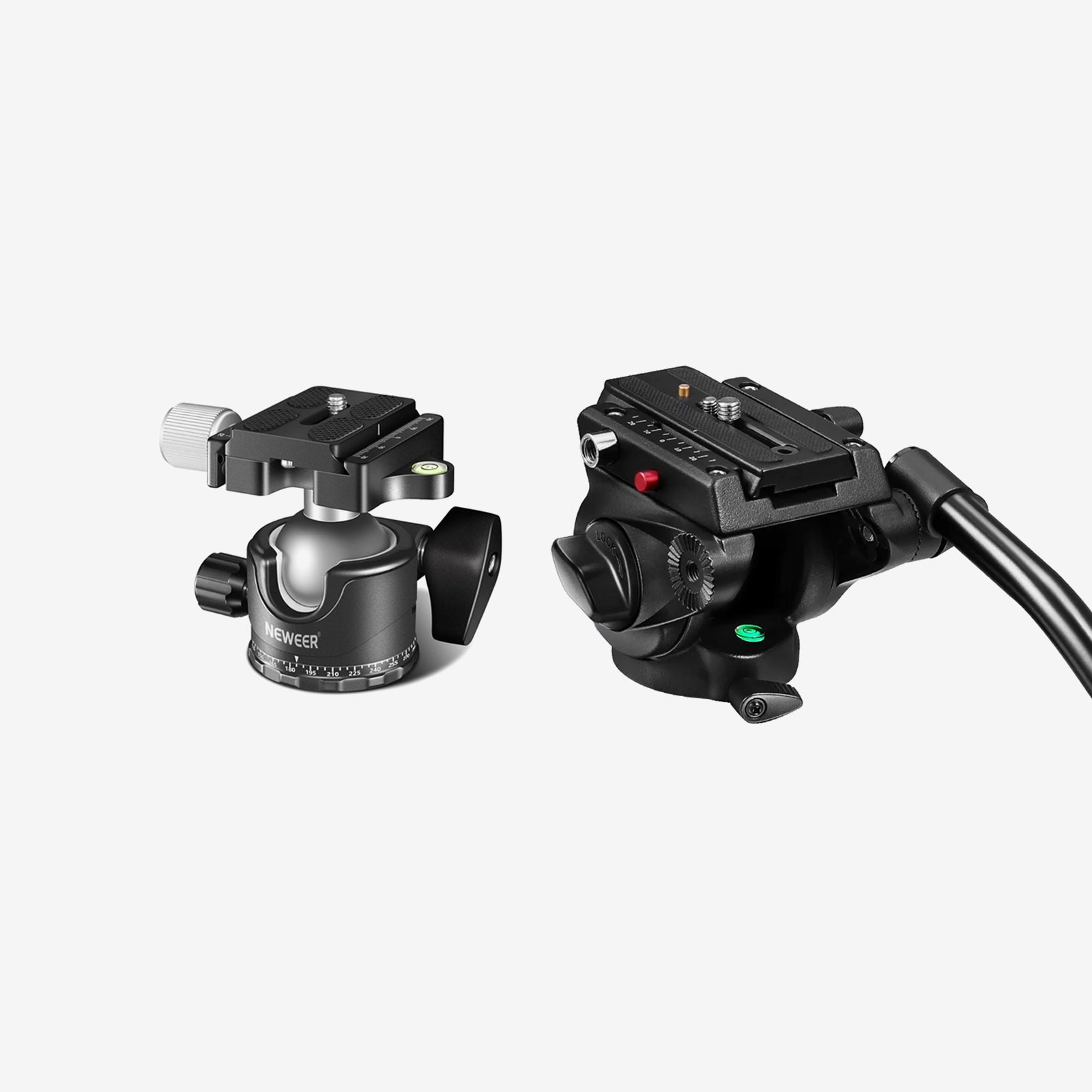
Types of Monopod Heads
|
Head Type |
Main Features |
Suitable Conditions |
|
Flexible angle adjustments |
General photography |
|
|
Controlled tilting movement |
Sports and wildlife photography |
|
|
Video Head |
Smooth panning and tilting |
Video recording and tracking moving subjects. |
Not every monopod needs a separate head. Some cameras and lenses can attach directly to a compatible monopod, but a suitable head can make positioning more convenient.
Types of Monopod Feet
The foot design affects how the monopod contacts the ground.
|
Foot Type |
Main Features |
Best For |
|
Rubber Foot |
Non-slip grip |
Indoor shooting and hard surfaces |
|
Spiked Foot |
Enhanced ground grip |
Grass, dirt, and soft terrain |
|
Foldable Feet |
Wider support base |
Extra support and controlled tilting |
Foldable feet can provide additional stability, but they do not turn a monopod into a fully independent tripod. You still need to control and support the equipment.

How to Use a Monopod
A properly adjusted monopod can make shooting more comfortable and help you maintain consistent framing.
Adjust the Height and Position
Extend the monopod until the camera sits at a comfortable shooting height. Lock each leg section securely before attaching or operating your equipment.
For eye-level photography, position the camera so you can look through the viewfinder without constantly bending forward. Adjust the height when shooting from lower or higher angles.
Find a Stable Supporting Stance
Place the monopod foot slightly in front of your body or at a comfortable angle. Keep your feet apart for balance and use one hand to control the camera while the other helps guide the monopod.
Avoid leaning too much weight on the monopod. It is designed to support your equipment, not to function as a rigid structure that you can rely on without control.
Track Moving Subjects
For sports and wildlife photography, you'll often need to follow subjects moving across the frame.
Keep the monopod positioned so you can rotate your upper body or adjust the camera smoothly. A suitable head can also make it easier to change the shooting direction without repeatedly repositioning the entire support.
Check Your Setup Before Shooting
Before starting, make sure all leg locks are secure, the camera connection is tight, and the monopod's load capacity is suitable for your equipment.
When using a heavier camera and lens combination, pay particular attention to the center of gravity to avoid an unbalanced setup.

Monopod Setup for Different Photography Scenarios
A monopod can be useful in several photography situations, but the ideal configuration depends on the subject and shooting environment.
Sports Photography
Sports photographers often need to follow fast-moving subjects while working with heavy telephoto lenses.
A lightweight monopod with sufficient load capacity can reduce the effort of holding the camera for extended periods. A head that allows smooth horizontal movement is also useful when following athletes across a field or court.
For fast-paced sports, make sure the monopod can be adjusted quickly and does not restrict your movement.
Wildlife Photography
Wildlife photography often involves long periods of waiting and working with telephoto lenses. A monopod can help support the weight of the equipment while allowing you to reposition when an animal moves.
Consider a monopod with sufficient load capacity and a compatible head or lens collar connection. If you're shooting on grass or soft ground, a spiked foot may provide better contact with the surface.
For subjects that move frequently, choose a setup that allows you to follow them without repeatedly changing your stance.
Concert Photography
Concert photographers often work in crowded spaces where setting up a tripod may be impractical or restricted.
A compact monopod can provide extra support when using a telephoto lens to photograph performers from a distance. Choose a model that is easy to carry and adjust, and check the venue's equipment rules before bringing it.
A smaller setup also makes it easier to move between shooting positions when space allows.
Event Photography
Weddings, conferences, and other events often require photographers to move between different areas while capturing important moments.
A portable monopod can help support heavier equipment without taking up as much space as a tripod. A quick-adjustment locking system and a flexible head can make it easier to change shooting angles throughout the event.
For situations that require frequent movement, prioritize portability and ease of handling.

Using a Monopod with Telephoto Lenses
Telephoto lenses can be considerably heavier than standard lenses, especially when used for wildlife and sports photography. A monopod helps support this weight and makes extended shooting more comfortable.
Use the Tripod Collar When Available
Many larger telephoto lenses feature a tripod collar with a mounting foot. This allows you to attach the lens directly to a compatible monopod head.
Mounting through the lens collar can help distribute the weight more appropriately, rather than placing the entire load on the camera body's tripod socket.
Always check that the mounting connection is secure and compatible with your equipment.
Check Weight Distribution
A long lens can shift the center of gravity forward, making the setup harder to control. Pay attention to how the camera and lens balance when mounted.
If your lens has a tripod collar, position the mounting point so the equipment is supported properly. Avoid using a monopod or head with a load capacity that is too close to the total equipment weight.
Choose a Compatible Head
The right head depends on your shooting style. A ball head offers flexible positioning, while a tilt head can provide more controlled movement. For sports and wildlife photography, consider how easily you can follow a moving subject with the complete setup.
FAQs
Can a monopod hold a heavy camera and telephoto lens?
Yes, provided its load capacity is sufficient for the combined weight of your camera, lens, and accessories. For heavier telephoto lenses, check whether the lens has a tripod collar and use a compatible mounting connection.
Do I need a ball head for my monopod?
Not necessarily. A ball head is useful for flexible camera positioning, but a tilt head or direct camera attachment may be more suitable depending on your shooting style and equipment.
Are monopods with feet more stable?
Foldable feet provide a wider support base and can make a monopod easier to control in certain situations. However, they do not offer the same independent support as a tripod.
Can I use a monopod for video recording?
Yes. A monopod can support video cameras and help reduce the effort of holding heavier equipment. A compatible video head can make panning and tilting smoother.
Is a carbon fiber monopod better than an aluminum one?
Neither is universally better. Carbon fiber is generally lighter and convenient for travel, while aluminum is often more affordable. Your choice depends on budget, portability, and equipment weight.
Can I use a monopod for long exposure photography?
A monopod can reduce camera movement, but it cannot hold the camera independently in the same way as a tripod. For long exposures that require the camera to remain completely still, a tripod is usually the better option.