

Table of Contents
Getting enough light on a tiny subject isn't always easy. When you're shooting insects, flowers, jewelry, or other small details up close, your lens can block light from reaching the subject, leaving unwanted shadows or uneven exposure.
A macro ring flash is designed to help with this. Mounted around the front of your lens, it brings light close to your subject and provides illumination from around the lens axis. But is a ring flash right for your photography, and what should you look for before buying one?
Here's what you need to know about choosing and using a macro ring flash, including the features to consider in the NEEWER RF1.
What Is a Macro Ring Flash?
A macro ring flash is a flash unit that attaches around the front of a camera lens to illuminate subjects at close range. Unlike a standard hot-shoe flash, which sends light from above or to the side of the lens, a ring flash places the light source close to the lens axis.
This arrangement helps reduce harsh shadows caused by the camera or lens and provides relatively even illumination across small subjects. It's particularly useful when working at high magnification, where even a slight change in lighting can affect the details you capture.
A macro ring flash is different from an LED ring light. A ring flash produces a brief burst of light when you take a photo, while an LED ring light provides continuous illumination. If you're photographing moving insects or need a short burst of light to help freeze motion, a flash can be especially useful.

What Is a Ring Flash Used For?
A ring flash is most useful when you need controlled, close-range lighting. Here are some common applications.
Insects and Plants
Small subjects such as insects, flower petals, leaves, and mushrooms can be challenging to photograph in natural light, particularly in shaded environments or when shooting at high magnification.
A macro ring flash brings illumination close to the subject, helping reveal fine details without relying entirely on ambient light. Flash can also help freeze small movements, although the result depends on flash power, ambient exposure, and your camera settings.
For plant photography, it can help maintain consistent lighting when you're working in changing conditions. For insects, TTL exposure control can be useful when the subject's distance from the camera changes between shots.
Jewelry and Small Products
Jewelry, watches, accessories, and other small products often require enough light to show fine details clearly. A macro ring flash can provide even illumination around the lens, making it easier to photograph small objects without strong shadows from the camera or lens.
However, even lighting isn't always the most flattering choice for reflective subjects. Shiny metal, gemstones, and polished surfaces can produce unwanted reflections, so you may need to adjust your shooting angle or use additional light-shaping techniques to bring out texture and depth.
For product photography, the ability to adjust the balance between the left and right sides of a ring flash can be especially helpful when you want more dimension rather than completely flat lighting.
Other Close-Up Photography
Macro ring flashes can also be useful for photographing coins, stamps, small collectibles, textures, and other objects where close-up detail matters.
They're not limited to professional macro photography, either. If you regularly photograph small objects for online listings, documentation, or creative projects, a dedicated macro flash can simplify your lighting setup.
That said, a ring flash isn't ideal for every situation. For larger subjects or scenes that benefit from directional shadows, an off-camera flash or a twin-flash setup may give you more flexibility.
How to Use a Ring Flash for Macro Photography
Once you've chosen a compatible ring flash, getting started is relatively straightforward. A few adjustments can make a noticeable difference in your results.
1. Check the Lens Adapter and Mounting
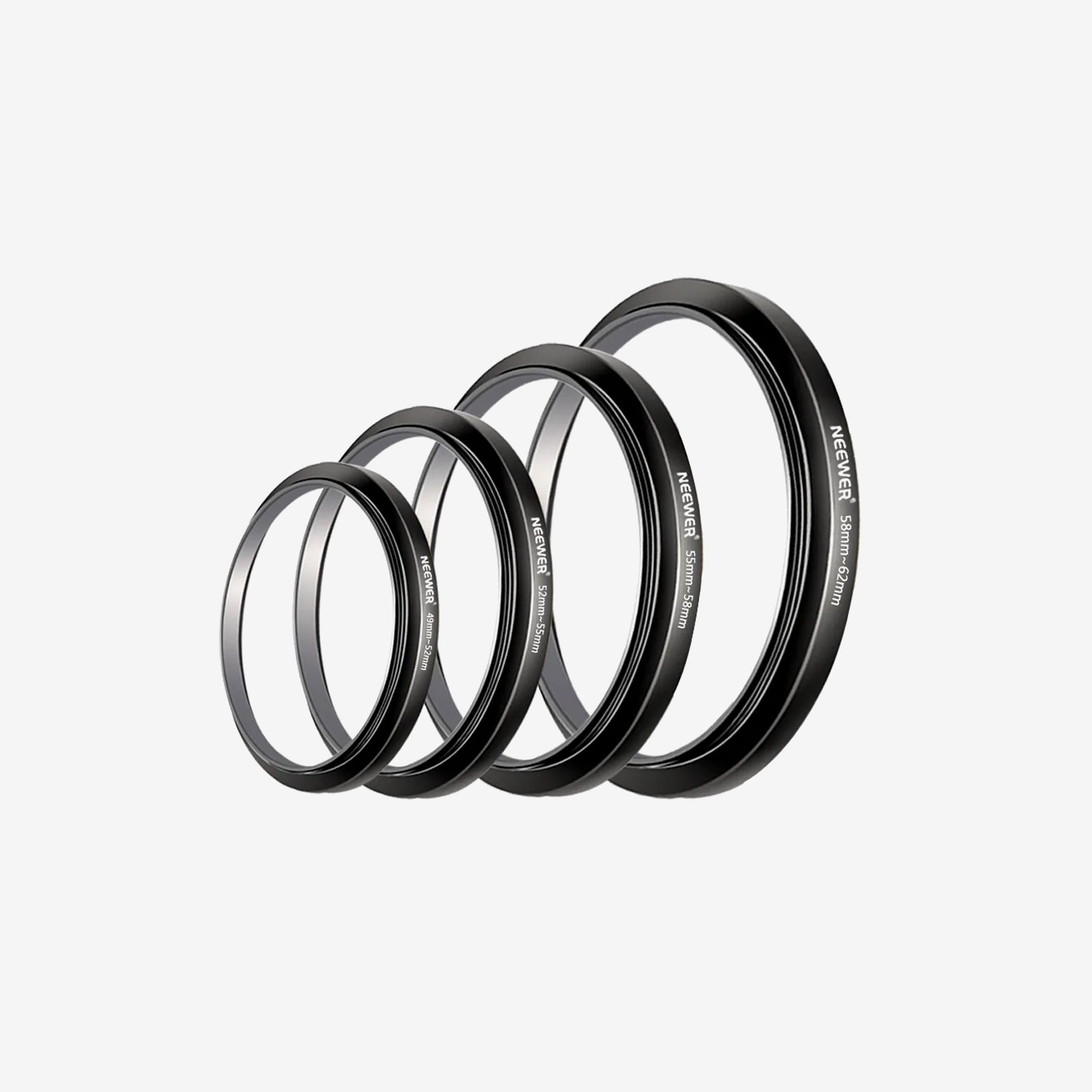
Start by attaching the ring flash head to the front of your lens using the appropriate adapter ring. Check the filter thread diameter printed on your lens or listed in its specifications, then choose a matching adapter.
Don't assume that a flash compatible with your camera will automatically fit every lens you own. Camera compatibility and lens attachment are two separate considerations.
Before shooting, make sure the ring flash is securely attached and doesn't obstruct the lens or appear in the frame.
2. Choose Between TTL and Manual Flash
Your flash mode affects how you control exposure.
TTL mode automatically adjusts flash output based on the camera's metering system and is useful when your shooting distance or subject position changes frequently.
Manual mode lets you set flash output yourself. This can be useful for stationary subjects, product photography, and repeatable setups where you want consistent results from one frame to the next.
If you're new to macro flash photography, start with TTL to get a feel for the lighting. Once you're comfortable with the setup, try manual mode to fine-tune the output and maintain consistency.
3. Adjust the Balance Between Flash Tubes
Some macro ring flashes feature independently controlled flash tubes on the left and right sides. Rather than illuminating your subject equally from both sides, you can adjust their relative output to introduce more directional contrast.
A balanced output can provide even illumination, while increasing the output on one side can help reveal texture and shape. This is particularly useful for jewelry, insects, and other subjects where surface detail matters.
Start with an even balance, then experiment with different ratios to see how the shadows and highlights change.

4. Use Focus Assist in Low Light
Focusing can become more difficult when you're working close to a small subject, especially in dim conditions. Some macro flash units include assist focus lights to help illuminate the subject while you compose and focus.
These lights are different from the flash itself: they provide continuous assistance for focusing, while the flash fires when you take the photograph.
If your ring flash includes focus-assist lighting, use it when needed and make sure your focus is accurate before taking the shot.
What to Look for When Choosing a Macro Ring Flash
The right macro ring flash depends on your camera, lens, shooting style, and the level of control you need. Before buying, consider these factors.
Flash Modes and Exposure Control
Look for a flash that supports the exposure workflow you prefer.
- TTL: Useful when subject distance or shooting conditions change frequently.
- Manual mode: Lets you control output directly for consistent lighting.
- Multi-flash mode: Produces repeated flashes during a single exposure for creative stroboscopic effects.
If you often photograph insects or handheld subjects, TTL can help you adapt to changing distances. For controlled product photography, manual output can make it easier to repeat the same lighting setup.
Also check the available manual power range. A flash with adjustable output from full power down to 1/128 gives you flexibility to work with different subject distances and reflective surfaces.

Lighting Control and Flash Output
Flash output matters, but maximum power isn't the only factor to consider. The guide number and watt-seconds provide useful output references, while adjustable power lets you fine-tune exposure for close-up subjects.
Independent flash-tube control is also worth considering. Adjusting the flash ratio can help create more depth and reveal surface texture, rather than relying solely on even, front-facing illumination.
Size, Weight, and Power Supply
Macro photography often involves moving between locations or shooting from awkward angles. A compact, lightweight flash is easier to handle, especially when working handheld.
Battery life and recycling time also affect your workflow. Faster recycling helps you capture consecutive shots, while sufficient battery capacity reduces interruptions during longer sessions.
Camera Compatibility and Lens Adapter Rings
Before buying, verify two types of compatibility.
Camera compatibility: TTL and other electronic functions depend on the flash version and supported camera system. A Canon version, for example, shouldn't be assumed to offer the same compatibility as a Nikon or Sony version.
Lens compatibility: The flash head must also attach securely to your lens. Check the supported filter thread sizes and whether the included adapter rings cover the lenses you plan to use.
If you own multiple camera bodies or lenses, review the manufacturer's compatibility list rather than relying on the product name alone.
NEEWER RF1 Macro Ring Flash
The NEEWER RF1-C/N/S 76Ws TTL Macro Ring Flash is designed for close-up photography, from insects and plants to jewelry and small products. Available in Canon, Nikon, and Sony versions, it offers TTL, manual, and MULTI flash modes, giving you flexible exposure control for different shooting conditions.
With independently controllable A/B flash tubes, you can adjust the flash ratio from 8:1 to 1:8 to create different lighting effects. Its compact 368g design also makes it practical for handheld macro photography, while two focus-assist lights help with focusing in low-light conditions.
Key Features
- Flexible flash control: TTL, manual output from 1/1 to 1/128, MULTI mode, and adjustable A/B flash ratios.
- Compact, practical design: 76Ws output, 5600K color temperature, and a recycling time of 0.1–2.7 seconds.
- Useful macro accessories: Two focus-assist lights, four color gel filters, and eight lens adapter rings.

NEEWER RF1 Specifications
|
Specification |
Details |
|
Maximum Power |
76Ws |
|
Guide Number |
GN15 (ISO 100, 1m) |
|
Color Temperature |
5600K |
|
Flash Modes |
TTL, Manual, MULTI |
|
Compatibility |
Canon/ Nikon/Sony Cameras |
|
Manual Power Range |
1/1–1/128 |
|
Flash Ratio |
8:1 to 1:8 |
|
Flash Duration |
1/400s–1/19,300s |
|
Recycling Time |
0.1–2.7s |
|
Flash Coverage |
80° |
|
Focus Assist |
2 focus-assist lights |
|
Power Supply |
4 × AA batteries |
|
Lens Adapter Rings |
49, 52, 55, 58, 62, 67, 72, 77mm |
|
Weight |
368g / 13oz |
FAQs
Is a Ring Flash Good for Macro Photography?
Yes. A ring flash provides close-up lighting that helps illuminate small subjects, such as insects, flowers, and jewelry, while reducing harsh shadows. It’s especially useful when shooting at close distances where the camera or lens may block some of the available light.
Can I Use a Ring Flash for Regular Photography?
Yes. A ring flash can also be used for portraits, beauty photography, and small product shots. However, its distinctive, relatively even lighting may produce flatter-looking images than more directional lighting, so it depends on the look you want to achieve.
How Do I Choose the Right Ring Flash for My Camera?
Start by checking camera compatibility and lens adapter requirements. Then consider flash modes, power output, recycling time, and whether you need adjustable flash ratios for more control over lighting. Make sure the ring flash supports your camera system and fits your lens's filter thread size.
Do I Need TTL for Macro Photography?
Not necessarily. TTL automatically adjusts flash output based on the camera’s metering, which is useful when your subject distance or lighting changes frequently. Manual mode is better when you want consistent exposure across multiple shots, such as when photographing products or focus-stacking a series of images.
Why Can Ring Flash Photos Look Flat?
A ring flash illuminates the subject from around the lens, which can reduce shadows and make lighting appear more even. While this is useful for revealing details in close-up subjects, it can also reduce the sense of depth. Adjusting the balance between the flash tubes, changing your shooting angle, or adding light from another direction can help create more dimension.