

Table of Contents
LED tube lights have become a popular lighting option for photography, video production, streaming, and other creative setups. Their long, narrow shape makes them easy to position around a subject, while different models can offer adjustable color temperature, RGB colors, or portable designs.
But what exactly is an LED tube light, and how is it different from other LED lights?
In this guide, we’ll see what LED tube lights are, how they are used, the main types available, and what to consider when choosing one for your setup.
What Is an LED Tube Light?
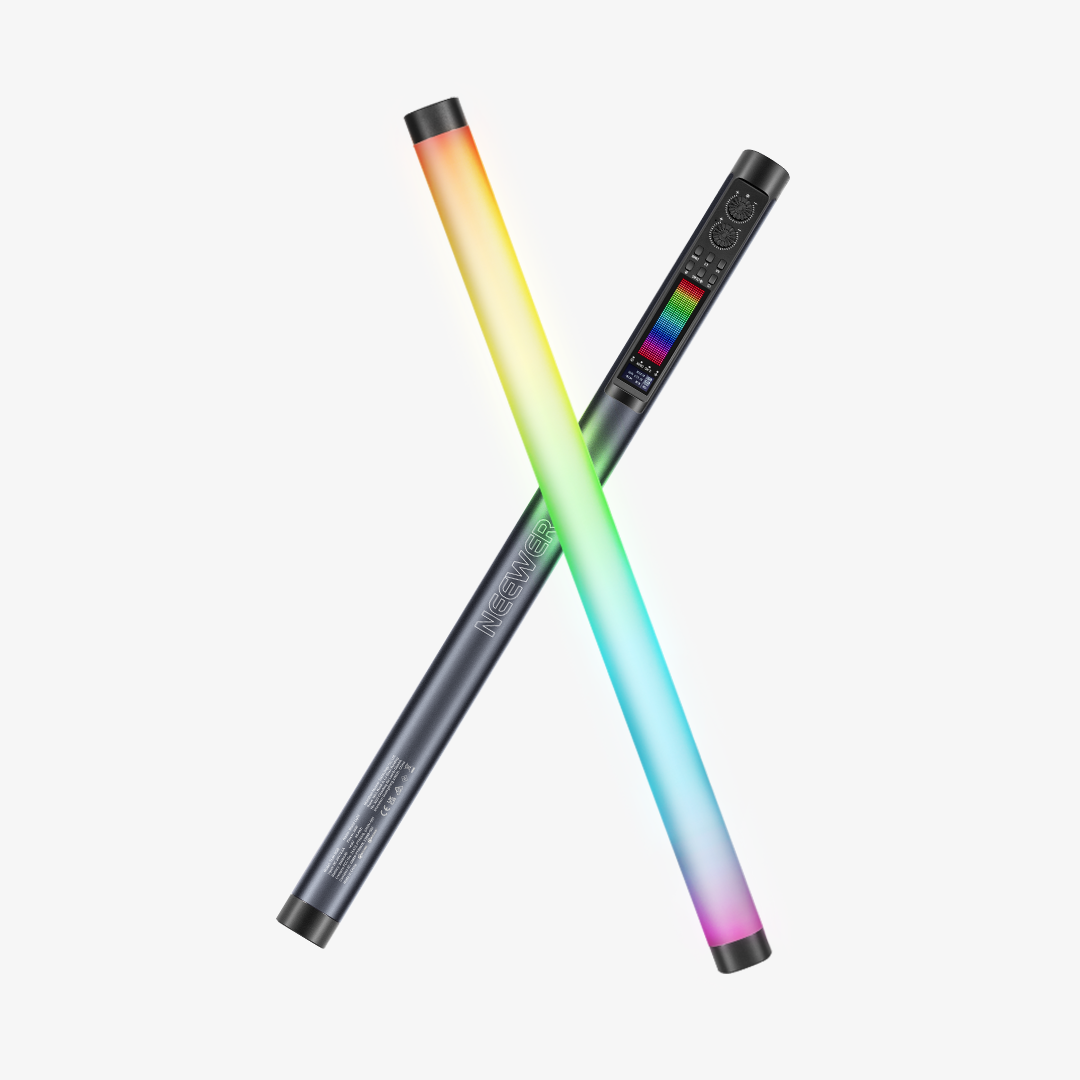
An LED tube light is a lighting device that uses light-emitting diodes (LEDs) as its light source. Unlike traditional rectangular LED panels, tube lights typically have a long, narrow design that allows light to be placed from different angles or used as part of the scene.
For photography and video, this shape offers more flexibility in how the light is positioned. A tube light can be placed next to a subject, behind them for accent lighting, or in the background as part of the overall scene.
LED tube lights are also sometimes called LED light sticks or LED light wands, particularly when they are designed for handheld or portable use. The exact name can vary depending on the product’s shape, features, and intended use.

What Are LED Tube Lights Used For?
LED tube lights can be used for both practical illumination and creative lighting. Their slim design makes them especially useful when a larger light source would be difficult to position.
Tube lights can be used as:
· Accent or rim lights to separate a subject from the background
· Background lights to add color or visual interest
· Portrait lights for more directional lighting
· Creative lights for light painting and other effects
Because tube lights are easy to move and reposition, you can experiment with different angles and distances without changing your entire lighting setup.
For video production, a tube light can be used to light a subject, add color to the background, or create separation between the subject and the scene.
They can also work well for smaller shooting spaces where there may not be enough room for large light fixtures.
3. Streaming and Content Creation
A tube light can add a simple lighting accent to a streaming or content-creation setup. Placing one behind a desk, next to a camera, or in the background can help add depth without taking up much space.
Tube lights are also useful when the light itself is part of the shot. Their long shape can become a visible element in the frame, making them useful for colorful backgrounds, practical lighting, and light-painting effects.

Types of LED Tube Lights
LED tube lights come in different configurations. The main differences usually come down to color options, light output, and physical design.
1. RGB LED Tube Lights
RGB LED tube lights can produce a wide range of colors instead of being limited to white light. They are commonly used for creative photography, video backgrounds, streaming, and atmospheric lighting.
Many RGB models also include built-in lighting effects, making them useful when you want to create a specific mood or add movement to a scene.
2. Bi-Color LED Tube Lights
Bi-color LED tube lights are designed to provide adjustable white light across a range of color temperatures. Instead of changing between different colors, you can shift the light from warmer to cooler tones depending on the scene.
This can be useful when you need to match ambient lighting or create a warmer or cooler look without adding colored light.
3. Flexible or Rollable LED Tube Lights
While many tube lights use a rigid housing, newer designs can use flexible or rollable structures. These lights can be easier to pack and carry, making them useful for creators who frequently move between locations.
LED Tube Light vs. LED Panel Light
LED tube lights and LED panel lights can both be used for photography and video, but their shapes make them better suited to different lighting setups.
|
|
LED Tube Light |
LED Panel Light |
|
Shape |
Long and narrow |
Flat and rectangular |
|
Typical use |
Accent, background, and creative lighting |
Key and fill lighting |
|
Positioning |
Easy to place at different angles |
Usually positioned toward the subject |
|
Portability |
Often compact and easy to carry |
Depends on the size and design |
|
Creative use |
Can become part of the scene |
Usually functions as a light source outside the frame |
A tube light is often a good choice when you want more freedom in placement or want the light itself to contribute to the look of the shot. A panel light may be more suitable when you need a broader, more even light source for illuminating a subject.
For a more detailed comparison of different LED video light types, see our guide to [COB vs. LED Panel vs. Tube lights].

How to Choose an LED Tube Light
The right LED tube light depends on how you plan to use it. Before choosing one, consider the following factors.
Brightness and Light Output
Consider how much light you actually need and how far the light will be from your subject.
A higher-output tube light can be more useful as a primary or stronger fill light, while a smaller light may be enough for background lighting, accent lighting, or close-up shooting.
Color Temperature and Color Options
Think about whether you need adjustable white light or full-color RGB lighting.
· Bi-color: useful when you mainly need adjustable white light
· RGB: better for creative colors and effects
· Fixed color temperature: suitable for simpler setups
If your lighting needs vary between different locations or types of content, adjustable color temperature can give you more flexibility.
Size and Portability
The size of the tube light affects both how you use it and how easily you can carry it.
A longer tube can provide a larger lighting surface, while a compact model is easier to fit into a small setup or camera bag. If you frequently shoot on location, also consider how the light is stored and transported.
Battery Life
For portable shooting, a built-in battery can make setup much easier. Check the expected runtime and charging method, especially if you plan to use the light away from a power outlet.
Mounting Options
Consider how you want to position the light.
A tube light may be used handheld, placed on a stand, or attached to a surface depending on its mounting options. Features such as a 1/4” thread or magnetic mounting can give you more ways to position the light around a scene.
FAQs
An LED tube light is a long, narrow lighting device that uses LEDs as its light source. It is commonly used for photography, video, streaming, background lighting, and creative lighting.
2. What are LED tube lights used for?
LED tube lights can be used for portrait lighting, accent and rim lighting, video backgrounds, streaming setups, light painting, and other creative lighting applications.
3. Are LED tube lights good for photography?
Yes. Their narrow shape makes them useful for accent lighting, background lighting, rim lighting, and creative effects. They can also be used as a more directional light source in smaller setups.
4. What is the difference between an LED tube light and an LED light stick?
The terms are often used interchangeably for portable, tube-shaped LED lights. However, “LED tube light” generally describes the tube-style form factor, while “LED light stick” often emphasizes portability and handheld use.