

Table of Contents
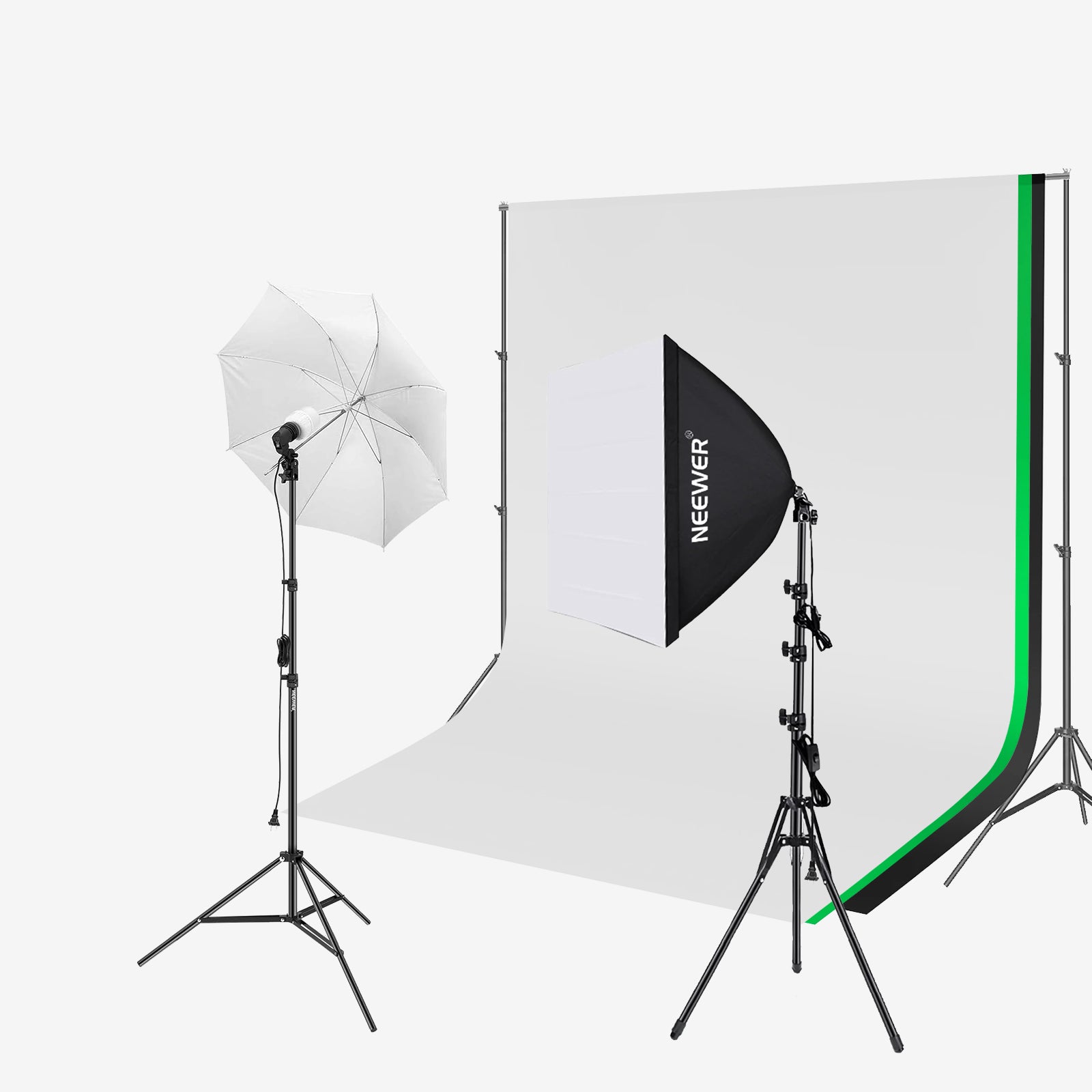
If your product photos look flat, overly shiny, or full of harsh shadows, the problem is usually the light source — not the camera. A softbox kit spreads light across a larger surface, making product photos softer, cleaner, and easier to shoot consistently. Start with a two-light setup — one softbox at 45 degrees on each side of the product, positioned roughly arm’s length away — then adjust distance before brightness, and dial in camera settings last.
This guide covers softbox lighting basics, one-light vs two-light setups, tabletop positioning, and how softboxes compare with LED panels and COB lights for product photography.
Quick Setup Recipe for Product Photos
Two softboxes at 45 degrees, key light slightly above the product, fill light at the same height — that is the foundation of most ecommerce product setups.
Starter product photography softbox setup parameters:
|
Item |
Role |
Notes |
|
Softbox kit |
Key light + fill light |
A 2-pack kit provides two bulbs, two stands, and one remote in a single purchase |
|
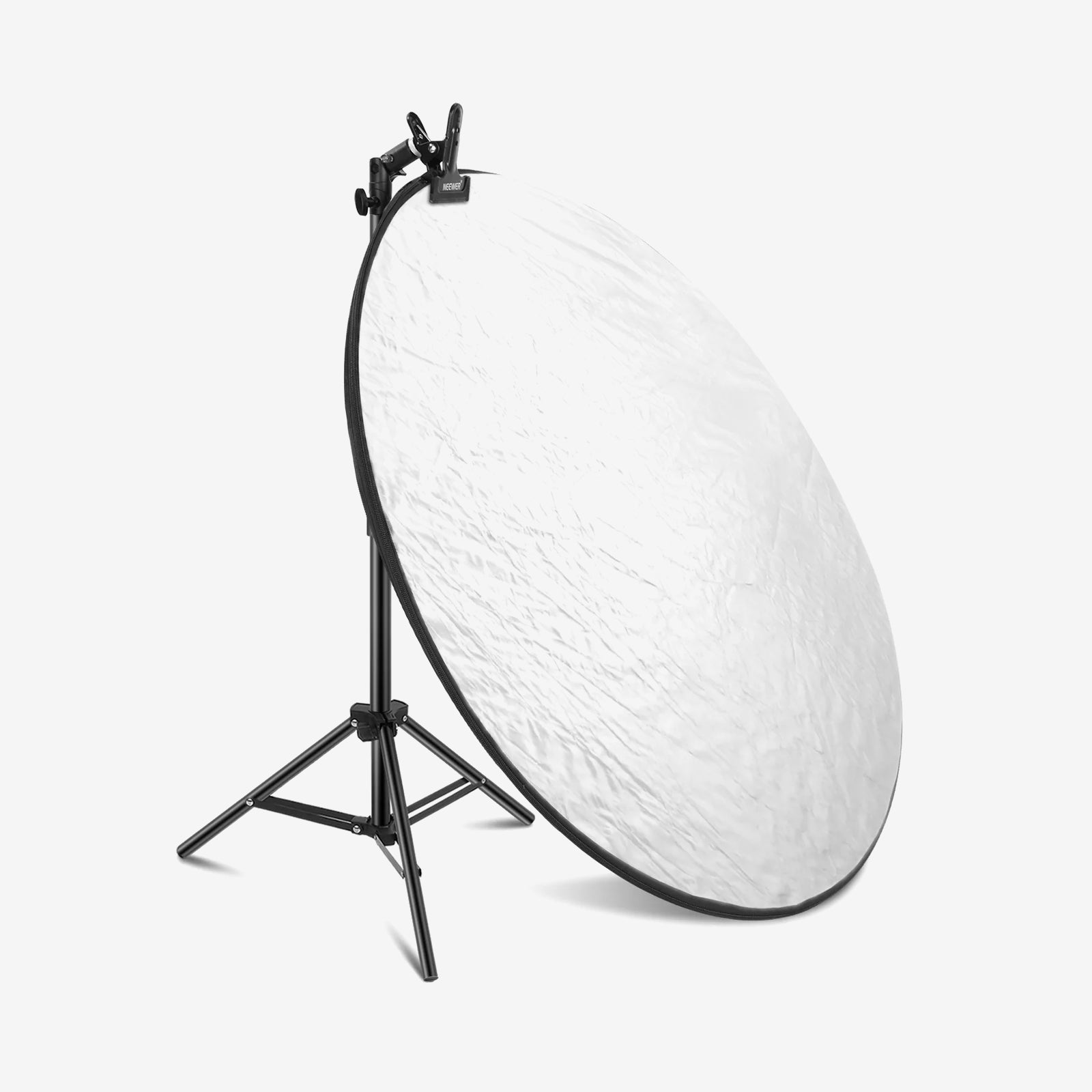
Reflector or white foam board |
Fill or bounce |
Substitute for a second softbox; reduces shadow on the fill side |
|
Light stands + sandbags |
Stability |
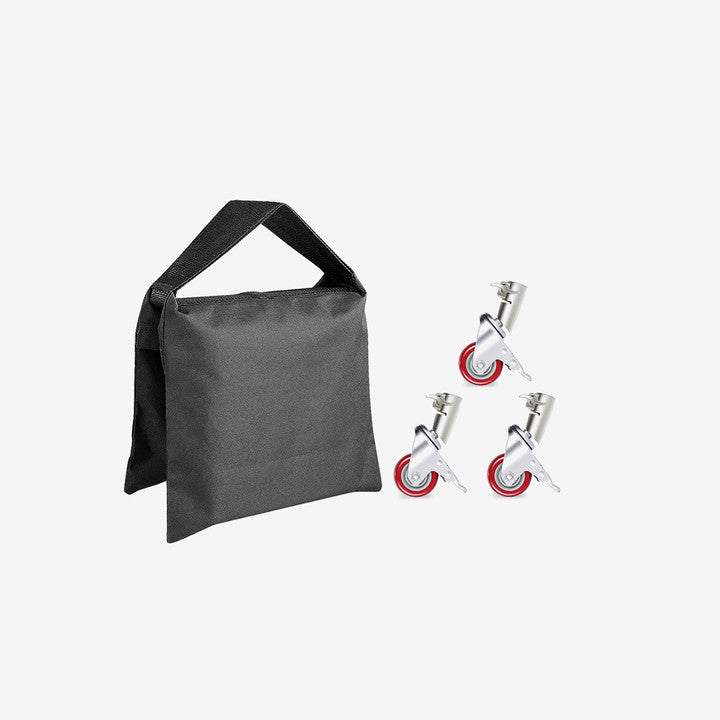
Most softbox kit stands reach 83"/210 cm; add sandbags outdoors or on uneven surfaces |
|
White or gray backdrop sweep |
Background control |
Paper or fabric behind and under the product; eliminates the horizon line |
|
Diffusion front panel |
Shadow softening |
Typically built into the softbox front face; no separate purchase needed |
What a Softbox Does to Light Quality
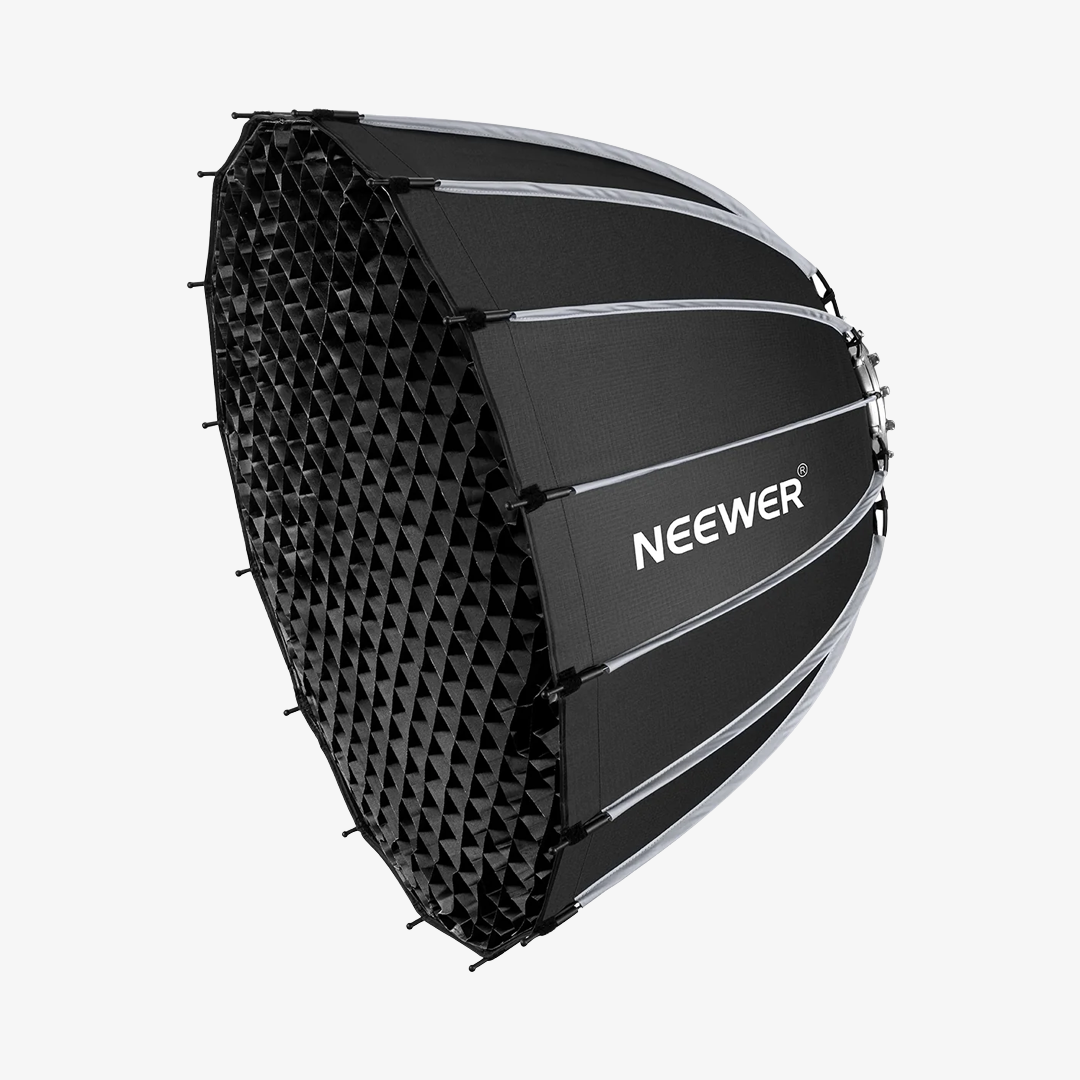
A softbox makes light softer and more even by spreading it across a larger surface. And a softbox placed 50–70 cm from a small product creates a light source that appears many times larger than the product itself — the result is even, wrapping illumination with no single hot spot.
Two things matter most in practice:
- Distance: moving the softbox closer changes both brightness and shadow softness.
- Diffusion: the reflective interior and front diffusion panel help spread light more evenly.
When to Use One Softbox vs Two Softboxes
One softbox works well for matte or textured products where some shadow depth still looks natural. Two softboxes — or one softbox plus a reflector — become necessary when you need to control the shadow side of the product.
|
Setup |
Shadow control |
Best for |
Difficulty |
|
One softbox (key light only) |
One-sided shadow; natural depth |
Dark backgrounds, jewelry, textured objects |
Easiest |
|
Two softboxes (key + fill) |
Both sides lit; near-shadowless result |
Ecommerce white-background hero shots, even coverage |
Moderate |
|
Softbox + white reflector |
Bounced fill; gentler than a second light |
Small products, flat lays, limited budget |
Easy |
For most ecommerce catalog work - white background, even exposure, minimal post-processing - the two-light configuration from a softbox kit is the correct starting point.
Step-by-step Setup for Small Product Photos
1. Position the product and background
Place the product on a table at a comfortable shooting height and set a white or gray backdrop behind and under it as a continuous sweep, eliminating the horizon line between background and surface. Keep at least 30 cm between the product and backdrop to avoid flat gray backgrounds.
2. Place the key softbox
Position the first softbox at 45 degrees to one side of the product, slightly above product height, angled down at 30–45 degrees. Start with the softbox face at roughly 50–70 cm from the product — close enough for soft shadows while still covering the full product evenly. Start around 70% brightness and adjust position before increasing output.
3. Add fill or background light
Position the second softbox at 45 degrees on the opposite side of the product, at the same height as the product (not raised). Set the fill light to 40–50% of the key light’s brightness: lower fill adds depth; higher fill creates a flatter ecommerce look. If only one softbox is available, place a white foam board 20–30 cm from the unlit side of the product to bounce light back onto the shadow side.
4. Adjust distance before brightness
Before changing the dimmer setting or any camera controls, move the key softbox 10 cm closer and take a new test shot. Small light movements usually matter more than camera settings. Only adjust brightness output after the right position is confirmed. Then set the camera aperture to f/8–f/11 for depth of field and ISO to 100–400 for a clean exposure at the working distance.
Softbox vs LED Panel vs COB for Product Photography
Each light type produces a different result for product photography — the right choice depends on product type, shooting distance, and how much control you need over shadows and highlights.
|
|
Softbox kit |
LED panel (bi-color) |
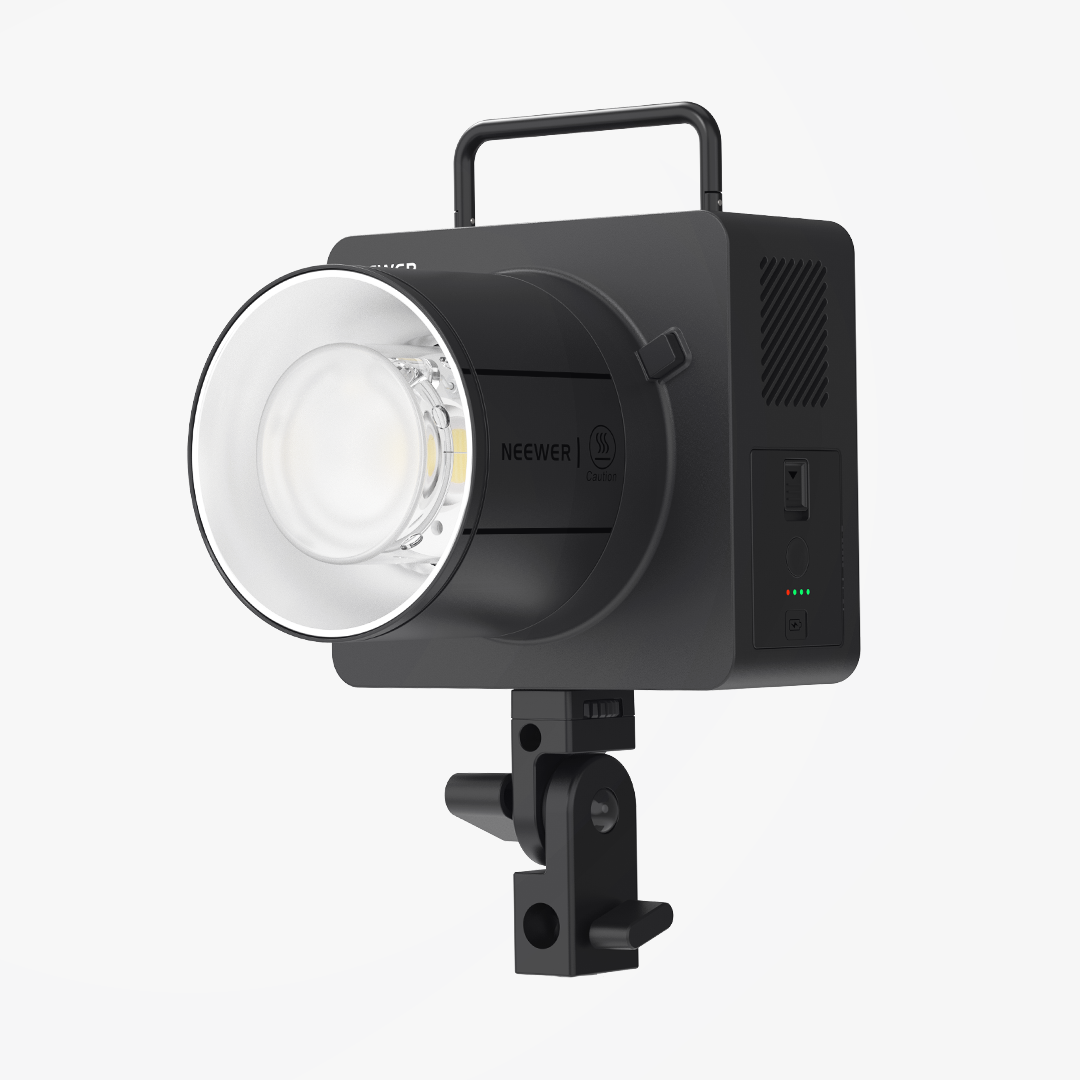
COB light + Bowens modifier |
|
Light quality |
Soft, diffused, wrapping shadows |
Even, flat, minimal shadow depth |
Directional; softens fully with modifier |
|
Best product type |
Matte, textured, apparel, small objects |
Product video, livestreams, talking-head video |
Textured or large products needing shadow depth |
|
Shadow control |
High — diffuse wrap with adjustable fill ratio |
Low — too even for three-dimensional products |
High — full modifier swap (softbox, grid, dish) |
|
Color accuracy |
CRI 95+ (varies by kit) |
CRI 95+ (varies by model) |
CRI 97+ (MS150C and above) |
|
Setup complexity |
Moderate — assemble stands and softboxes |
Easy — mount and plug in |
Moderate — Bowens mount, heavier head |
|
Also works for video |
Yes — key and fill for close-range product video |
Yes — primary use for video and live content |
Yes — with Bowens softbox or diffusion modifier |
For most beginners shooting ecommerce product photos, a softbox kit is the correct starting point. LED panels work well for video and livestream setups, but can make products look flatter at close range. A COB light produces better shadow depth when combined with a small modifier, but costs significantly more and makes more sense in a setup that already uses panels or softboxes for fill.
NEEWER Softbox Kits for Product Photography: NK103 and NK800
NEEWER’s softbox kit range covers two complementary configurations for product photography and content creation: the NK103 as the two-light bi-color workhorse for standard ecommerce setups, and the NK800 for creators who also need RGB scene lighting and app-based multi-light control. The NK103 is the recommended starting point for most product photography; the NK800 adds creative color range for video content and lifestyle photography alongside its standard bi-color output.
Quick comparison:
|
|
||
|
Category |
Best two-light bi-color starter kit |
Best RGB softbox kit with app control |
|
Kit format |
2-pack |
2-pack |
|
Light type |
Bi-color LED |
RGB + bi-color LED |
|
Output |
45W / 1400 lux/m at 4400K |
26W / 400 lux/m |
|
CCT |
2900K–7000K |
2700K–6500K |
|
CRI |
95 |
93+ |
|
Control |
2.4G remote |
NEEWER App via Bluetooth |
|
Price |
$79.99 |
$169.99 |
1. NEEWER NK103: Best Softbox Kit for Small Product Photos
The NK103 is a practical starter setup for ecommerce photos, handmade products, and small home studios. The 24"×24" softbox face wraps around most small and medium products at 50–80 cm working distance, the bi-color bulb (2900K–7000K) helps match common room lighting, and the 2.4G remote controls both bulbs independently, so the key-to-fill ratio is adjustable without moving either stand.
The Breakdown
- Light placement: Two 83"/210 cm aluminum alloy stands with 4-section height adjustment and 210° tilt; both stands adjust independently for key and fill positioning.
- Shadow control: The 24"×24" face produces gradual shadow fall-off at 50–80 cm working distance. Key and fill brightness can be adjusted separately from the remote.
- Reflection control: For reflective products, position the key softbox above and slightly behind the reflecting plane; use fill at a low lateral angle.
- Kit contents: 2× softbox, 2× 83"/210 cm stand, 2× 45W bi-color LED bulb, 1× 2.4G remote, 1× carrying bag — no additional accessories required to start shooting.
Key Parameters
|
Spec |
Detail |
|
Softbox size |
24"×24" / 60×60 cm |
|
Bulb output |
45W |
|
Max illuminance |
1400 lux/m (4400K), enough for tabletop shooting at f/8 without pushing ISO above 400 |
|
Color temperature |
2900K–7000K |
|
CRI |
95 |
|
Control |
2.4G remote |
|
Stand maximum height |
83" / 210 cm |
|
Price (2-pack) |
$119.99 |
Pros
- Two-light kit in a single purchase — stand, bulb, and remote included
- 2.4G remote enables independent key and fill adjustment from one device
- Replaceable bulbs make future upgrades easier.
- A carrying bag keeps the full setup portable and easy to store between shoots
- Output is best suited to close tabletop setups rather than large products or wide shooting distances.
- Fixed 24"×24" size; products larger than 30 cm across may need a larger modifier
- No app or Bluetooth control; limited to 2.4G remote and a physical dimmer
Ecommerce product photography, small tabletop setups, beginner home studio, flat lays, first softbox lighting kit
Also pairs well with:
NEEWER Clamshell Light Reflector/Diffuser — A clamshell-style reflector and diffuser that works as a fill substitute or close-range light modifier alongside the NK103 kit. Useful for reducing shadow depth on the fill side without adding a second stand.
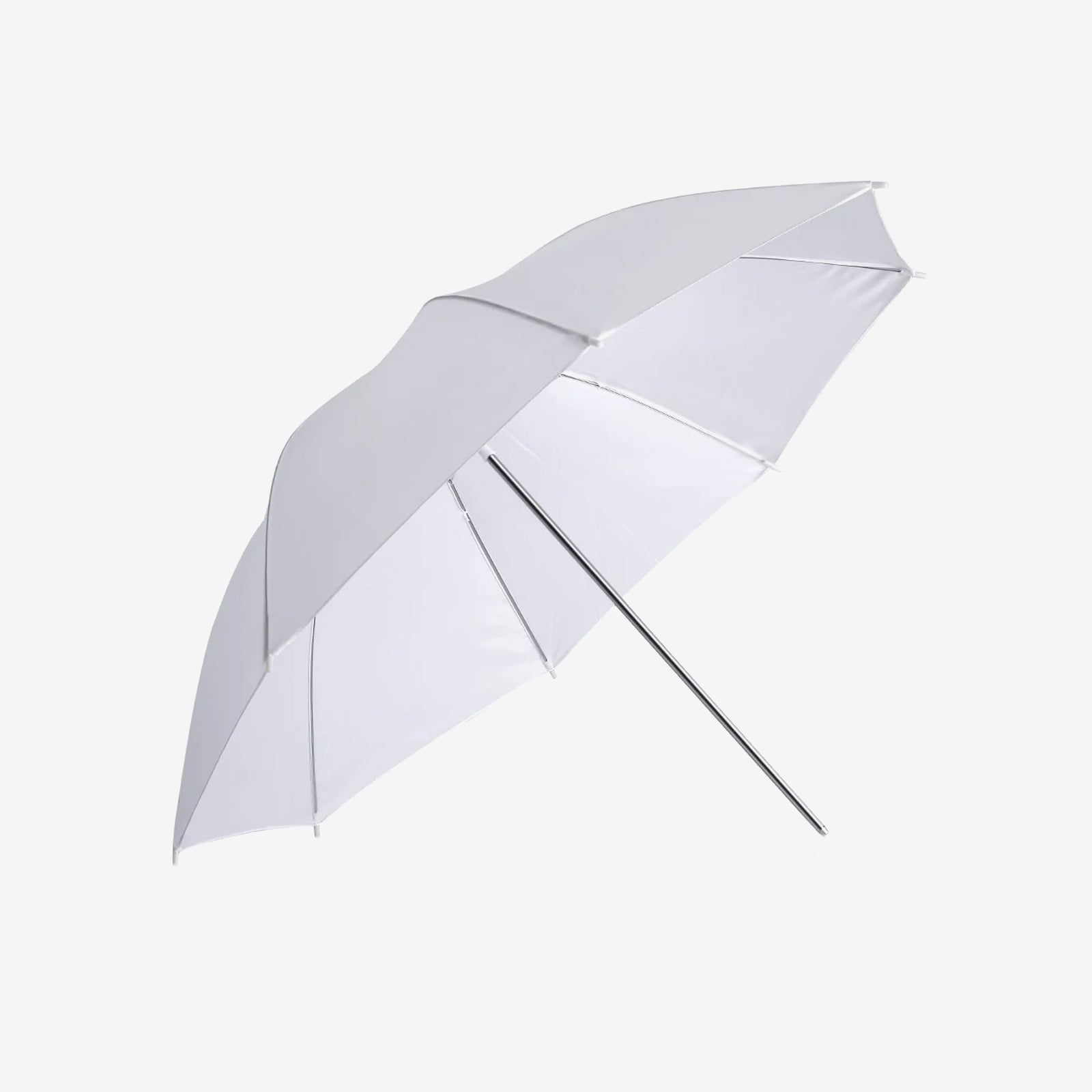
NEEWER 18" Collapsible Light Softbox Diffuser — An 18" collapsible diffuser that attaches over an existing light source to soften output further. A compact option for single-light tabletop setups where you need more diffusion without changing the main modifier.
NEEWER Collapsible Softbox with Strap, Grid, and Carrying Bag — Compatible with NEEWER 480/660/530 LED panels; includes a grid for tighter light control and a carrying bag. Extends the NK103 setup if you later add an LED panel as a third light source.
2. NEEWER NK800: Best RGB Softbox Kit with App Control
The NK800 adds RGB accent lighting to a standard softbox setup for creators shooting video and social content. Its 26W RGB bulbs cover a full 0–360° hue range and 2,700K–6,500K white output, controlled entirely via the NEEWER App over Bluetooth — no physical remote is included. It is better suited to close-range and creative content setups than to larger product setups or longer shooting distances.
The Breakdown
- Light type: RGB LED — 44 cool + 44 warm + 45 RGB LEDs per bulb; covers both standard bi-color white output and full 0–360° RGB hue
- Output: 26W per bulb, 400 lux/m maximum illuminance, 2,000 lumens; works best at close range (under 80 cm), especially in small rooms and tabletop setups
- App control: NEEWER App (Bluetooth, up to 49 ft / 15 m); 9 color modes; independent or collective control of up to 8 lights; 2 preset saves; OTA firmware update
- Kit contents: 2× 26W RGB LED bulb, 2× 24"×24" softbox, 2× 210 cm stand, 1× carrying bag
Key Parameters
|
Spec |
Detail |
|
Softbox size |
24"×24" / 60×60 cm |
|
Bulb output |
26W |
|
Max illuminance |
400 lux/m |
|
Color temperature |
2700K–6500K |
|
RGB hue |
0–360° |
|
CRI |
93+ |
|
Control |
NEEWER App via Bluetooth (up to 49 ft / 15 m) |
|
Stand maximum height |
7′ / 210 cm (aluminum alloy) |
|
Price (2-pack) |
$169.99 |
Pros
- Full 0–360° RGB hue range alongside 2700K–6500K white output — both creative and standard modes in one bulb
- App control supports independent and grouped adjustment of up to 8 lights with preset saving
- 9 color modes, including FX, Source Match, and Picker, cover a wide range of production scenarios
- 400 lux/m maximum illuminance — limited reach at distance
- No physical remote; control requires a phone with the NEEWER App installed
- Lower CRI (93+) — a small difference, but relevant for color-critical catalog work
Creators who need both bi-color white light for standard product shots and full RGB color for content with creative scene lighting, app-based multi-light control, and close-range product and lifestyle photography with color accent effects in small home studios and apartments.
Also pairs well with:
NEEWER RH12B 12" Bi-Color LED Ring Light Kit — A 12" bi-color ring light (2,900K–7,000K) that works as a compact accent alongside the NK800 softbox key. Well-suited for beauty close-ups, talking-head shots, and vlog content where a smaller accent footprint is preferred.
NEEWER RB18B 18" Bi-Color Edge-Lit Ring Light Kit —An 18" bi-color ring light with built-in battery for wireless use. Pairs with the NK800 as a softbox key + ring light accent for beauty, talking-head, or vlog content — and doubles as a portable option for outdoor or on-location shoots.
A tip for talking-head set up: Place the NK103 as key at 45° (full output, 1–1.5 m from subject) and the NK800 as accent or rim on the opposite side (30–50% output). Set NK800’s hue in the app first, then bring up the NK103 until it clearly dominates — the RGB light stays subtle instead of overpowering skin tones.
Common Beginner Mistakes and Fixes
1. Lights positioned too far away.
Fix: move the softbox face to within 50–80 cm of the product.
2. Equal key and fill brightness can make products look flat.
Fix: keep fill light around 40–50% of the key light.
3. Adjusting camera settings before moving lights usually creates more problems than it solves.
Fix: position lights first, then adjust exposure settings.
4. Background spill from incorrect fill angle.
Fix: direct it at the shadow side of the product instead, and keep at least
30 cm between product and backdrop.
5. LED flicker in product video.
Fix: set the shutter to a multiple of your mains frequency — 1/50 s or 1/100 s in 50 Hz regions; 1/60 s or 1/120 s in North America (60 Hz). If flickering persists at the correct shutter speed, check whether the light lists a PWM frequency or anti-flicker rating in its specifications — some LEDs still flicker at certain shutter speeds even when frequency settings are technically correct.
6. White background turning gray when they receive less light than the product.
Fix: increase product-to-background distance or light the backdrop separately.
FAQs
Are softbox lights good for product photography?
Yes. Softboxes spread light over a larger surface, producing gradual shadows that reveal product shape without harsh highlights. Bare bulbs, flat LED panels, and on-camera flash can’t replicate the same wraparound quality at close range.
How far should a softbox be from a product?
Start at 50–70 cm. That keeps the light source large relative to the subject, which is what produces soft shadows. Move closer for a softer look; farther for more defined edges.
Do I need two softboxes for ecommerce photos?
For white-background ecommerce shots, two lights — or one softbox plus a white reflector — produce cleaner, more consistent results than a single light. One softbox alone creates a shadow on the opposite side of the product; a second light or bounce fill eliminates it.
Is a softbox better than an LED panel for product shots?
For still photography, yes. A softbox creates gradual shadow fall-off that helps products keep more shape and texture; an LED panel’s flat, even output works better for video and talking-head setups than tabletop product work.
What do most beginners use as a starter lighting kit?
For product photography: two softboxes. For talking-head video: a softbox key light plus an RGB accent. For TikTok and Reels: a ring light with reflector fill. For anyone covering both product shots and creator video, the NK103 + NK800 covers both use cases in one purchase.
Final Thoughts
Consistent product photos come from controlling light before changing camera settings. A softbox kit makes that easier with softer shadows, adjustable fill, and predictable lighting at close range. The NK103 2-Pack is a practical starting point for ecommerce and tabletop setups, while the NK800 adds RGB control for creators shooting both product photos and video. Most beginners improve product photos faster by adjusting light position and fill ratio than by upgrading cameras.