

Table of Contents
If you stream at a desk, shoot on the road, or light products on a table, not every light solves the same problem. Desk streaming panels, monitor clip lights, pocket fills, and studio COB heads each fit a different job.
NEEWER covers all four — so one brand can handle calls, streams, portable shoots, and product photography if you match the right light to the right setup. Start with your use case, then compare specs.
Quick Comparison by Creator Type
|
Setup type |
What this category typically offers |
NEEWER pick |
|
Desk streaming |
Edge-lit panels, desk stands, app control |
GL1 PRO - CRI 97+ / TLCI 98+; |
|
Video calls |
Monitor clips, USB fill lights |
NL10 - no ring catchlight, no glare on glasses; |
|
Portable/on-camera |
Pocket panels, cold shoe lights |
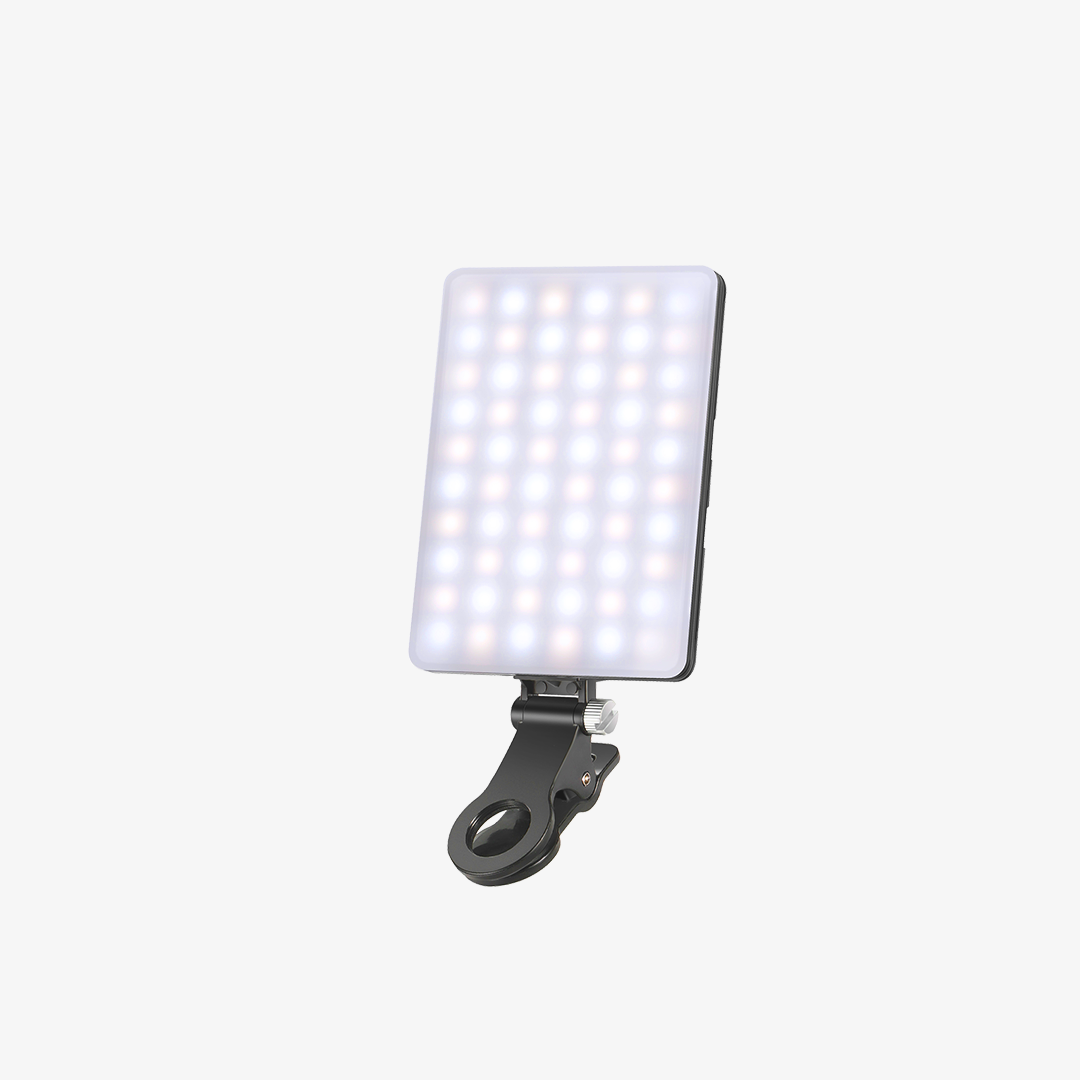
RGB61 - magnetic back + 3 cold shoes + 1/4" thread; |
|
Product/studio |
COB lights, softbox systems |
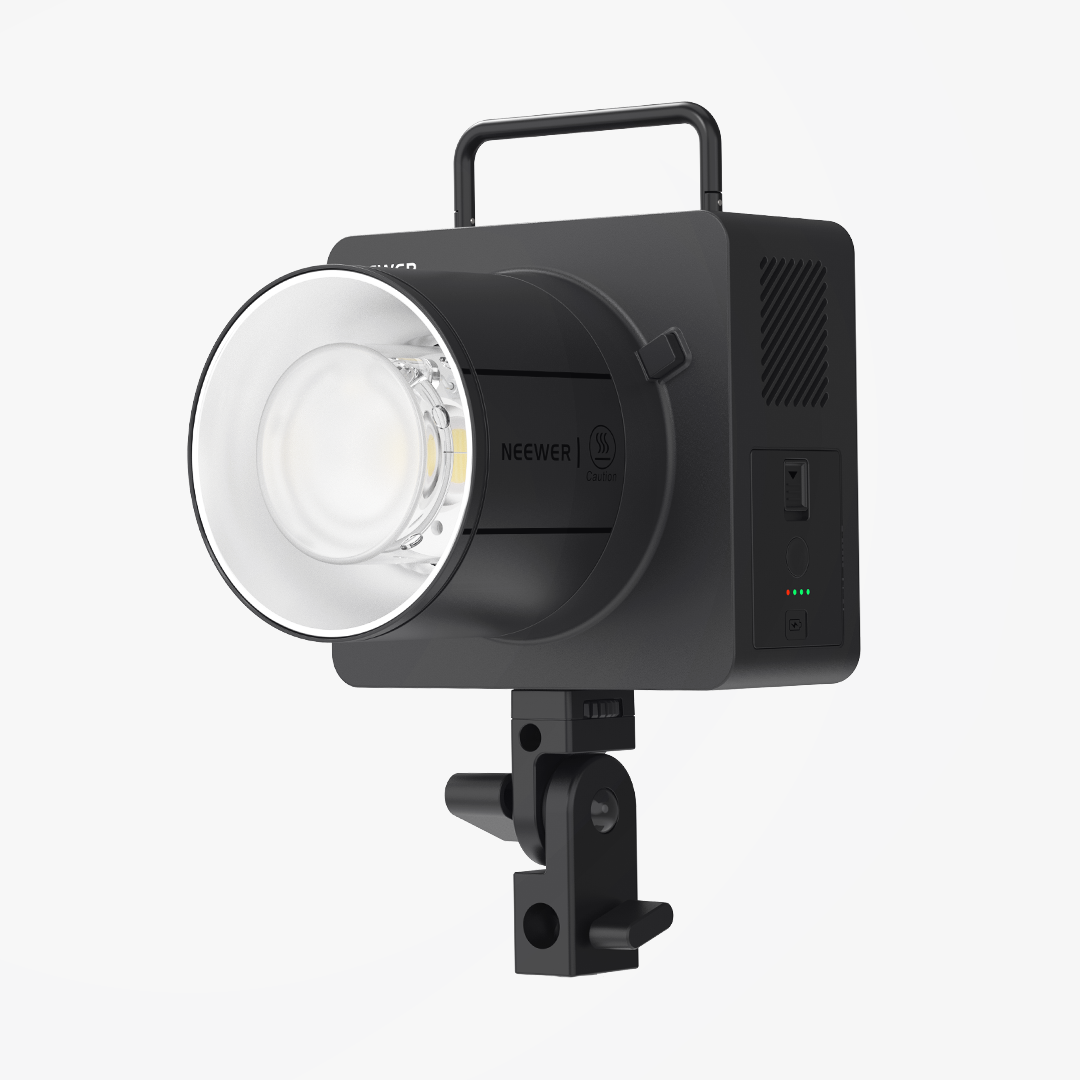
MS150C - 150W RGBWW + Bowens mount + 6 light modes |
How Lighting Categories Differ by Setup
Desk streaming lights and monitor clip lights solve the same basic problem - visible face lighting - but in different ways. A panel on a stand puts soft, directional light at face height; a monitor clip sits on the display and delivers flat, even fill from a closer distance. Neither is wrong; the right choice depends on whether you need output range and directional control, or just a zero-footprint fill for calls.
Portable lights trade maximum output for size and battery life. Cold shoe mounts, magnetic backs, and USB-C charging matter more than lux ratings when the light has to live in a bag. For portable creator use, output ratings at close distance (around 0.3–0.5 m) are often more useful than long-range measurements.
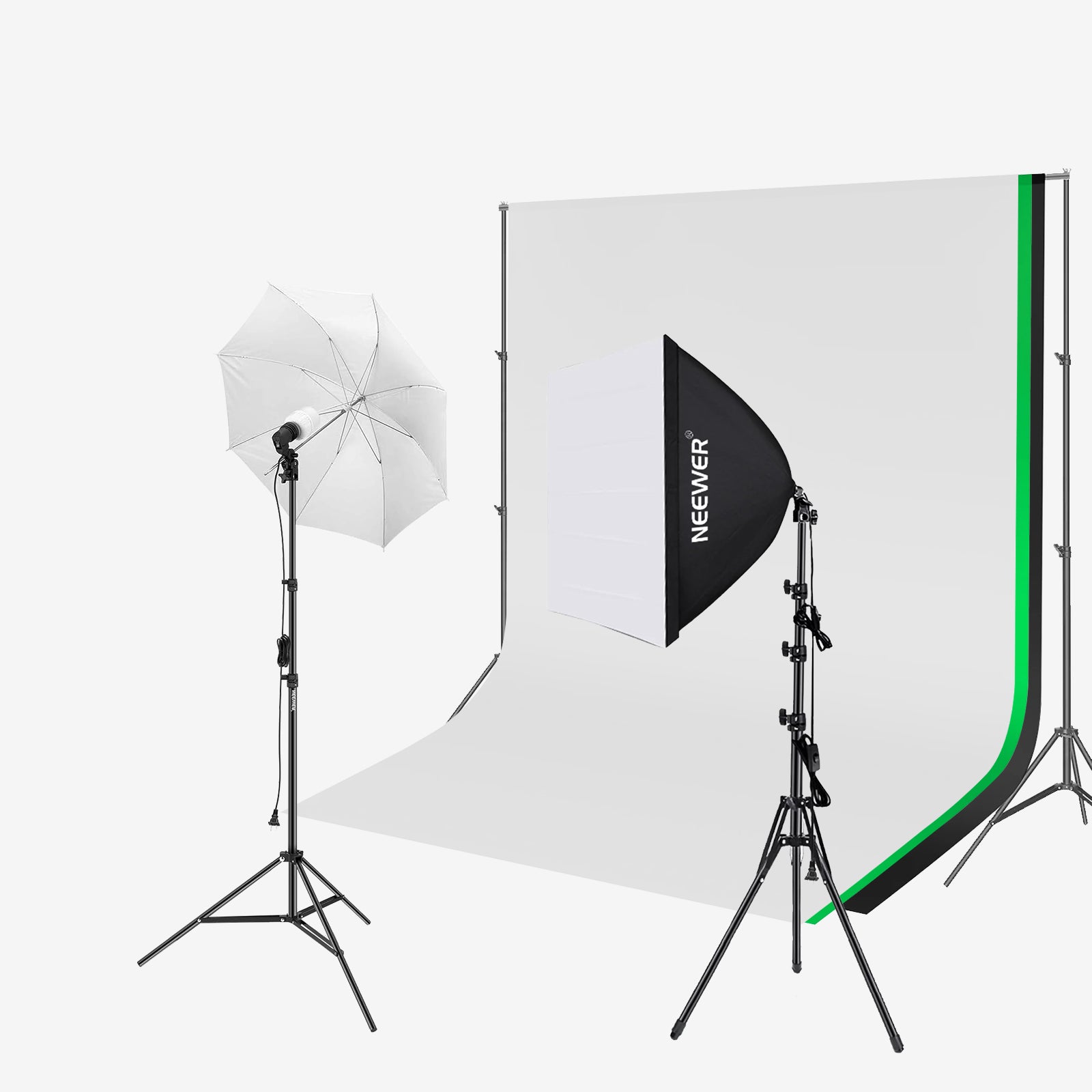
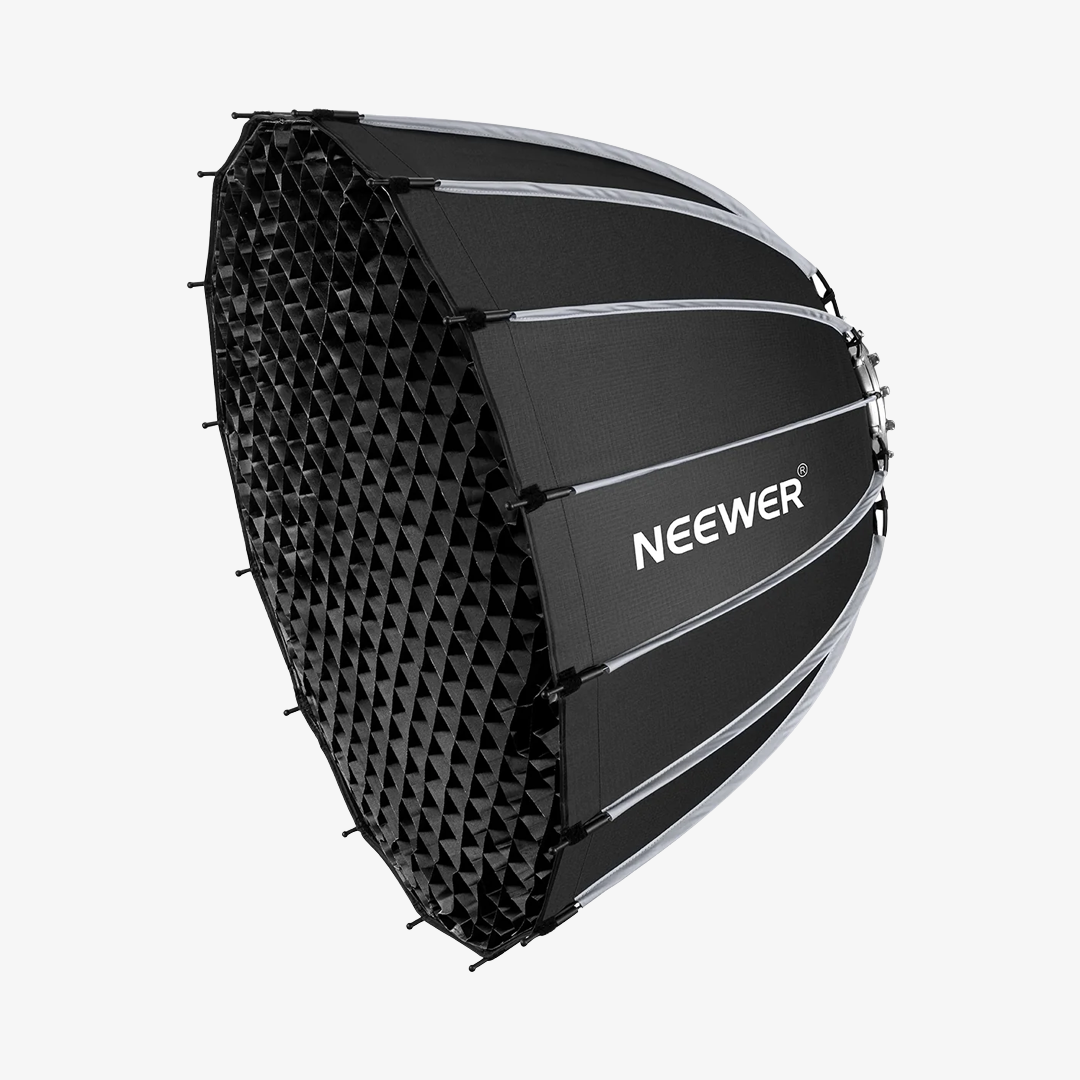
Studio and product lights are a different category entirely — COB heads with Bowens mounts, softboxes, and enough output to maintain proper exposure through diffusion at 1–2 m. A desk panel that works at arm's length will not replicate this at working distance through a softbox.
NEEWER covers all of these categories, so desk, portable, and studio setups can share the same ecosystem of stands, apps, and color presets as you add fixtures.
What Is a Key Light?
A key light is the main light on your face or subject. It sets how bright you look and where the shadows fall. Fill light softens those shadows; a rim light separates you from the background. Without a controlled key, you are at the mercy of ceiling LEDs and window glare.
On a streamer’s desk, “key light” usually means a soft panel on a stand in front of you — that is the most common desk streaming format. In a studio, it often means a stand-mounted light, sometimes inside a softbox, one to two meters from the subject.
When you compare brands, look past the label and check four things:
- Lux at your real distance - a rating at 0.5 m does not tell you how the light performs through a softbox at arm's length.
- Color temperature range - can it match warm room bulbs, or hold a neutral 5600K for skin tones?
- CRI / TLCI - 95+ keeps skin and product color from going green or muddy on camera.
- Mounts - desk clamp, Bowens softbox, cold shoe, or magnetic; the mount decides whether the light fits your room.
Desk Streaming and Video Calls
Desk streaming needs soft light at face height, quiet operation, and a mount that survives daily use.
NEEWER covers the desk in two formats, depending on what you actually need:
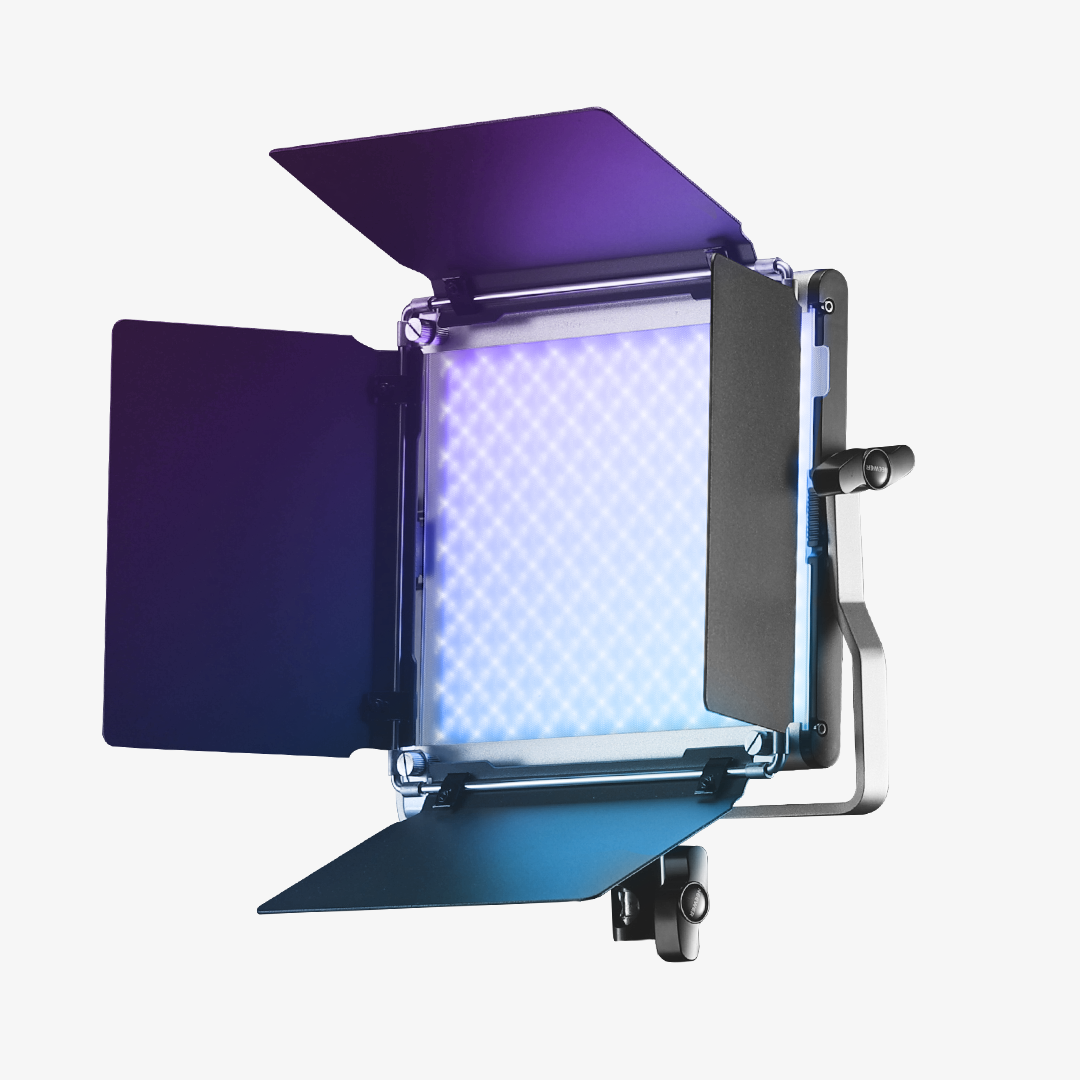
NEEWER GL1 PRO: Best Streaming Key Light for Desk Creators

- 45W fanless edge-lit panel; CRI 97+ / TLCI 98+; 2900K–7000K
- Desk clamp stand included; 13.8"–23.6" height adjustment
- Three control options: 2.4G USB dongle (no Wi-Fi needed), Wi-Fi + NEEWER Live app or third-party streaming controllers, Bluetooth
- Soft panel output for long sessions without fan noise
- Compatible with third-party streaming controllers without switching software ecosystems
- Desk-distance rating — not a softbox key at 1–2 m
Best for: Daily streamers, gamers, and podcasters who want a panel key light with software control
NEEWER NL10: Best Monitor Light for Video Calls

- 10W USB-powered monitor clip light; CRI 95 / TLCI 98; 3000K–6000K (5 steps)
- Clips to monitor top or sits as a mini desk stand — no floor stand required
- Soft diffused fill; no ring catchlight, no reflections on glasses
- Zero desk footprint; works on any monitor or laptop
- From $25.99 — low-cost entry for better call lighting
- 10W is right for call distance; not a standalone streaming key at a longer range
Best for: Remote workers and meeting-heavy creators who want better call lighting without a floor stand
Comparing more desk panel options? See NEEWER’s best lights for streaming for bar lights, ring lights, and other desk formats side by side.
Portable Creator Lighting
Portable shooting involves different trade-offs than desk or studio work. Maximum output matters less than mounting speed, battery runtime, and how small the light packs. A travel creator may prefer a faster setup and lighter carry weight over the soft, diffused output of a larger panel.
When comparing portable lights, check five things:
- Mounting system - cold shoe, magnetic clip, or 1/4"-thread stand mount; each affects how quickly you can attach and reposition
- Battery runtime - how long at 50% or full output before a recharge stop
- Charging port - USB-C fast charge keeps a travel kit moving; proprietary cables are a friction point on the road
- Output at close range - portable lights typically rate output at 0.3–0.5 m; confirm the number matches your actual shooting distance
- Form factor - handheld wand, panel, or COB; each suits a different shooting style
NEEWER covers portable with wands, pocket lights, and mini COB fixtures — the easiest addition to an existing kit is a pocket fill:
NEEWER RGB61: Best Pocket Fill for On-Camera and Vlog Setups

Specs
- 6W RGB pocket light; CRI 97+; 2500K–8500K; 800 lux at 0.5 m
- 96 g, magnetic back + 3 cold shoes + 1/4" thread
- USB-C; 2.6 h runtime at full brightness
- 20 scene modes for color accent and effects
Pros
- True pocket size — fits any camera bag or rig
- Magnetic mount sticks to metal surfaces for fast repositioning
Cons
- 6W is best suited for close-range fill or accent, not full key-light duty
- No dedicated battery indicator beyond on-screen percentage
Best for: On-camera fill, vlog accent, and second-light setups where a desk or studio key is already covered
Product Photography and Small Studio Kits
Product and studio work need controlled shadows, modifier options, and enough output through diffusion at your actual working distance.
NEEWER COB and panel kits with Bowens mounts are the natural fit for a keyed product table:
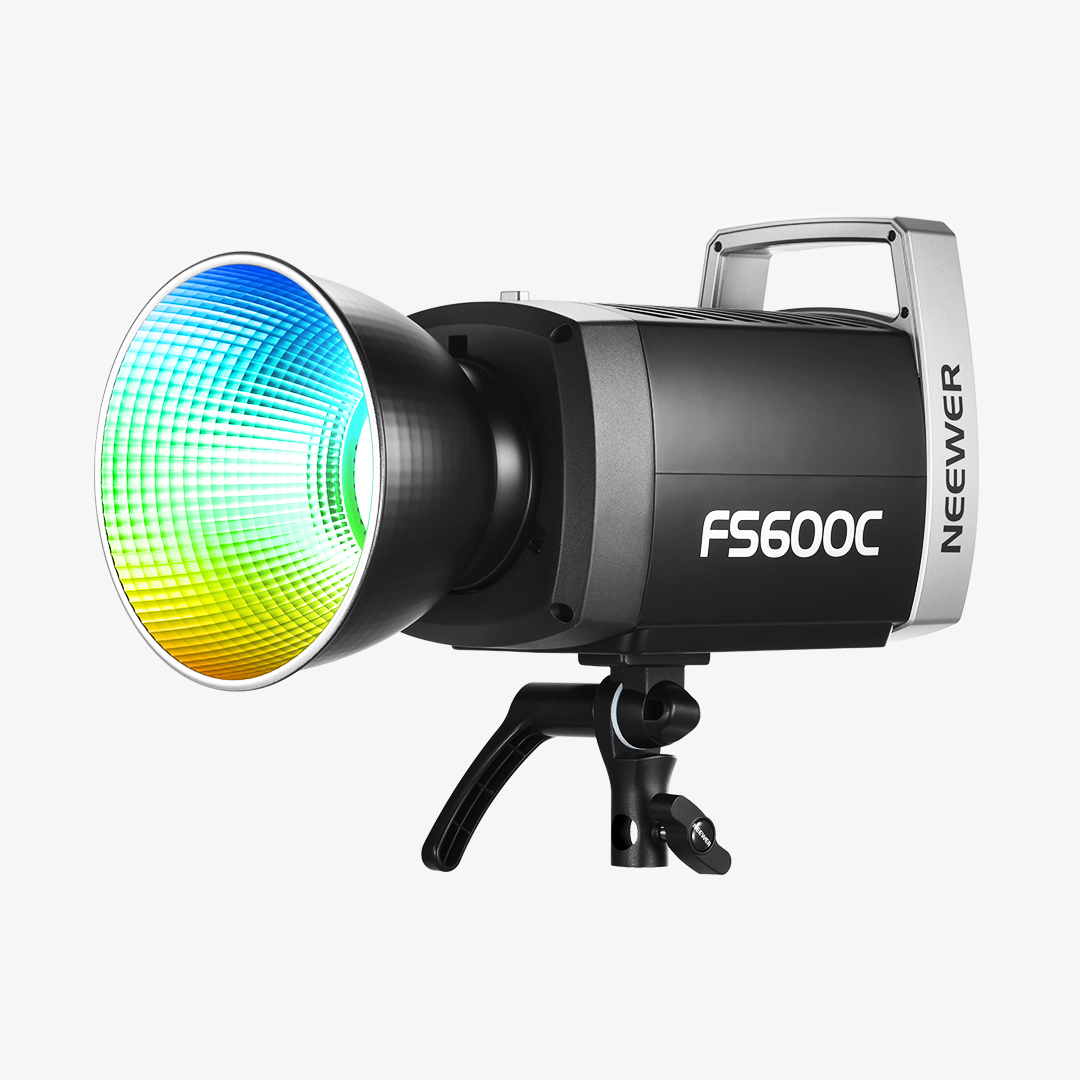
NEEWER MS150C: Best RGB Key Light for Small Creator Studios

Specs
- 150W RGBWW COB; 16,600 lux at 1 m bare / 18,000 lux at 1 m with included reflector
- Bowens mount included; fits softboxes, beauty dishes, grids, and snoots
- Six light modes: CCT, HSI, RGBCW, gel presets (40), source match, 17 FX scenes
- Control: physical knobs, NEEWER app, or 2.4G remote; 2.3 lb
- Enough output to key through a softbox at typical YouTube or product distances
- RGBWW modes for background color without a separate RGB fixture
- AC-first; V-mount battery is an extra cost
Best for: YouTube, product photography, and small studio builds where a desk panel is no longer enough
Browse the full LED panel lights and RGB lights collections for two-light and three-light rig options.
Two-Person Interview Studio: A Starter Light List
For a two-person interview setup with two cameras, each subject needs their own key light, a fill or background light adds separation from the backdrop, and everything needs to be repositionable without a full studio rebuild between shots.
Desk panels are designed for close-distance face lighting, not for pushing through large softboxes at 1–2 m. For a two-key interview setup, COB lights with Bowens mounts are the practical fit:
- 2× key lights - two MS150C COB heads, one per subject, each inside a Bowens softbox at roughly 45° to camera
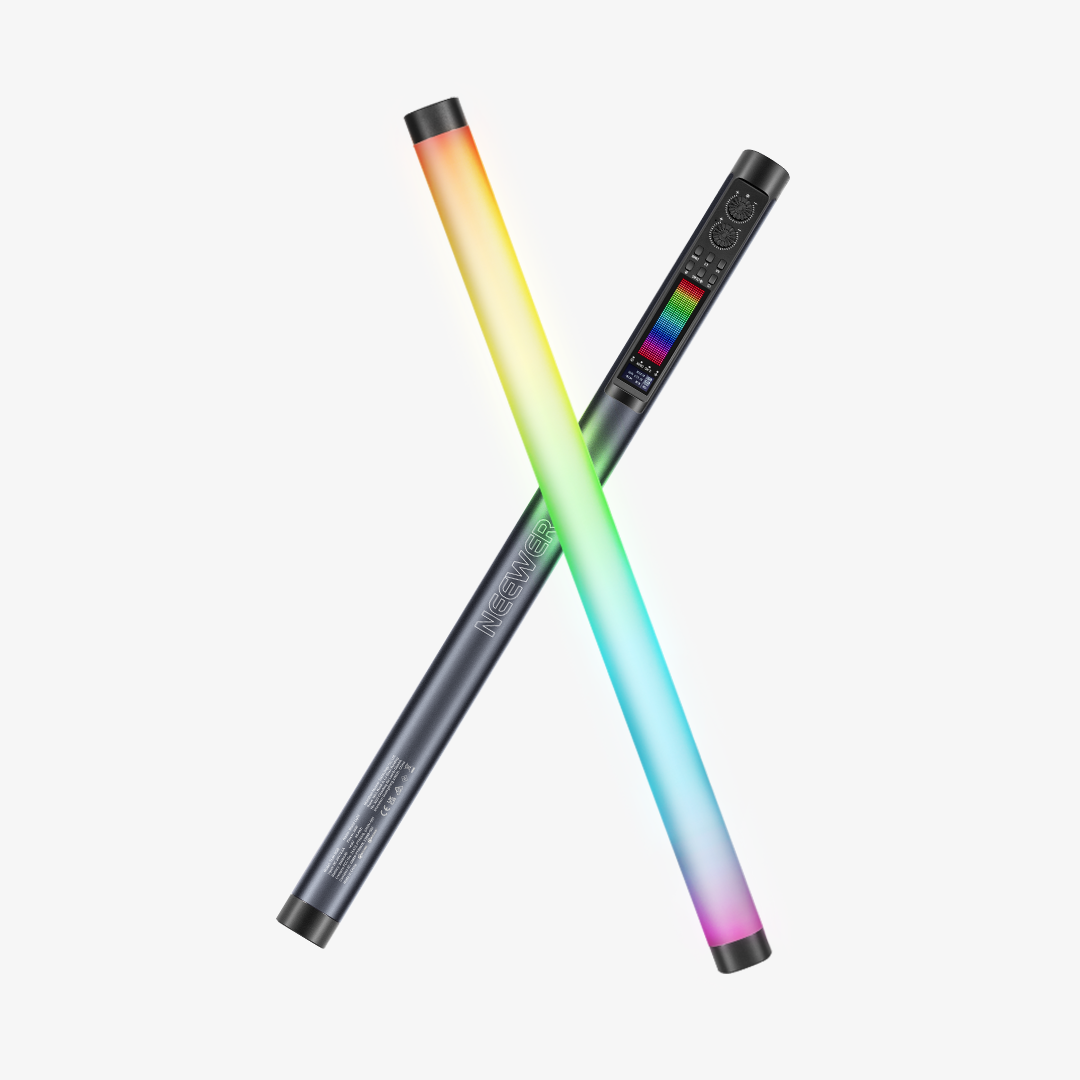
- 1× background or accent light - an RGB wand or panel behind or beside the backdrop for separation and color
- 2× light stands - sturdy enough to hold a COB and softbox at full extension
Each MS150C delivers enough output through a softbox at 1–2 m to expose skin tones cleanly, and using the same model on both sides keeps color temperature consistent across both subjects in the frame.
When to Choose Each NEEWER Light — and When to Look Further
NEEWER fits well if your setup will grow beyond a single light — desk calls, streaming, portable fill, and studio softbox work are all covered within one ecosystem. Stands, modifiers, apps, and color presets stay consistent as you add fixtures.
Start with a desk panel if your primary use is streaming or video calls at a fixed desk — the GL1 PRO covers streaming, the NL10 covers calls without a floor stand.
Add a portable light if you shoot on location or need a second light in the bag — the RGB61 fits cold shoes, magnetic surfaces, and USB-C charging without adding bulk.
Move to a COB if your content requires a softbox key at 1–2 m — the MS150C’s Bowens mount opens up the full modifier ecosystem for product, portrait, and YouTube work.
For large commercial productions or cinema-scale lighting setups, higher-output dedicated cinema fixtures may be more appropriate — that is a different product category.
Before you check out anywhere, measure your shooting distance, list the mounts you need, and check what is actually included in the box.
FAQs
What makes a desk streaming panel worth buying?
The three things that matter most: soft, even output (edge-lit panels reduce hotspots), a mount that fits your desk without taking up the whole surface, and control that fits your workflow — app, dial, or your streaming controller. The GL1 PRO covers all three.
What should I look for in a portable on-camera light?
Mounting system (cold shoe, magnetic, or 1/4" thread), battery runtime at your typical brightness, and output at 0.3–0.5 m for your actual shooting distance. For most on-camera setups, a pocket fill in this output range covers the job — built-in battery and a standard charging port keep the kit simple.
What kind of light works best for product photography?
Product photography needs enough output to push through a softbox at 1–2 m, a Bowens mount for modifier flexibility, and controlled color accuracy. A desk panel at close range works for small flat lays, but not for a keyed product table with a softbox.
What should I compare before buying any creator light?
Setup type first, then lux at your actual shooting distance, color temperature range and CRI, mounts and modifiers, power source, and control method. Brand name comes last.
I stream daily but also shoot products on weekends — what do I buy first?
Buy for the job you do every day. Streaming daily → start with the GL1 PRO. When product shots need a softbox at 1–2 meters, add the MS150C — a streaming panel will not cover that distance through a modifier.
Final Thoughts
Pick the setup, then the light. Desk calls and streaming need different tools from portable shoots and studio work — and all four fit within one ecosystem. GL1 PRO for daily streams, NL10 for meetings, RGB61 as a pocket fill on the road, and MS150C when the softbox comes out. Match the light to the job, check what is included in the box, and add a second fixture only when your content actually demands it.