

Table of Contents
"Is a carbon fiber tripod worth the extra cost?" For long-distance travel and long exposures, the answer is yes. Carbon fiber offers superior vibration damping and weight savings, while aluminum provides better mass-stability and value for studio use. Refer to our comprehensive comparison article of materials to help you find the tripod that best suits your needs.
The Price Gap: What Are You Actually Paying For?
When comparing aluminum and carbon fiber tripods, aluminum is typically 30-50% cheaper than a comparable carbon fiber model. However, the price premium reflects more than just the cost of different materials.

What makes carbon fiber more expensive?
The higher price is not just about raw material cost. It comes from manufacturing complexity:
-
Layered composite construction – Carbon fiber tripod legs are built from multiple layers of woven fiber sheets, oriented in specific directions for strength and stiffness. This process requires precision layup and controlled curing.
-
Resin bonding and curing – The fibers must be bonded with epoxy resin and cured under controlled conditions, increasing labor and equipment costs.
-
Quality control standards – Composite tubes must be carefully inspected for voids, delamination, or fiber misalignment.
By contrast, aluminum tripod legs are typically produced through extrusion and machining, which are mature, high-volume industrial processes. This makes aluminum more predictable and cost-efficient to manufacture.
In short, you’re paying for engineering complexity and weight optimization, not just a different material.
Carbon fiber vs aluminum tripods in terms of manufacturing :
| Aspect | Carbon Fiber Tripods | Aluminum Tripods | Cost Impact Explanation |
| Raw Material | Carbon fiber composite sheets + epoxy resin | 6061 / 7075 aluminum alloy | Carbon fiber material itself is more expensive per unit |
| Manufacturing Process | Layered composite construction with directional fiber orientation | Metal extrusion + CNC machining | Composite layup is more labor-intensive and time-consuming |
| Structural Formation | Multiple woven fiber layers (e.g., cross-weave) precisely aligned | Extruded aluminum tubes shaped in one industrial step | Carbon fiber requires precision layup for strength optimization |
| Bonding & Curing | Resin bonding under controlled curing conditions | No curing process required | Resin curing increases labor and equipment cost |
| Quality Control | Inspection for voids, delamination, fiber misalignment | Dimensional and surface inspection | Composite QC standards are stricter and more complex |
| Production Scale | Lower-volume, higher-precision manufacturing | Mature, high-volume industrial process | Aluminum benefits from economies of scale |
| Core Cost Driver | Engineering complexity + weight optimization | Manufacturing efficiency | You're paying for performance engineering, not just material |
Material Properties: High-Tech Rigidity vs. Metallic Reliability
1. Carbon Fiber
-
Advantages:
-
lighter than aluminum.
-
Superior vibration damping, critical for long exposures (not impact resistance)
-
Low thermal conductivity, comfortable to handle in cold environments
-
Naturally resistant to corrosion and moisture
-
-
Disadvantages:
-
Higher manufacturing cost
-
More brittle under sharp point impact compared to ductile metals
-
Repairs are usually not practical
-
2. Aluminum Alloy
Most metal tripods are made from 6061 or 7075 aluminum alloy. This material has remained a staple for 50 years due to its predictable behavior and cost-effectiveness.
-
Advantages:
-
Budget-friendly
-
Excellent impact tolerance (bends instead of cracking)
-
Heavier mass can improve static stability
-
Easier to continue using after cosmetic damage
-
-
Disadvantages
-
Heavier for the same stiffness
-
Transmits vibration more readily
-
Cold and uncomfortable in winter shooting
-
Carbon fiber vs aluminum tripods in terms of material properties :
| Category | Carbon Fiber | Aluminum Alloy (6061/7075) |
| Material Type | Composite polymer reinforced with carbon fibers | Ductile metallic alloy |
| Structural Behavior | Stiff, lightweight composite | Ductile metal that bends before breaking |
| Weight | About 20% lighter than aluminum for similar stiffness | Heavier for equivalent stiffness |
| Vibration Handling | Superior vibration damping (important for long exposures) | Transfers vibration more readily |
| Impact Resistance | More brittle under sharp point impact | Excellent impact tolerance (bends instead of cracking) |
| Thermal Conductivity | Low (comfortable in cold weather) | High (cold to the touch in winter) |
| Corrosion Resistance | Naturally resistant to moisture and salt | Can corrode if not properly treated |
| Stability Characteristic | Optimized stiffness-to-weight ratio | Higher mass can improve static inertia |
| Repairability | Difficult and often impractical to repair | Often usable even after dents |
| Cost Level | Higher manufacturing cost | Budget-friendly and cost-efficient |

Carbon Fiber vs Aluminum Tripods – Which is More Cost-Effective?
That depends on usage:
1. When to Go Carbon Fiber
-
The Backcountry and Long-Distance Travel:
For travel and landscape photographers weight is no trivial detail. It directly impacts your endurance mobility and shooting consistency. When you hike 5+ miles into backcountry terrain every pound you carry drains your energy and affects your stability by the trail’s end. Trimming just 1–1.5 lbs from your tripod can drastically cut cumulative fatigue during an 8-mile hike. This helps you keep steadier hands and make smarter choices during golden hour shoots.
Carbon fiber’s outstanding stiffness-to-weight ratio lets you carry a full-height stable support system without sacrificing mobility. This benefit shines when you’re gaining elevation hiking uneven trails or traveling internationally where airline carry-on restrictions matter. Simply put lighter gear means more energy reserved for nailing composition and timing. Carbon fiber is ideal for weight-conscious travel and backcountry adventures.
-
Achieving Sharpness in Wind, Cold, and Coastal Conditions:
For long-exposure landscape photography and astrophotography, vibration control is make-or-break. When you take 20–30 second exposures near waterfalls along coastlines or in open desert winds your camera faces micro-movements. These movements are invisible to the naked eye but glaringly obvious on a 45MP sensor. Carbon fiber has natural vibration-damping properties that let oscillations settle much faster than aluminum. This lowers the risk of blurry images and is key for sharp long exposures in challenging conditions.
Carbon fiber also performs more comfortably in cold mountain or coastal settings. Unlike aluminum it doesn’t conduct heat, so you can handle it without gloves in freezing temperatures. What’s more it’s inherently resistant to saltwater corrosion—a major advantage for seascape photographers who frequently work in humid or oceanfront locations.
-
Short conclusion :
Carbon fiber is the better choice for weight-conscious travel, long exposures that demand vibration control, and extreme outdoor conditions — thanks to its superior stiffness-to-weight ratio, natural vibration-damping capabilities, heat-insulating properties, and saltwater corrosion resistance.

2. When to Go Aluminum Alloy
-
The Professional Studio and Indoor Events:
In controlled environments like studio photography, indoor corporate events, and wedding venues, aluminum tripods often make more sense than carbon fiber options. For American photographers in these settings, portability rarely becomes a limiting factor—stability is what matters most.
Aluminum’s greater mass creates a lower center of gravity. This directly boosts resistance to micro-movements from camera operation, cable tugs, or accidental bumps. This is especially critical when you’re working with top-heavy setups—think full-frame cameras paired with long lenses, external monitors, or fluid video heads. The extra mass boosts inertia. This helps fend off sudden external disturbances like bumps, leading to more consistent sharpness in still photos and smoother motion in video.
-
High-Impact and Rough Handling Scenarios:
Aluminum tripods also shine in scenarios where gear durability matters more than cutting weight. If your work requires frequent setup and teardown, tight shooting spaces, or environments where gear might get knocked, dragged, or set on hard surfaces, aluminum is far more forgiving.
A dented aluminum leg typically stays functional. It may have cosmetic damage, but it will still extend, lock, and safely support your gear. In contrast, carbon fiber can develop structural cracks from sharp impacts. Once it’s compromised, repairs are expensive or not feasible. For shooters working near their vehicles, on location sets, or in rugged urban or industrial environments, aluminum delivers a more economical and resilient long-term solution.
-
Short conclusion :
Aluminum is the better choice for superior stability, enhanced durability, and cost efficiency in controlled or high-impact environments—thanks to its greater mass for lower center of gravity, increased inertia, and forgiving structural resilience against dents and rough handling.
Recommendations: Top NEEWER Solutions for Every Budget
Based on our analysis, we recommend the following NEEWER models for their specific engineering strengths:
1. Top-Tier Carbon Fiber Performance
-
The Ultimate Travel Companion:
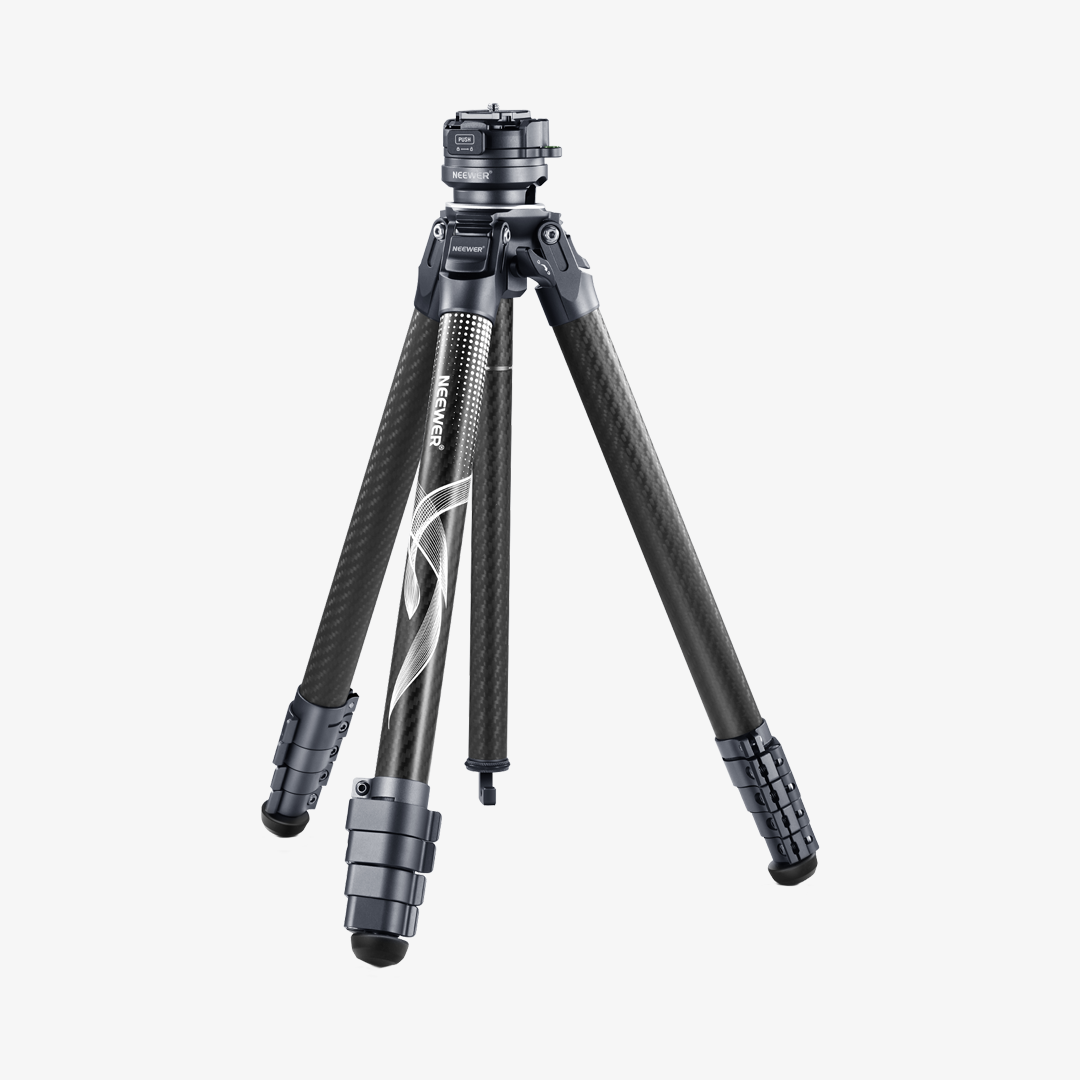
The NEEWER LiteTrip LT38 Carbon Fiber Tripod is designed for the minimalist. Its 10-layer carbon weave handles a 22lb load while weighing just 2.4lbs. It offers the high stiffness-to-weight ratio needed for sharp long exposures without the physical fatigue of a metal tripod.
Ideal Environment: Long hikes, international travel, and windy mountain peaks.
Target User: The minimalist traveler who counts every ounce.
-
The Cinema Grade Support:
For heavy video rigs, the NEEWER LL55 78" Carbon Fiber Video Tripod provides the vibration damping required for smooth 4K pans. It’s significantly easier to transport between locations than an equivalent aluminum video rig.
Ideal Environment: Outdoor film sets, wedding venues, and coastal landscapes.
Target User: Videographers need smooth motion in challenging conditions.
2. Rock-Solid Aluminum Stability
-
The Studio Workhorse:
The NEEWER 76" Heavy Duty Aluminum Video Tripod is the definitive choice for studio setups where raw mass is an asset. Aluminum construction provides a lower center of gravity and high inertia, offering rock-solid stability for heavy cameras.
Ideal Environment: Controlled studios, indoor interviews, and permanent setups.
Target User: Commercial photographers and YouTubers working with top-heavy rigs.
-
The Versatile All-Rounder:
For hobbyists, the NEEWER 79-inch Camera Tripod/Monopod offers incredible height and durability. it can handle being tossed in a car trunk or used in high-traffic event spaces where gear often gets bumped.
Ideal Environment: Family events, urban street photography, and sports.
Target User: Hobbyists looking for the best "bang for their buck."
Frequently Asked Questions about Professional Photography
Q1: Is a carbon fiber tripod always worth the extra cost?
A1:No. Carbon fiber is worth the extra cash mainly for photographers who hike long distances. It also makes sense for those who travel often or shoot long exposures in windy conditions. If you mostly work in studios indoor events or near your vehicle aluminum delivers similar stability at a much lower price. This makes it the better value choice for photographers who don’t need the weight savings of carbon fiber.
Q2: Is aluminum more durable than carbon fiber?
A2:Yes. Aluminum is generally more impact-tolerant because it bends under stress instead of cracking. A dented aluminum leg will often still work reliably. On the other hand, carbon fibercan fracture under sharp point impacts. Once it fractures it may require costly replacement. For high-impact or rough-handling environments, aluminum is typically the safer long-term option for American shooters.
Q3: Does carbon fiber reduce vibration better than aluminum?
A3:Yes. Carbon fiber naturally dampens vibration faster than aluminum. This difference is especially critical for long-exposure photography and high-resolution sensors. Faster vibration settling helps produce sharper images in windy or unstable conditions. This makes carbon fiber a key advantage for landscape and astrophotography enthusiasts.
Q4: Is aluminum good enough for professional photography?
A4:Yes. Aluminum tripods are widely used by professional photographers. They’re especially popular for studio work indoor events and video production. Aluminum offers strong load capacity, reliable stability and cost efficiency. Unless it is necessary to reduce weight or to have extreme environmental adaptability. It’s a practical choice for pros who prioritize value without sacrificing core functionality.
Final Verdict: Which Material Should You Choose?
The ultimate decision in carbon fiber vs aluminum tripods hinges on how far you’ll carry your tripod: Aluminum offers strong core performance at a significantly lower cost. This makes it ideal for studio work or car-based shoots where stability and value matter most. Carbon fiber shines for adventures, delivering absolute sharpness in tough conditions and tangible benefits for long-distance carries or challenging environments.
Words: 2004
Update Note: This guide is updated for February 2026.