

Table of Contents
Whether you're working on commercial productions, product videos, fashion shoots, or brand content creation, a high-quality OLED camera monitor is an essential choice if you need to evaluate colors more accurately, preview images with greater realism, or ensure that viewers in different locations see consistent footage.
What Is an OLED Camera Monitor?

An OLED camera monitor is an external display that uses Organic Light-Emitting Diode (OLED) technology to help photographers and videographers view and evaluate footage more accurately while shooting. Unlike standard LCD monitors that rely on a backlight, OLED monitors use self-emitting pixels, allowing each pixel to generate its own light and turn off completely when displaying black. It combines advanced display technology with camera monitoring tools to help creators make more informed shooting decisions and achieve better results in post-production.
Why Is an OLED Camera Monitor Important for Video Production?

OLED camera monitors are commonly used in professional video production, filmmaking, commercial shoots, and other color-critical workflows where image accuracy is essential, because they can provide a more realistic representation of the captured image, making it easier to assess exposure, focus, shadow detail, and overall image quality on set.
1. Evaluate Colors More Accurately
Compared with LCD monitors, an OLED camera monitor can display richer and more accurate colors. This helps videographers make better decisions when adjusting white balance, applying LUTs, or reviewing footage on set. More accurate color reproduction also reduces the risk of discovering color issues later during editing and color grading.
2. Judge Exposure with Greater Confidence
The exceptional contrast ratio of OLED displays makes it easier to distinguish between highlights, midtones, and shadows. As a result, filmmakers can evaluate exposure more accurately and identify potential issues such as clipped highlights or underexposed areas before recording is complete.
3. See Shadow Details More Clearly
Because OLED panels can produce true blacks, they reveal subtle details in dark areas of an image that may be difficult to see on other display types. This is especially useful when filming low-light scenes, interviews, night shots, or cinematic content where shadow detail plays an important role in the final look.
4. Improve Focus Accuracy During Shooting
A high-quality OLED display provides a clear and detailed view of the image, making it easier to confirm critical focus. This is particularly valuable when shooting with wide apertures, capturing close-up subjects, or working with manual-focus lenses where even slight focus errors can be noticeable.
5. Get a More Realistic Preview of the Final Image
An OLED camera monitor can provide a closer representation of how the finished footage will appear after editing and color grading. Its combination of accurate colors, deep blacks, and strong contrast helps creators assess the overall visual impact of a scene while still on set, reducing surprises during post-production.
6. View Images Consistently from Different Angles
Video productions often involve multiple crew members reviewing footage at the same time. OLED technology offers wide viewing angles, allowing directors, camera operators, and clients to see consistent colors and contrast even when viewing the monitor from different positions.
When Should You Use an OLED Camera Monitor?
- Commercial and Product Video Production: OLED camera monitors are ideal for commercial shoots where accurate color reproduction is essential. They help ensure that product colors, branding elements, and lighting appear as intended before footage reaches post-production.
- Cinematic Filmmaking: When creating narrative films, short movies, or cinematic content, OLED monitors make it easier to evaluate contrast, mood, and shadow detail. Their ability to display true blacks can help filmmakers achieve a more precise visual style on set.
- Low-Light and Night Shoots: OLED technology excels in dark scenes because individual pixels can turn off completely. This allows videographers to see subtle details in shadows and better assess exposure when filming at night or in dimly lit environments.
- Studio Productions: In controlled lighting environments, image accuracy is often more important than maximum screen brightness. OLED monitors provide reliable color and contrast performance, making them well suited for studio interviews, product demonstrations, and educational videos.
- Commercial Photography and Tethered Shooting: Photographers who need to review images during a shoot can benefit from OLED's accurate color reproduction and high contrast. This helps confirm lighting, composition, and image quality before moving on to the next setup.
- Music Videos and Creative Projects: Productions that rely heavily on dramatic lighting, colorful scenes, or stylized visuals can benefit from OLED's vibrant colors and strong contrast, making it easier to preview the intended creative look during filming.
- Color-Critical Productions: Projects destined for professional color grading, advertising campaigns, or high-end digital content often require the most accurate image monitoring possible. OLED monitors provide a closer representation of the final image, helping creators make more informed decisions on set.
Key Features to Look for in an OLED Camera Monitor
|
Feature |
What to Look For |
|
Screen Size |
5"–7" for most video production workflows |
|
Resolution |
Full HD or higher for sharper image evaluation |
|
Color Accuracy |
Wide color gamut and factory calibration |
|
Brightness |
Higher brightness for outdoor shooting |
|
Connectivity |
HDMI and/or SDI support |
|
Monitoring Tools |
Focus peaking, zebras, false color, waveform, LUTs |
|
Power Options |
NP-F, V-mount, or DC power support |
|
Build Quality |
Durable construction for field production |
While all of these specifications matter, color accuracy, monitoring tools, and connectivity are often the most important factors for professional video production.
Best OLED Camera Monitor in 2026: NEEWER F700U

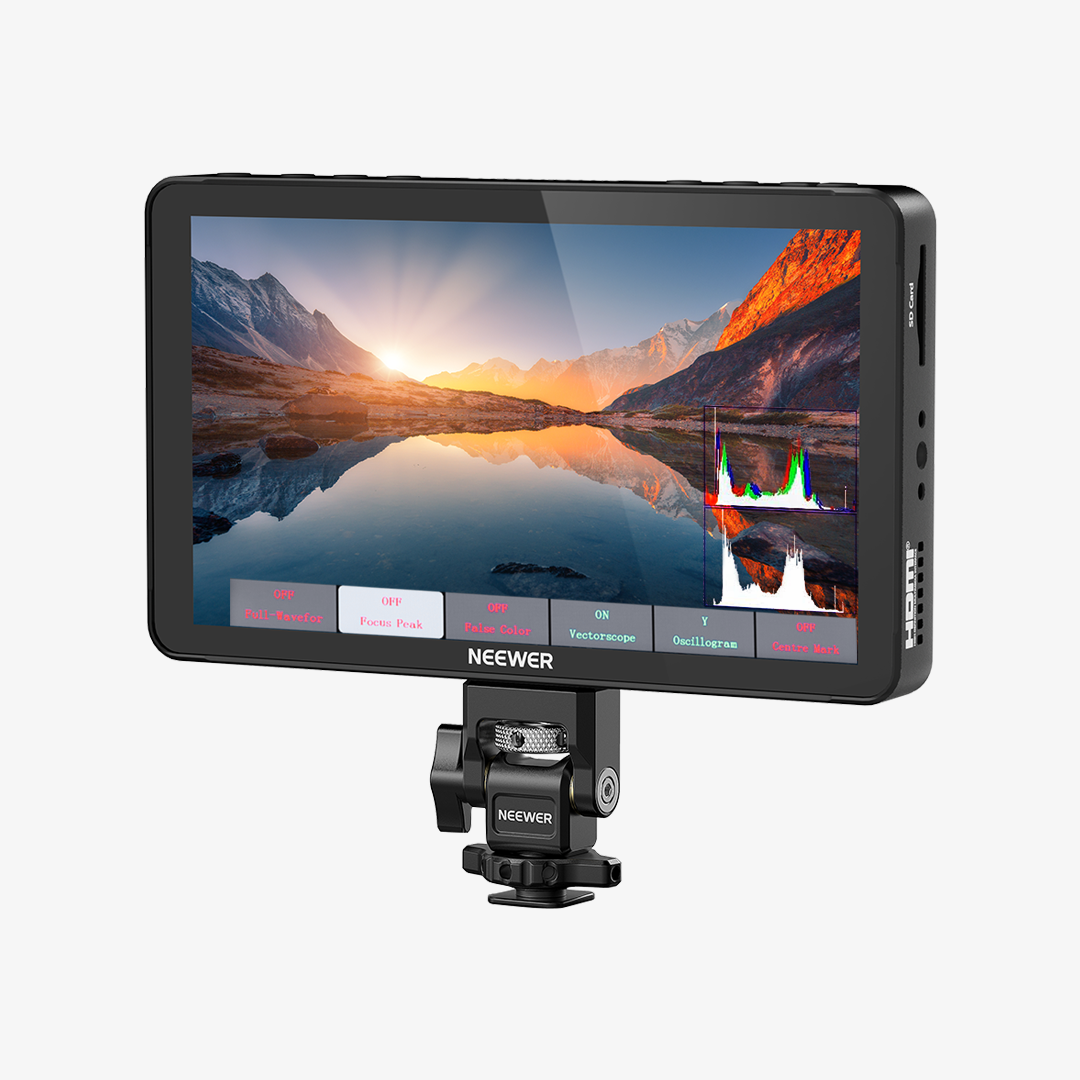
If you're looking to invest in an OLED camera monitor suitable for outdoor shooting, the NEEWER F700U is the perfect choice. With a brightness of 1,200 nits and a contrast ratio of 100,000:1, it allows you to clearly see both highlights and shadows in your footage, even when shooting in direct sunlight. Plus, it supports both HDMI and SDI input and output, making it ideal for professional film crews and small teams.
The Breakdown
- Display & Brightness: 7-inch OLED touchscreen with 1920×1080 resolution, 1200 nits brightness, and a 100,000:1 contrast ratio delivers deep blacks and punchy highlights. The 160° viewing angle stays color-accurate off‑axis, and both manual and auto backlight adjustments keep the image visible in harsh sunlight or dim interiors — no hood required for basic focus pulls.
- 4K HDMI & SDI Connectivity: Supports smooth 4K HDMI video signal transmission with loop-out capability, while the dedicated SDI input and output handle lossless 1080p feeds for professional workflows. A 3.5mm headphone jack provides real‑time audio monitoring directly from the monitor.
- Monitoring Tools: Built‑in assist tools cover peaking, false color, zebra, histogram, waveform, vectorscope, HDR preview, monochrome, and audio level meters — everything you need to nail exposure, focus, and framing on set. Fifteen 3D LUTs come pre‑loaded, and up to 60 custom LUTs can be imported via SD card.
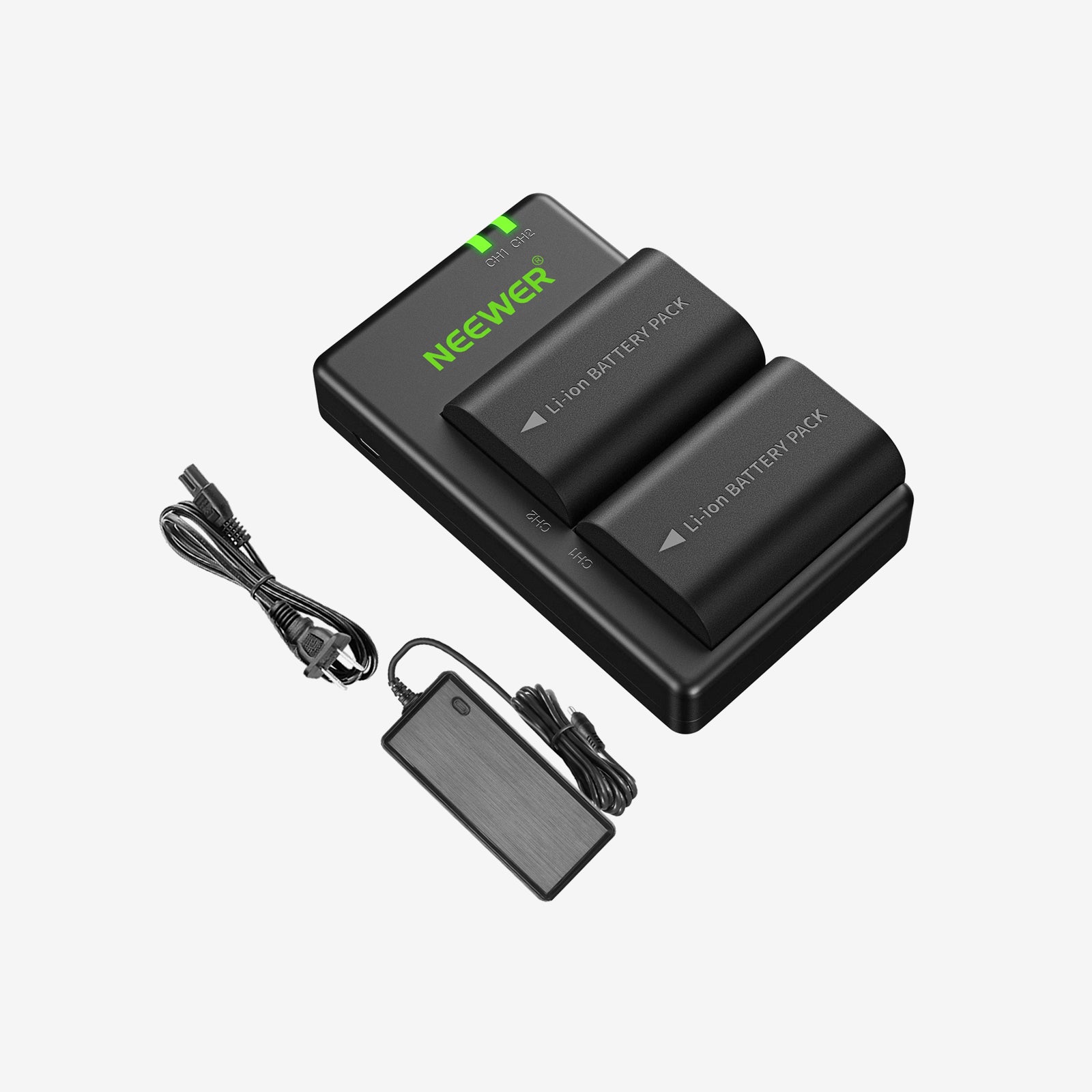
- Power Options: Runs on NP‑F series batteries, a DC 12V adapter, or USB‑C (supports 5V/3A fast charging). Two NP‑F750 4400mAh batteries are included, providing hours of runtime.
Key Parameters & Configuration
|
Key Parameter |
Detail |
|
Model |
|
|
Display |
OLED |
|
Resolution |
1920 × 1080 |
|
Brightness |
1200 nits (±10%) |
|
Contrast Ratio |
100,000:1 |
|
Color Depth |
10-bit |
|
Viewing Angle |
>160° (H/V) |
|
Input |
HDMI, SDI |
|
Output |
HDMI, SDI, 3.5mm headphone |
|
USB-C Input |
5V/3A or higher (fast charging / PD) |
|
DC Input |
7–24V (5.5mm barrel) |
|
DC Output |
8.4V (2.5mm barrel) |
|
Power Consumption |
10W (without DC output) |
|
Dimensions |
7.1 × 4.2 × 1.1" (180 × 107 × 29mm) |