



Table of Contents
Selecting the right floor lamp can transform a room's atmosphere and functionality, but the sheer variety often leads to confusion. This guide cuts through the clutter, providing clear, actionable steps to find a floor light that perfectly suits your space, style, and lighting needs.
What Is a Floor Lamp?
A floor lamp is a freestanding lighting fixture that can be placed directly on the floor without needing a table or any other surface to support it. It typically consists of three main components: a base, a lamp pole, and light sources. The long lamp pole raises the light source to a height suitable for illuminating the space.
Floor lamps are easy to move and can be placed in corners or next to furniture, providing lighting without taking up too much space.
Types of Floor Lamps Explained

1. LED Floor Lamps
LED floor lamps focus on energy efficiency and modern design. Many include dimming, color temperature adjustment, or remote control features. They’re great for daily use in living rooms or home offices where the lamp stays on for hours. LED lamps stay cool, use less power, and offer long-term reliability.
2. Arc Floor Lamps
Arc floor lamps feature a high, curving arm that extends over seating areas, with the shade hanging down. Classic mid-century modern look. Ideal over a sofa, reading chair, or dining nook. It delivers focused light right where you need it without needing a table nearby. Makes a strong style statement.
3. Torchiere Floor Lamps
Torchiere lamps direct light upward toward the ceiling, creating indirect ambient lighting. They brighten an entire room without harsh glare, which makes them comfortable for evening use. This type works well in living rooms, apartments, or bedrooms where overhead lighting feels too strong. You get a calm, evenly lit space that’s easy on the eyes.
4. Tree Floor Lamp (Multi-Light)
A vertical pole with several adjustable heads branching out. Fantastic for lighting a whole seating area or a dark corner. You can aim each head separately — one at a chair, one at a painting, one at the ceiling. Super functional for flexible lighting.
5. Tripod Floor Lamps
Tripod floor lamps use three legs for balance and a centered shade. They fit naturally in corners, next to accent chairs, or beside a sofa. These lamps feel stable and intentional, making them popular in living rooms and bedrooms. They provide soft ambient light and work well when you want the lamp to be seen as part of the decoration, not just a light source.
6. Shelf Floor Lamps
Shelf floor lamps combine lighting with built-in shelves. They work well in small apartments, dorm rooms, or corners where storage is limited. You can display books, plants, or decorations while the lamp adds warm light. This type is practical when you want one piece to serve multiple purposes without cluttering the room.
7. Task Floor Lamps
Task floor lamps focus light downward in a controlled beam. They are built for reading, knitting, desk work, or close-up tasks. You’ll often see them placed next to a recliner or reading chair. The adjustable head lets you aim the light exactly where you need it, keeping the rest of the room softly lit.
How to Choose the Right Floor Lamp

1. Determine the Purpose of Your Lamp
Decide whether the lamp will provide ambient light, task light, or accent lighting. Knowing the purpose helps you pick the right style, height, and brightness without guessing. Your primary need will immediately rule out several styles.
- For reading, a task lamp with a focused beam works best.
- For general room illumination, consider a torchiere or LED floor lamp.
- Accent lamps highlight décor or create mood lighting.
2. Choose the Right Style for Your Space
Floor lamps should complement your existing decor, not fight it. A sleek, black arc lamp might suit a minimalist loft, while a wooden tripod lamp could warm up a bohemian living area. Consider the finishes—brass, matte black, nickel—and how they interact with other metals and textures in the room.
3. Think About Placement and Space
Measure your floor space before buying. Some lamps require more clearance for arc arms or tripod legs. Corner spots, behind sofas, or next to desks are popular, but ensure the lamp won’t block foot traffic or furniture. Placement affects both function and aesthetic appeal.
4. Consider the Size and Height
A floor lamp should complement the furniture around it. Arc lamps work well over sofas, while smaller tripod or shelf lamps fit corners or narrow spaces. Make sure the lamp’s height aligns with your eye level when seated or standing. Being too tall or too short disrupts both light distribution and visual balance in the room.
5. Check the Lighting Options
Look for adjustable brightness or dimming features. LED lamps often allow color temperature changes, which is great for reading in warm light or working under cool daylight tones. Swing-arm and task lamps let you direct light exactly where you need it, giving maximum control over comfort and glare.
6. Evaluate Quality and Build
Assess the materials. A weighted metal base provides stability. Check joints and adjustment points for smooth, secure movement. The switch should feel solid, not flimsy. For plugged-in models, a robust cord is a sign of quality. These details directly impact safety and longevity.
Best Floor Lamp for Beginners: NEEWER NF01

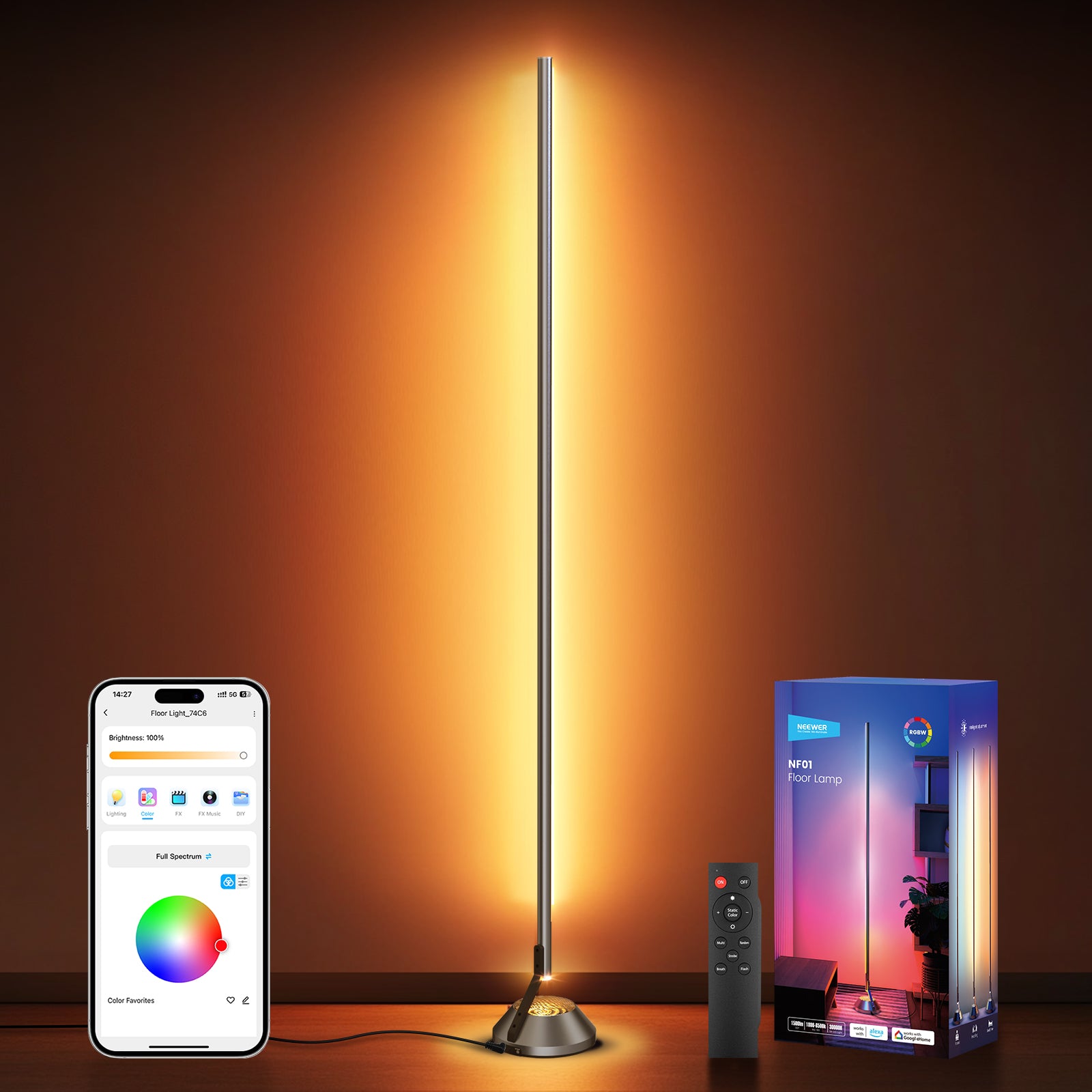
If you're looking for a minimalist and practical smart LED floor lamp for beginners, the NEEWER NF01 is an excellent choice. Equipped with an intelligent AI lighting engine and compatible with Google Assistant and Alexa, it supports smart voice control. With simple voice commands, you can effortlessly turn the light on/off, switch colors, and more. You can create personalized lighting effects or use dynamic scenes and music sync mode to set the perfect ambiance.

The NEEWER NF01 RGBW Floor Lamp delivers up to 1500 lumens of brightness with an 180° wide-angle beam, effortlessly illuminating your living room, bedroom, or game room. It allows you to adjust brightness and color temperature to suit your needs, providing optimal eye protection for reading, working, or sleeping. Plus, this LED floor lamp is incredibly easy to install.
Pros:
- Smart RGBW Floor Lamp with AI Lighting Creation
- Eye Friendly with 1500lm High Brightness
- Dynamic Scenes & Music Sync
FAQs about Floor Lamps

1. Can floor lamps be used effectively for task lighting in a home office?
Yes, floor lamps can be used effectively for task lighting in a home office. The key is to choose a model specifically designed for task work—one with a fully adjustable arm and head that can be precisely positioned to illuminate your work surface without casting a shadow or creating glare on a computer screen. Look for high output (1000+ lumens) and a cooler color temperature (4000K-5000K) to promote alertness.
2. How Tall Should a Floor Lamp Be?
As a primary rule, a floor lamp should generally be tall enough to place the light source above eye level when seated. This typically translates to a total lamp height between 58 and 65 inches.
For reading or task lighting, the shade or bulb should hover slightly above your head while sitting in a chair or at a desk, preventing glare in your eyes. Arc or swing-arm lamps can extend even further over sofas or tables, while shorter tripod or shelf lamps work better for corners or side tables. Always measure your furniture and seating positions to make sure the lamp height provides comfortable, evenly distributed light without overpowering the room.
3. How Many Lumens for a Floor Lamp?
Your required lumens depend entirely on the lamp's purpose.
- For a floor lamp serving as a primary reading light, 800 to 1100 lumens is a good target.
- For general ambient fill light in a living room, 700 to 1200 lumens is often sufficient.
- If it's purely for mood lighting, 200 to 500 lumens may be all you need.
Remember, a dimmable fixture gives you control across a wide range.