

Table of Contents
An off camera flash earns its place in a creator's bag when it solves two problems at once: it gives you more control than a camera-mounted speedlight, but it does not force you to carry a full studio strobe kit. The NEEWER Q120 120Ws 2.4G TTL Outdoor Studio Flash sits in that useful middle ground.
Quick answer: the Q120 is a compact 120Ws off camera flash for creators who shoot portraits, products, weddings, and outdoor content where a normal speedlight can feel underpowered, but a larger monolight is more gear than the job needs.
Its real value is not one single spec. It is the combination of 120Ws output, TTL/manual control, HSS support, a rechargeable battery, compact carry size, and a trigger ecosystem that can fit into mixed lighting setups.
Quick Takeaways
| Buyer question | Q120 answer |
|---|---|
| Best use | Outdoor portraits, creator shoots, small commercial setups, wedding details, portable location lighting |
| Flash output | 120Ws |
| Color temperature | 5600K ±100K |
| Sync support | HSS up to 1/8000s with QZ/QPro trigger |
| Power control | 1/256 to 1/1 |
| Battery | 7.2V/3000mAh lithium battery |
| Full-power flashes | 410-420 |
| Recycle time | 0.01-1.5s |
| Weight | 1.5lb / 671g including battery |
| Main tradeoff | It is still a compact strobe, not a replacement for higher-output studio lights |
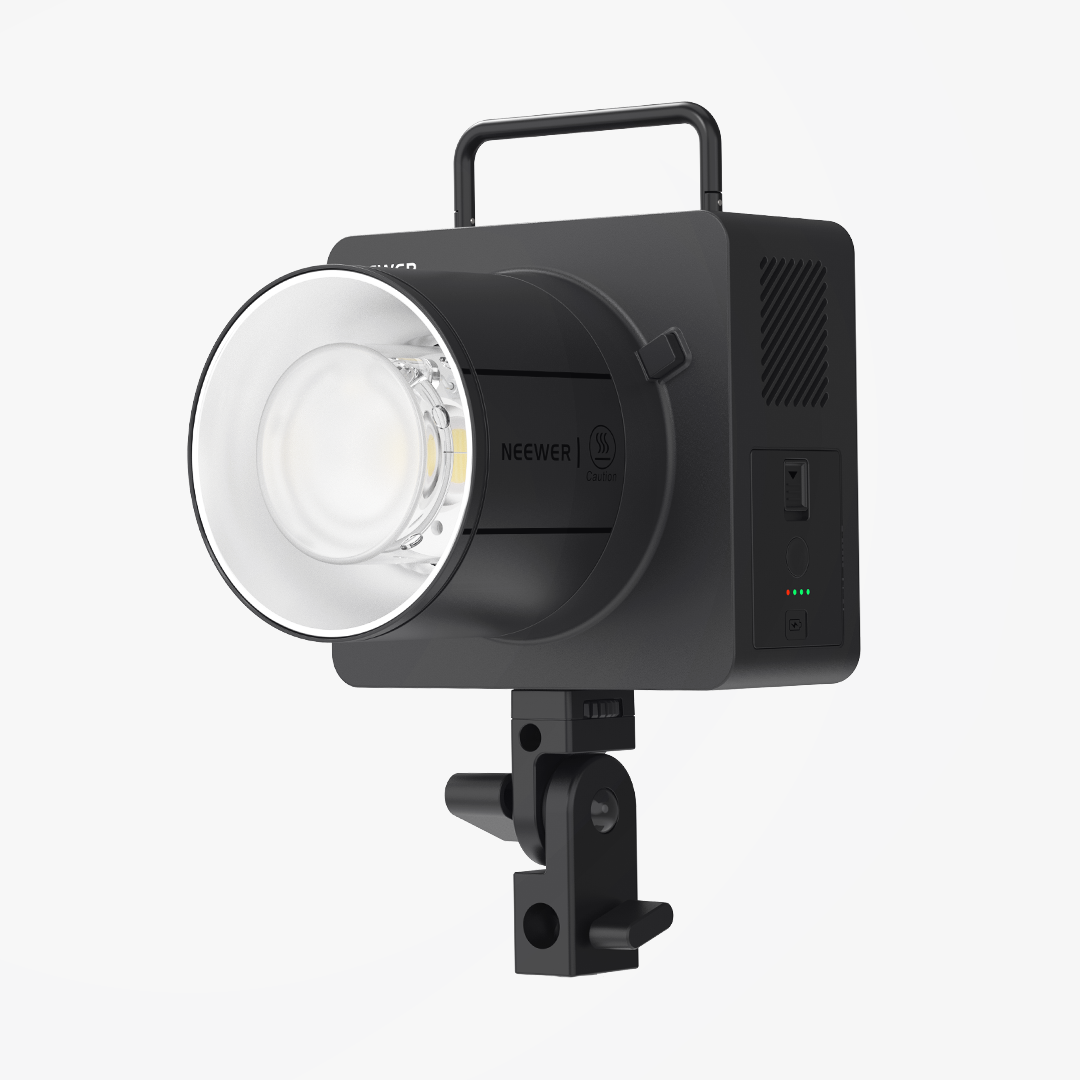
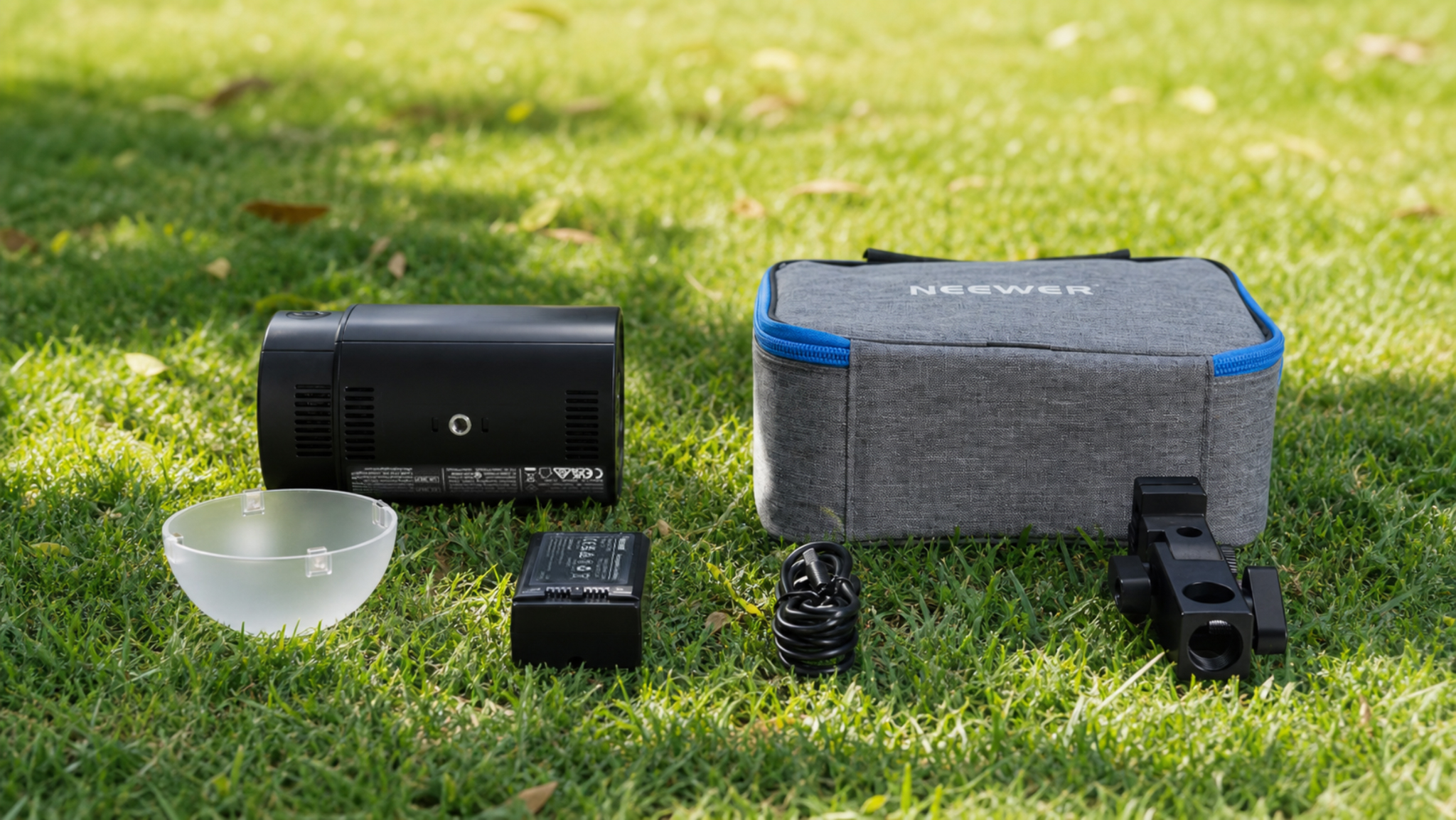
Before the technical details, it helps to see the kit as a working setup rather than just a flash head. The Q120 includes the flash, battery, metal handle, charging cable, diffuser, and carrying bag.
What Makes a Good Off Camera Flash for Outdoor Work?
A good off camera flash should do more than fire brighter light. It should let you place the light where it shapes the subject, keep exposure consistent, and stay portable enough that you actually bring it to the shoot.
That is where a compact strobe becomes useful. A speedlight is easy to pack, but it can struggle when you need more output, faster recycle, or a modifier-friendly light source. A larger studio strobe gives you more power, but it can slow down smaller shoots. The Q120 is built for the gap between those two categories.
| Option | Strength | Limitation |
|---|---|---|
| On-camera speedlight | Small, fast to mount, good for events | Less ideal for shaping directional light outdoors |
| Compact off camera flash like Q120 | More power and better placement control while staying portable | Requires trigger setup and light placement |
| Larger battery strobe | More output for bigger modifiers or harsh sun | More weight, bulk, and setup time |
For many creators, that middle option is the practical one. You get enough light to build a portrait, separate a subject from the background, or add polish to a product setup without turning every shoot into a full production.
Why 120Ws Is the Sweet Spot
The Q120's 120Ws output is the main reason it feels different from a regular camera flash. It gives you more headroom for outdoor portraits, backlit scenes, and small modifiers, while keeping the unit small enough for one-person work.
The body measures 3.2 x 3.2 x 5.6 in / 81 x 81 x 143mm and weighs 1.5lb / 671g with the battery. That matters. A light that is powerful but annoying to carry often stays at home. A light that is compact but too weak can become frustrating once you step outside. The Q120 is designed to stay useful in real location work.
This does not mean 120Ws is magic. If you are overpowering harsh midday sun with a large modifier from several feet away, you may want more output. But for half-body portraits, close product setups, creator shoots, and controlled outdoor scenes, 120Ws is a sensible balance.
HSS, TTL, and Manual Control Are Workflow Features
High-speed sync is one of the key reasons to use an outdoor flash instead of relying only on natural light. The Q120 supports HSS up to 1/8000s when used with a QZ or QPro trigger. That lets you work with wider apertures or faster shutter speeds while still adding controlled flash.
The Q120 also supports TTL, manual, and MULTI modes. TTL is useful when the subject or distance changes quickly. Manual mode is better when you want repeatable results from frame to frame. The power range from 1/256 to 1/1 gives enough control for both subtle fill and stronger key light setups.
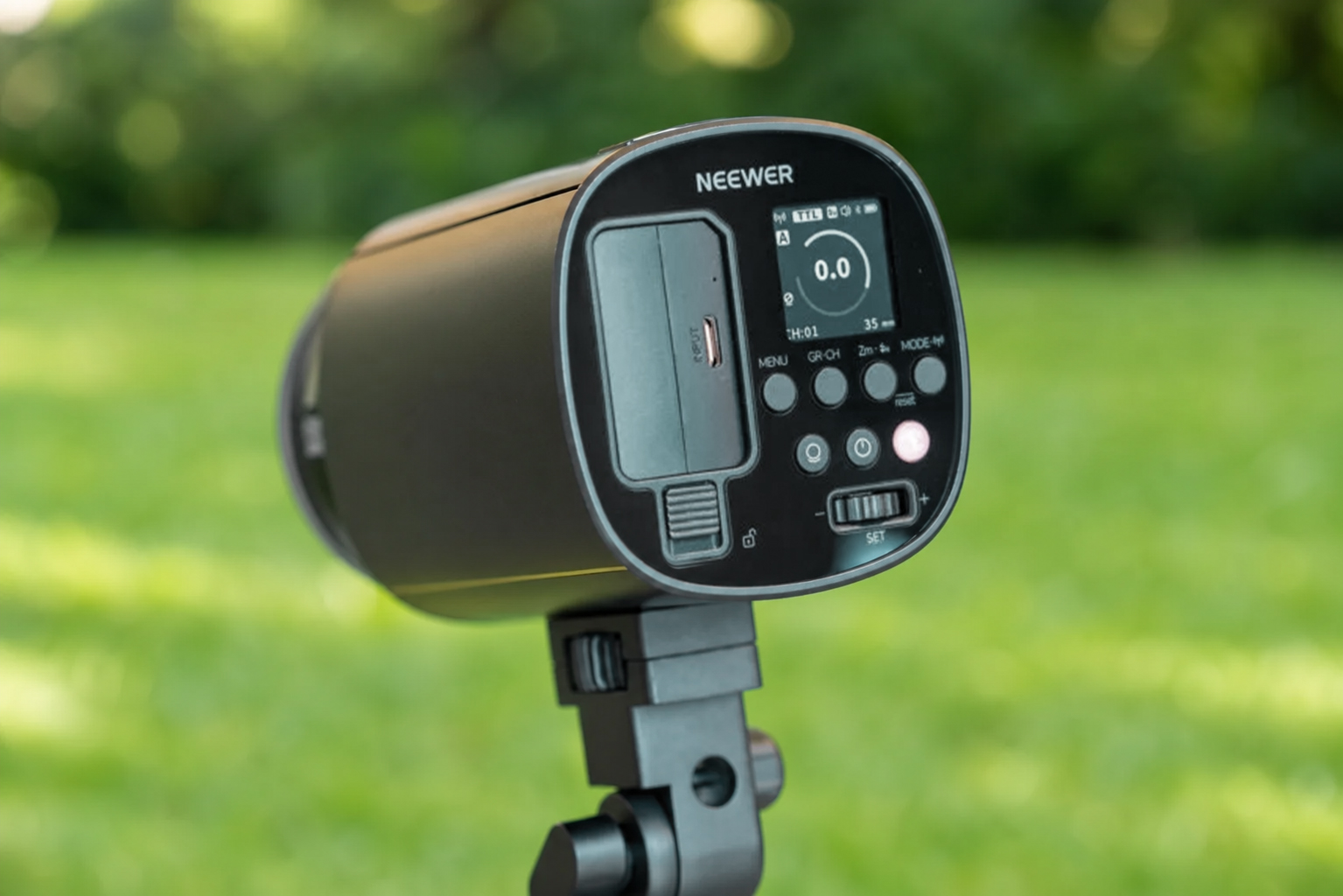
The practical point is simple: HSS, TTL, and manual power are not checklist features. They decide how quickly you can move, how much control you keep, and how repeatable your lighting becomes.
The Compatibility Detail Buyers Should Check
Trigger compatibility is where many flash purchases become confusing, so it is worth checking before buying any off camera flash.
The Q120 works with NEEWER QZ/QPro triggers and Q system speedlights. It also supports compatibility with the Godox 2.4G X system through the RX COMPAT menu, or as a slave using XPro, X3, or X2 transmitters. The important limitation is that Q and X systems cannot be used at the same time, and the latest firmware is required for compatibility.
That makes the Q120 especially interesting for creators who are building a NEEWER lighting kit or who already have mixed flash gear. It can be easier to add one compact strobe when it does not force an immediate full-system switch.
Battery Life and Carry Size Matter More Than They Sound
The Q120 uses a 7.2V/3000mAh lithium battery rated for 410-420 full-power flashes. Its recycle time is listed at 0.01-1.5 seconds, depending on power level. For outdoor portrait work, event details, and short commercial shoots, that combination is more meaningful than a headline watt-second number alone.
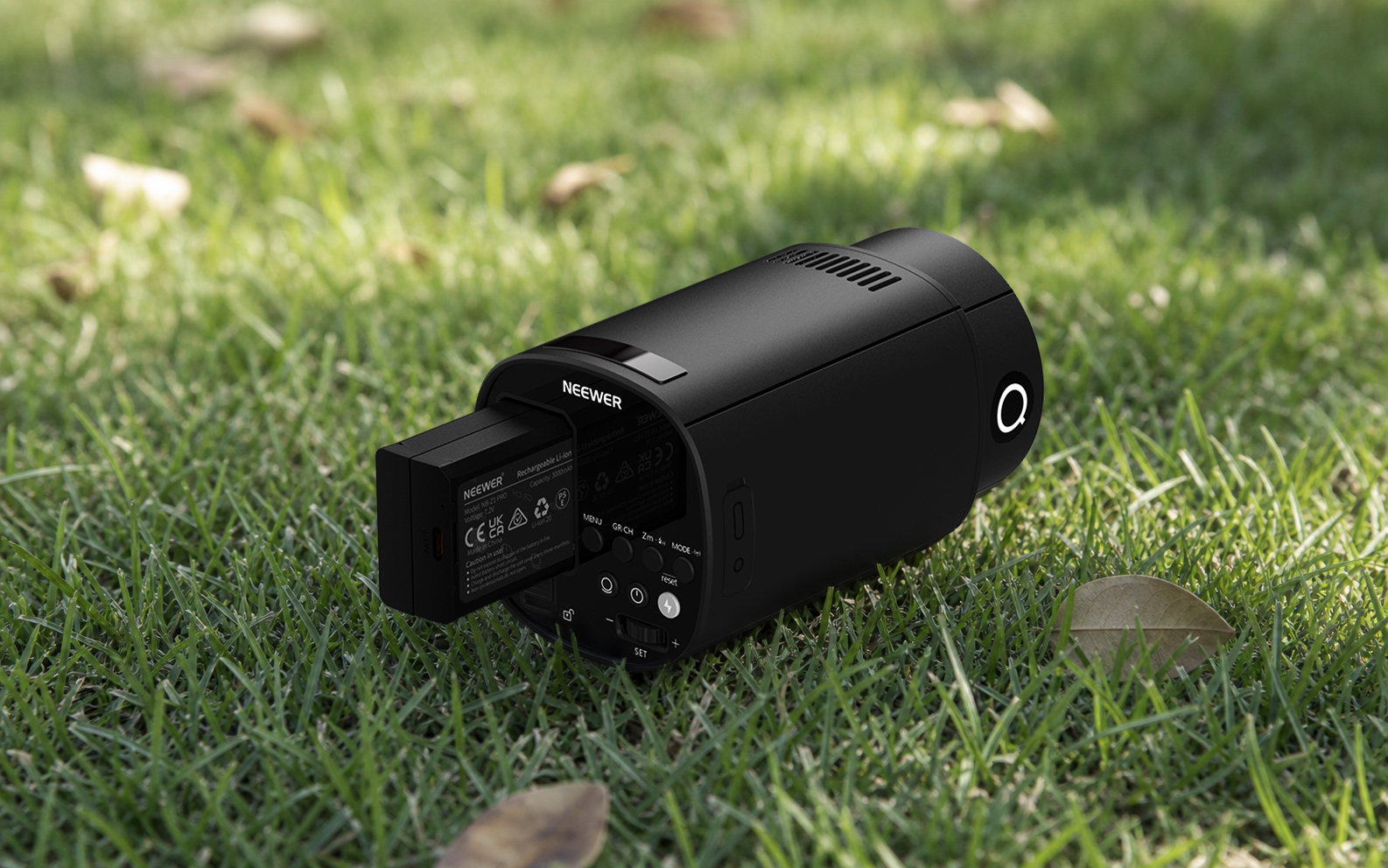
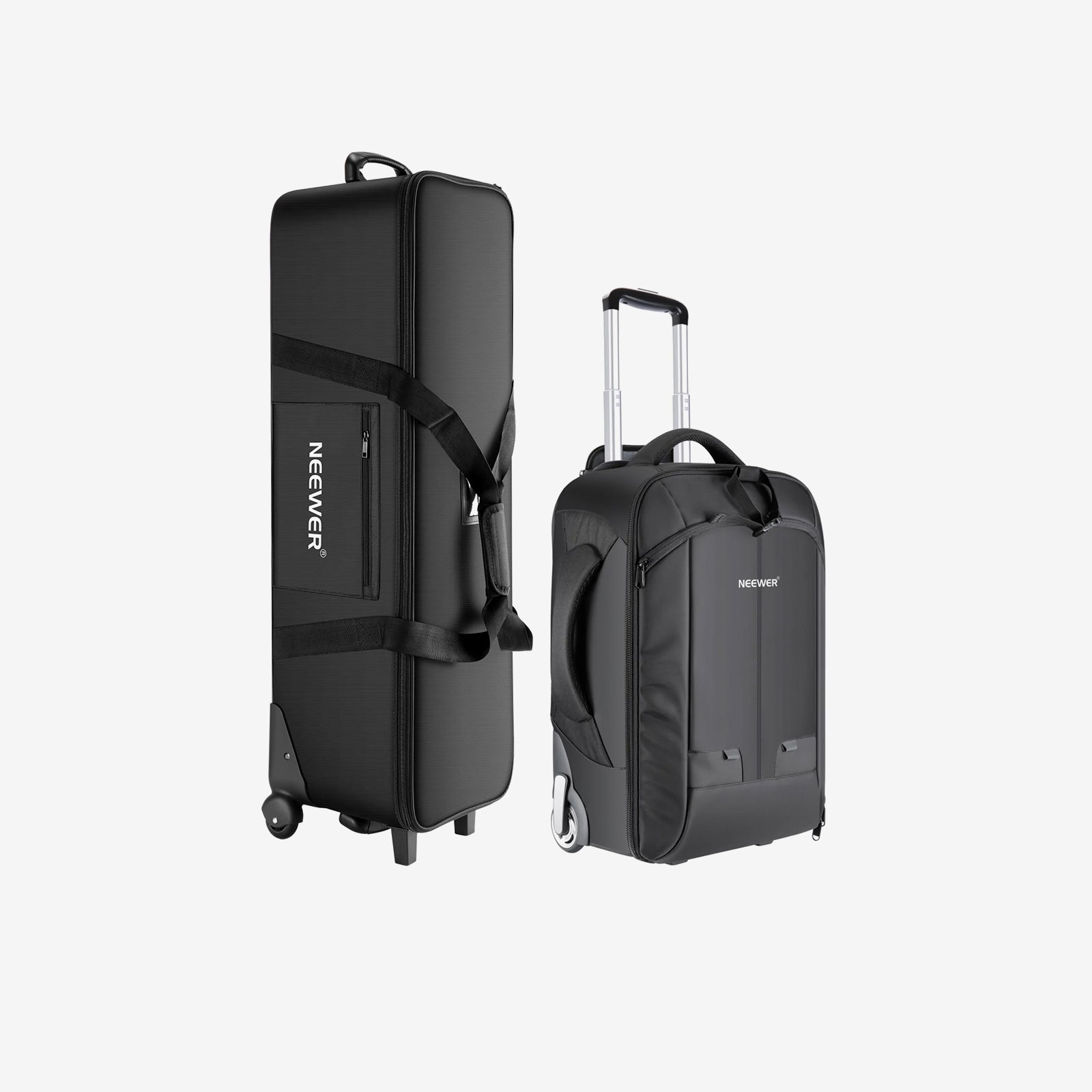
A portable strobe is only portable if the rest of the kit stays manageable. The included carrying bag, diffuser, battery, charging cable, and metal handle make the Q120 easier to treat as a small lighting kit rather than a loose flash head that still needs several missing parts.
Who Should Choose the Q120?
Choose the Q120 if you want a portable strobe flash for outdoor portraits, creator content, product details, wedding work, or small commercial setups. It makes the most sense if you care about compact size but still want more control than a standard camera flash.
It is also a strong fit if you already use NEEWER Q system gear, plan to use QZ/QPro triggers, or need a small light that can fit into a mixed flash workflow after checking firmware and compatibility.
Who May Not Need It?
You may not need the Q120 if you mostly want simple on-camera bounce flash for events. A traditional speedlight may be faster for that job.
You may also want a higher-output strobe if you regularly use large modifiers, shoot full-length portraits in very bright sun, or need maximum power from longer distances. The Q120 is compact by design, and that compactness is part of both its strength and its limit.
Common Buying Mistake: Choosing Only by Watt-Seconds
Watt-seconds matter, but they do not tell the whole story. For an off camera flash, the better question is how the light fits your actual workflow.
Ask these before buying:
| Check | Why it matters |
|---|---|
| Will you use it off-camera most of the time? | The Q120 is designed around placed lighting, not camera-top bounce |
| Do you need HSS? | HSS requires a compatible QZ/QPro trigger |
| Are your triggers compatible? | Mixed systems require careful setup and current firmware |
| How portable does the kit need to be? | The Q120's small body and bag are part of its appeal |
| Do you need more than 120Ws? | Larger outdoor setups may need a stronger strobe |
The best off camera flash is not always the most powerful one. It is the one that gives enough output, enough control, and few enough setup problems that you keep using it.
Key Q120 Specifications
| Specification | NEEWER Q120 |
|---|---|
| Model | Q120 |
| Flash output | 120Ws |
| Color temperature | 5600K ±100K |
| Flash modes | M/MULTI with wireless off; TTL/M/MULTI in 2.4G wireless mode |
| Power range | 1/256 to 1/1 |
| Flash duration | 1/220s to 1/23020s |
| HSS | Up to 1/8000s with QZ/QPro trigger |
| Wireless range | 328ft / 100m |
| Groups | A, B, C, D, E |
| Channels | 01-32 |
| IDs | 01-99 |
| Battery | 7.2V/3000mAh lithium battery |
| Full-power flashes | 410-420 |
| Recycle time | 0.01-1.5s |
| Dimensions | 3.2 x 3.2 x 5.6 in / 81 x 81 x 143mm |
| Weight | 1.5lb / 671g including battery |
| Package contents | Q120 flash, metal handle, lithium battery, charging cable, diffuser, carrying bag |
FAQ
Is the Q120 an on-camera flash?
No. The Q120 is best understood as a compact off camera flash. It is designed for placed lighting on a stand or handle, not as a traditional camera-top bounce flash.
Is 120Ws enough for outdoor portraits?
For many outdoor portrait and creator setups, yes. It is especially useful for close to moderate working distances, subject separation, and controlled fill. For large modifiers in harsh midday sun, a higher-output strobe may be more appropriate.
Does the Q120 support high-speed sync?
Yes. The Q120 supports HSS up to 1/8000s when used with a compatible QZ or QPro trigger. The trigger is not included, so buyers should plan that into the setup.
Can the Q120 work with Godox triggers?
The Q120 can work with the Godox 2.4G X system through the RX COMPAT menu or as a slave using XPro, X3, or X2 transmitters. Q and X systems cannot be used at the same time, and the latest firmware is required.
How many full-power flashes does the battery provide?
The official specification lists 410-420 full-power flashes from the 7.2V/3000mAh lithium battery.
What comes in the Q120 box?
The package includes the Q120 outdoor strobe flash, metal handle, lithium battery, charging cable, diffuser, and carrying bag.
Final Takeaway
The NEEWER Q120 is not trying to be the biggest flash in the bag. Its strength is more practical: it gives creators a compact 120Ws off camera flash with useful control, HSS support, solid battery life, and a kit that is easy to carry.
For photographers and video-first creators who want better outdoor lighting without stepping into a bulky strobe setup, the Q120 is a smart place to start. You can view the current product details on the NEEWER Q120 product page or browse more NEEWER strobe flashes.
Product details in this article are based on official NEEWER specifications, official product images, and supplied source material. This article does not claim independent lab testing.