

Table of Contents
A variable ND (VND) filter lets you adjust the amount of light entering your camera lens by rotating the filter, so you can control exposure without swapping between different filters.
VND filters are especially useful for outdoor photography and video. They can help you use wider apertures in bright light, slow down shutter speeds, or maintain consistent camera settings while lighting conditions change.
But different VND filters are designed for different needs. Some prioritize precise adjustment, while others offer a wider density range or combine ND and CPL functions. Below, we compare four NEEWER variable ND filters to help you choose the right one.
Comparison Table of the Best Variable ND Filters
|
Product |
ND Range |
Light Reduction |
Main Feature |
Best For |
|
NEEWER ND2-32 Variable ND Filter |
ND2–ND32 |
1–5 stops |
Hard Stops, True Colors |
Precise exposure control |
|
NEEWER ND8-ND128 Variable ND Filter |
ND8–ND128 |
3–7 stops |
Reduced black “X” cross |
Wide-angle & telephoto shooting |
|
NEEWER ND3-ND1000 Variable ND Filter |
ND3–ND1000 |
1.5–10 stops |
Wide exposure range |
Bright conditions & strong light control |
|
NEEWER Variable ND2-32 & CPL Filter Set |
ND2–ND32 / ND64–ND512* |
1–5 / 6–9 stops* |
VND + CPL |
Outdoor photography & video |
* The extended range is achieved by stacking the included magnetic ND32 filter. The magnetic ND32 is not designed to be used independently.
1. Best for Precise Control: NEEWER ND2-32 Variable ND Filter

The NEEWER ND2-32 True Colors Hard Stop VND is a good choice if you want simple and repeatable exposure adjustment.
Its hard-stop design provides five defined settings—ND2, ND4, ND8, ND16, and ND32—with tactile feedback and a click at each position. The 1–5 stop range is suitable for everyday photography and video, while True Colors technology helps minimize unwanted color shifts.
· Hard Stops: Five defined ND settings for repeatable adjustment.
· 1–5 Stops: Suitable for everyday photography and video.
· True Colors: Helps maintain natural-looking colors.
· 30-Layer NANO Coating: Helps reduce reflections and resist water, dust, oil, and scratches.
· Slim Aluminum Frame: Helps keep the filter compact while providing a secure grip.
2. Best for Outdoor Shooting: NEEWER ND8-ND128 Variable ND Filter

The NEEWER HD Variable ND Filter ND8-ND128 provides 3–7 stops of adjustable light reduction for brighter shooting conditions.
Its approximately 70° rotation range is designed to help reduce the black “X” cross that can occur with variable ND filters at extreme settings. Combined with Japanese AGC 4-element HD optical glass and 30 layers of Nano coating, it is well suited to both wide-angle and telephoto shooting.
· 3–7 Stops: More light reduction for brighter outdoor conditions.
· Reduced Black “X” Cross: Approximately 70° rotation range helps minimize uneven darkening.
· AGC HD Optical Glass: Designed for clarity and accurate color reproduction.
· 30-Layer Nano Coating: Helps reduce reflections and ghosting.
· Slim Frame: Helps reduce the risk of vignetting with wide-angle lenses.
3. Best for Wide Exposure Range: NEEWER ND3-ND1000 Variable ND Filter

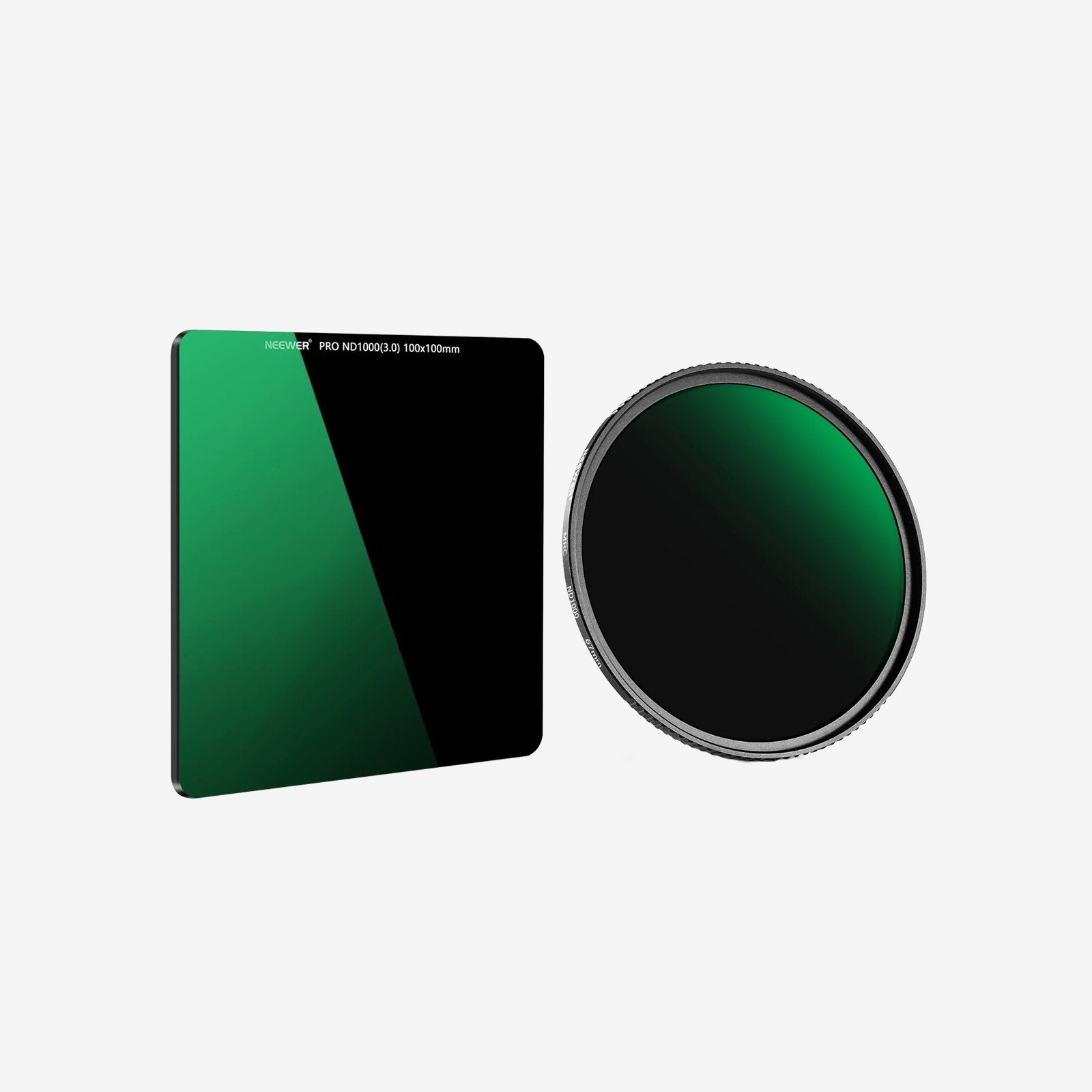
When you need a much wider range of light control, the NEEWER ND3-ND1000 Variable ND Filter offers 1.5–10 stops of adjustable light reduction.
This makes it useful for bright sunlight, wider apertures, and situations where you need to significantly slow down your shutter speed. Clearly marked F-stop settings also make it easier to adjust and repeat different density levels.
· 1.5–10 Stops: Covers a wide range of lighting conditions.
· ND3–ND1000: Provides strong light reduction for bright environments.
· Marked F-Stop Range: Makes density adjustments easier to identify.
· HD Optical Glass: Helps maintain image clarity while reducing glare and reflections.
· Multi-Coated Construction: Adds resistance to water, dust, oil, and scratches.
Note: At very high density settings, particularly around ND256, an X-shaped pattern or vignetting may occur depending on the lens and focal length. For dedicated long-exposure shooting, a fixed ND1000 or ND2000 filter may be more suitable.
4. Best for VND + CPL: NEEWER Variable ND2-32 & CPL Filter Set

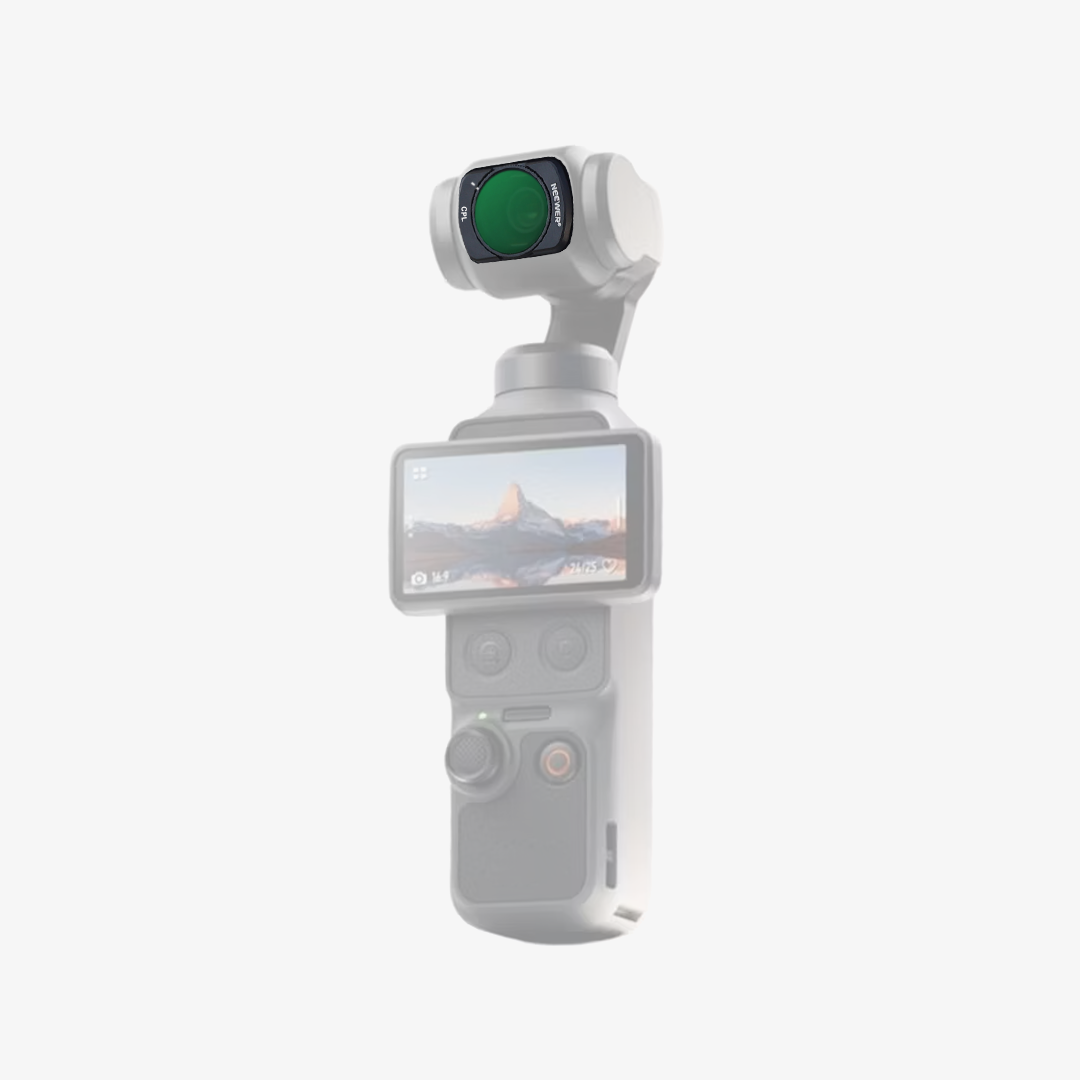
If you want both exposure control and polarization, the NEEWER True Colors VND2-32 & CPL Filter Set combines a variable ND and CPL in one setup.
The VND provides 1–5 stops of adjustment, while the included magnetic ND32 can be stacked to extend the setup to 6–9 stops. The CPL function helps reduce glare and reflections from surfaces such as water and glass.
· VND + CPL: Adjust exposure while reducing glare and reflections.
· 1–5 Stops: ND2–ND32 variable light reduction.
· 6–9 Stops with Magnetic ND32: Provides additional light reduction when needed.
· One-Knob Adjustment: Makes ND and CPL adjustment more convenient.
· True Colors: Helps maintain natural-looking colors.
How to Choose a Variable ND Filter
Consider how much light you usually need to reduce.
|
ND Range |
Approx. Light Reduction |
Best For |
|
ND2–ND32 |
1–5 stops |
Everyday photography & video |
|
ND8–ND128 |
3–7 stops |
Brighter outdoor conditions |
|
ND3–ND1000 |
1.5–10 stops |
Very bright conditions & strong light control |
A wider range isn’t always better. Choose based on your typical shooting conditions and the level of control you actually need.
2. Consider Your Shooting Style
For video, a VND makes it easier to adjust exposure while keeping your preferred shutter speed and aperture.
For everyday photography, an ND2–ND32 filter provides a practical range, while a hard-stop design is useful when you want repeatable settings.
For bright outdoor shooting, ND8–ND128 or ND3–ND1000 provides stronger light reduction.
If you often shoot water, glass, foliage, or other reflective surfaces, a VND + CPL can provide both exposure and reflection control.
3. Check Your Lens Filter Thread Size
Before purchasing a VND filter, check your lens’s filter thread size. Common sizes include 58mm, 67mm, 72mm, 77mm, and 82mm.
The size is usually marked on the front of the lens with a “Ø” symbol, such as Ø77.
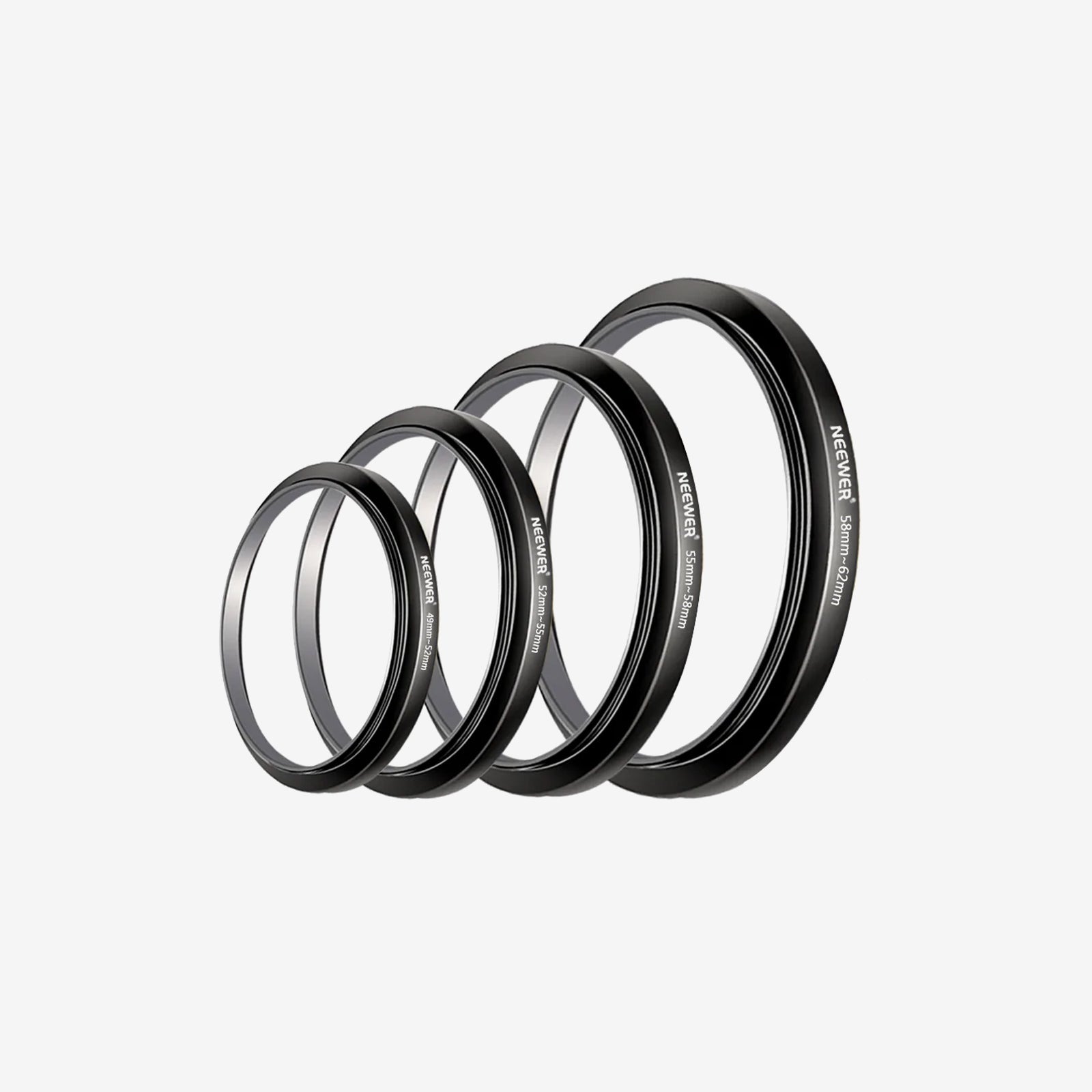
If you use multiple lenses with different thread sizes, a step-up ring can allow you to use one larger filter across several lenses.
FAQs
1. What is a variable ND filter?
A variable ND filter reduces the amount of light entering your lens, and you can adjust the density by rotating the filter. This allows you to control exposure without changing filters.
2. Is a variable ND filter better than a fixed ND filter?
It depends on your shooting needs. A VND offers more flexibility when lighting changes, while a fixed ND can be better when you need a specific and consistent amount of light reduction, especially for long-exposure photography.
3. What ND range should I choose?
ND2–ND32 is suitable for everyday photography and video. ND8–ND128 is better for brighter outdoor conditions, while ND3–ND1000 provides a much wider range for strong light control.
4. Can I use a variable ND filter for video?
Yes. VND filters are particularly useful for video because they allow you to adjust exposure while keeping other camera settings consistent.
Final Thoughts
The best variable ND filter depends on your shooting conditions and how much control you need.
· ND2–ND32 Hard Stop VND: Best for precise, repeatable exposure control.
· ND8–ND128 VND: Best for brighter outdoor shooting and reduced black “X” cross.
· ND3–ND1000 VND: Best when you need the widest range of light reduction.
· VND2-32 + CPL + Magnetic ND32: Best when you want exposure and reflection control in one setup.