








Table of Contents
For filmmakers working in controlled lighting environments—such as studio shoots, commercial productions, or cinematic setups—OLED can meaningfully improve decision-making on set. The ability to produce true blacks, extremely high contrast, and accurate color reproduction makes it easier to evaluate exposure, shadow detail, and color balance in real time.
OLED also benefits workflows where visual precision matters more than maximum brightness; the improved contrast and shadow rendering can provide a more realistic preview of the final graded image.
What Is OLED Technology?

OLED, which means Organic Light-Emitting Diode, is a display technology in which each pixel produces its own light. Unlike traditional LCD screens that rely on a separate backlight, OLED displays can turn individual pixels completely on or off as needed. This self-emitting design allows OLED screens to deliver true blacks, extremely high contrast ratios, and vibrant colors.
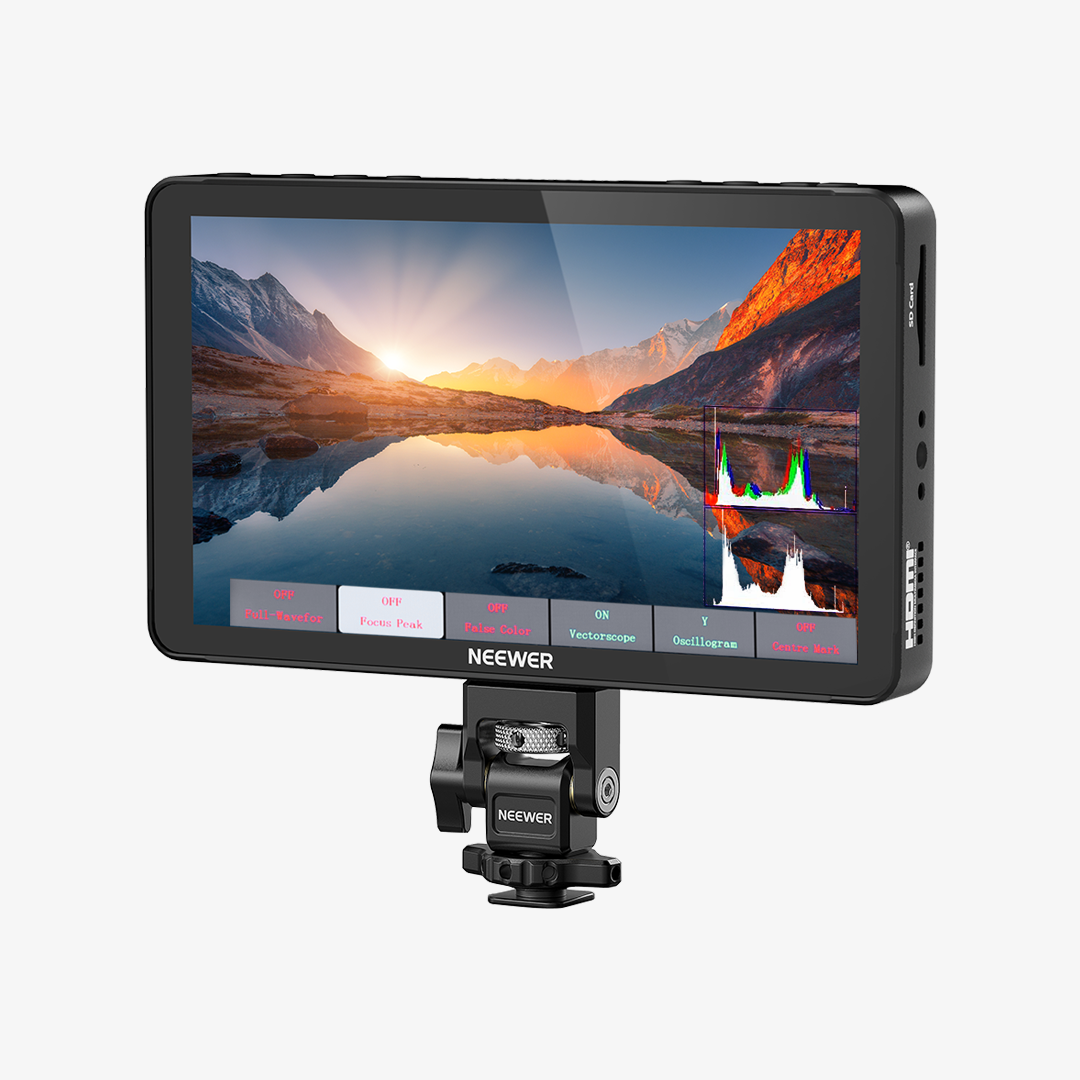
For photographers and videographers, OLED technology is especially valuable because it helps camera monitors display images with richer colors, deeper blacks, and greater detail, making it easier to judge footage accurately while shooting. These qualities make OLED camera monitors a popular choice for color-critical tasks such as filmmaking, commercial video production, and HDR content creation.
How Do OLEDs Work?
OLED displays are made by placing a series of organic thin films between two conductors and work by using organic compounds that emit light when an electric current passes through them. Each pixel in the screen contains these light-emitting materials and functions as its own independent light source.
When a pixel receives power, it produces light and displays a specific color. When no power is supplied, the pixel turns off completely, creating a true black area on the screen. Because OLED pixels generate their own light, there is no need for a separate backlight like the one used in LCDs.
Pros and Cons of OLED Technology

1. Pros of OLED Technology
- No Backlight Required: Since each pixel generates its own light, OLED displays eliminate the need for a separate backlight, contributing to thinner and lighter monitor designs.
- Excellent Color Accuracy: OLED panels can reproduce rich, accurate colors, helping photographers and videographers evaluate footage with greater confidence.
- Exceptional Contrast Ratio: The combination of bright highlights and true blacks creates outstanding contrast, making images appear more realistic and detailed.
- Better Shadow Detail: Deep blacks and precise pixel control make it easier to distinguish subtle details in darker areas of an image.
- Wide Viewing Angles: Colors and brightness remain consistent even when viewing the screen from the side, which is useful when multiple people are monitoring footage on set.
- Fast Response Time: OLED pixels change state very quickly, reducing motion blur and providing a smoother viewing experience when monitoring fast-moving subjects.
2. Cons of OLED Technology
- Higher Cost: OLED displays are generally more expensive to manufacture than LCD panels, which often makes OLED camera monitors cost more than comparable LCD models.
- Limited Availability in Camera Monitors: Compared to LCD technology, fewer camera monitor models use OLED panels, which can limit choices when selecting specific screen sizes, brightness levels, or connectivity options.
- Risk of Image Retention: Displaying static elements such as camera menus, exposure tools, or monitoring overlays for extended periods can potentially cause temporary image retention.
- Higher Power Consumption with Bright Content: OLED displays can consume more power when showing large bright areas, such as white backgrounds or high-key scenes, which may reduce battery runtime during field use.
- Potential Color Shift Over Time: As the organic materials age, some OLED panels may experience slight changes in color accuracy or brightness consistency after years of heavy use.
3. Pros vs Cons at a Glance
|
Feature |
Benefit |
Trade-off |
|
Self-emissive pixels |
True blacks and exceptional contrast |
Higher cost |
|
Color reproduction |
Accurate and vibrant colors for monitoring footage |
Potential color shift over time |
|
Power usage |
Efficient when displaying darker scenes |
Higher power consumption with bright content |
|
Screen durability |
Excellent image quality throughout normal use |
Temporary image retention may occur with prolonged static overlays |
|
Market availability |
Premium display technology for color-critical work |
Fewer camera monitor options compared to LCD |
|
Shadow detail |
Easier to evaluate dark scenes and low-light footage |
/ |
|
Viewing angles |
Consistent image quality from different positions |
/ |
|
Response time |
Smooth motion handling |
/ |
|
Display design |
Thinner and lighter |
/ |
OLED vs LCD: Key Differences
|
Feature |
OLED (Organic Light-Emitting Diode) |
LCD (Liquid Crystal Display) |
|
Light Source |
Each pixel emits its own light |
Requires a separate backlight |
|
Black Levels |
True blacks (pixels can turn off completely) |
Dark gray blacks due to backlight bleed |
|
Contrast Ratio |
Extremely high |
Moderate to high, but limited by backlight |
|
Color Accuracy |
Excellent, especially for video monitoring |
Good, but depends on panel quality and calibration |
|
Viewing Angles |
Wide, minimal color/brightness shift |
Narrower, noticeable shift at angles |
|
Response Time |
Very fast, reduced motion blur |
Slower, may show slight motion blur |
|
Brightness |
Generally lower peak brightness in some models |
Can achieve very high brightness (good for outdoor use) |
|
Power Consumption |
Efficient with dark content, less efficient with bright scenes |
More consistent power usage, often more efficient with bright images |
|
Thickness & Weight |
Thinner and lighter design |
Thicker due to the backlight layer |
|
Burn-in Risk |
Possible with static overlays over time |
No burn-in risk |
|
Cost |
Higher |
Lower and more widely available |
|
Usage in Camera Monitors |
Premium color-critical monitoring |
Most common choice for field monitors |
|
Best For |
Cinematographers, filmmakers, studio shooters, and color-critical workflows |
Run-and-gun videographers, budget-conscious content creators, and long recording sessions |
Which One Should You Choose?
- OLED: best for color-critical work, controlled lighting, cinematic monitoring
- LCD: better for outdoor brightness, budget setups, general field use
OLED vs 4K: What’s the Difference?

Is OLED Better than 4K? OLED and 4K are often compared, but they actually are not competing standards, as they refer to two completely different aspects of a display.
- OLED is a display technology that describes how the screen produces light and color.
- 4K refers to resolution, specifically a display with approximately 3840 × 2160 pixels.
For camera monitoring, OLED improves how the image looks, while 4K improves how detailed the image is. If you are judging exposure, contrast, and color grading, OLED technology plays a bigger role. If you are evaluating footage for focus accuracy or fine textures, 4K resolution is important. They are independent specifications that can exist together. For example, you can have an OLED 4K monitor, which combines high resolution with superior contrast and color performance.
Is OLED Worth It for Photography and Video?

OLED can be worth it for photography and video work, but the value depends heavily on how and where you shoot, as well as your monitoring requirements on set. OLED is less about replacing LCD and more about serving a specific type of workflow where image precision is the top priority.
- OLED is worth it if you prioritize color accuracy, contrast, and cinematic monitoring quality.
- LCD may be the better choice if you prioritize outdoor visibility, affordability, and long shooting endurance.