

Table of Contents
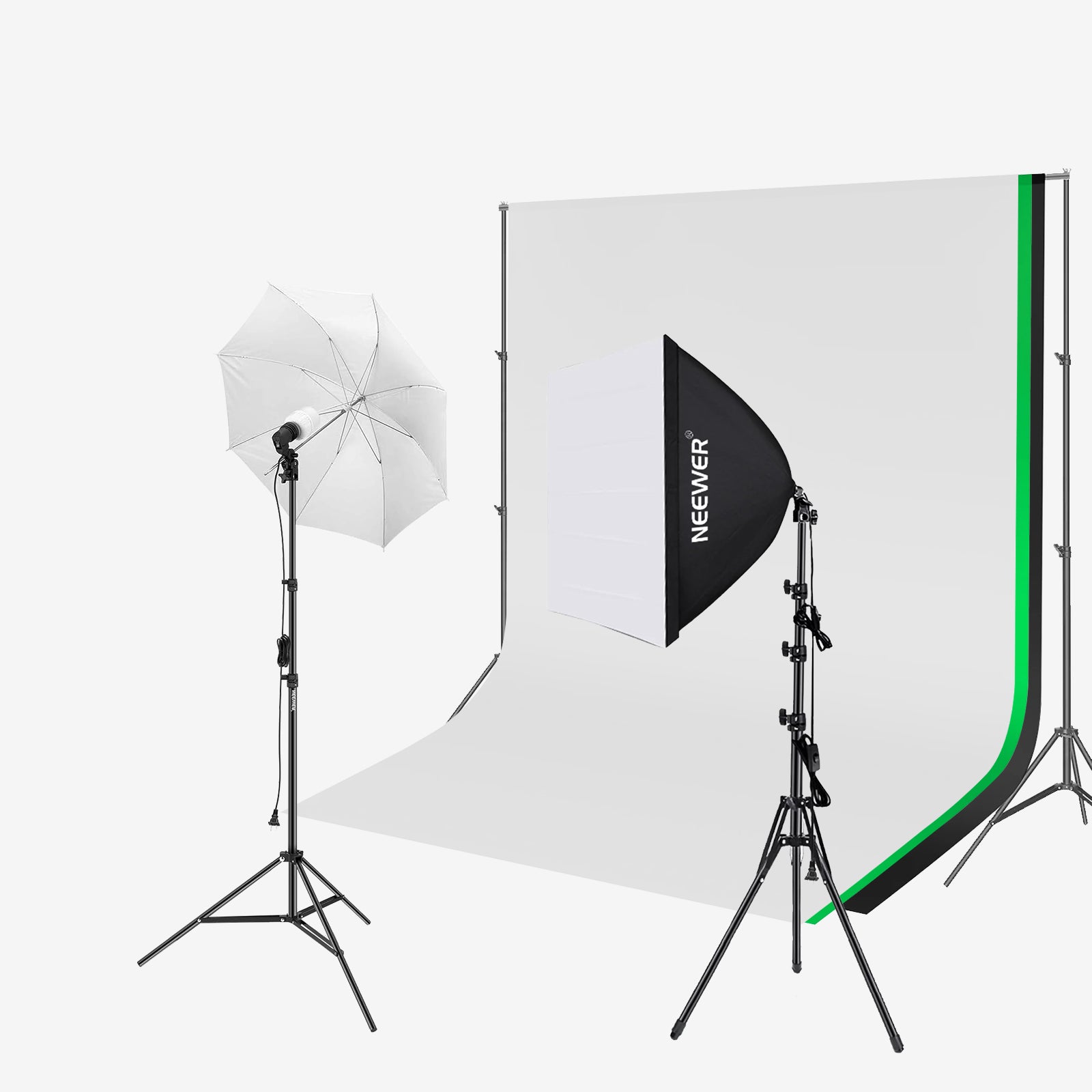
In a tiny home studio, a beginner portrait setup starts with one softbox kit placed at roughly 45° as a key light, plus a subtle rim or fill to separate your subject from the background. You don’t need a dedicated room or pro-grade gear to pull it off — the NK103 2-pack gives you two 60×60 cm square softboxes, two bulbs, and stands in one box, ready for the full key and rim layout.
Once you understand where the lights should go, the next step is choosing the right softbox shape for your room and shooting style: square and rectangular boxes deliver even, controlled light and suit small rooms well; octagonal boxes wrap light with the softest falloff; and parabolic designs concentrate output for longer throws. Choose by room size and how much spill you can manage.
Quick answer — match your room and goals to the right softbox shape
|
Your situation |
Best softbox shape |
Recommended kit |
|
Tiny room, |
Square (60×60 cm) |
|
|
Need more reach, tighter beam |
Parabolic |
|
|
Product photography |
Rectangular or square |
|
Beginner Portrait Softbox Setup in a Tiny Room
A two-light portrait setup — key softbox at 45°, rim or fill on the opposite side — gives you clean face shaping and subject separation without needing a large room or a third light.
The classic layout uses one softbox as the key light and a second as the rim or fill. The steps below work in spaces as small as 8×10 ft. If you want everything in one box, the NK103 two-pack is sized exactly for this layout.
Step 1 — Position the Key Softbox at 45°
Place your key softbox at 45° to one side of the camera, just above eye level, angled slightly down toward your subject’s face.
Start 2–3 ft (0.6–0.9 m) away from your subject. In a tiny room, closer placement increases the apparent size of the light source and softens shadow edges — which is what you want for portraits. Set your exposure based on the key light before adjusting the fill or rim.
Step 2 — Add a Rim or Fill for Separation
Place the second softbox behind and to the opposite side of your subject at roughly 135°, set to 20-40% of the key light's output, to trace the shoulder line and lift the subject off the background.
If your room is too narrow for a rear stand, a second softbox aimed at the wall behind your subject creates a soft background glow that still separates the subject without crowding the frame. Keep the rim subtle; if it becomes brighter than the key, the portrait starts to look flat and artificial.
Step 3 — Set Your Power Ratio and Check the Result
A 3:1 key-to-rim ratio (key at 100%, rim at 30–35%) is the standard starting point for portrait work; adjust from there based on how much background separation you want.
Take a test shot and check the edge of the subject's shoulder — if the rim is visible but not distracting, you’re in the right range. If it washes into the skin tone, pull it back to 20% before changing anything else.
|
Light role |
Position (off camera axis) |
Distance from subject |
Starting power |
|
Key softbox |
45° front-side |
2–3 ft / 0.6–0.9 m |
100% (reference) |
|
Rim / fill softbox |
135° rear-side or opposite |
3–5 ft / 0.9–1.5 m |
20–40% of key |
Tight room tip: If you can’t place a rear stand, use the second NK103 softbox on a low stand aimed at the background wall. It won't give you a hard rim edge, but the soft background fill still creates enough depth for portrait work.
How to Choose Softbox Shape
Different softbox shapes change how soft the light looks, how far it spreads, and how much control you have over the background — the right choice depends on your room size and shooting style. This section covers the three shapes most relevant to beginners in small spaces.

1. Octagonal Softboxes
Octagonal softboxes produce the most even, wrap-around light of any shape, which is why they're the default choice for solo portraits and headshots.
The circular catchlight they create in the eyes reads as natural, similar to a large window. In a tiny room, an octagonal 60×60 cm or 85 cm softbox delivers soft falloff without needing to pull the light far back. The downside is that they spread light broadly — in a tight room with nearby walls, which can add unintended fill bouncing back onto your subject.
2. Rectangular Softboxes
Rectangular softboxes give you more directional control than octagons — the long axis guides where the light goes, which is useful when you need to keep spill off a backdrop or limit what the light hits.
A horizontal rectangle placed at portrait height produces a wide band of light that covers the face and upper body without as much overhead wrap. A vertical strip is narrower still and is commonly used as a controlled rim or edge light. In a small room with a colored backdrop, a rectangular softbox is easier to aim away from the background.
3. Parabolic Softboxes
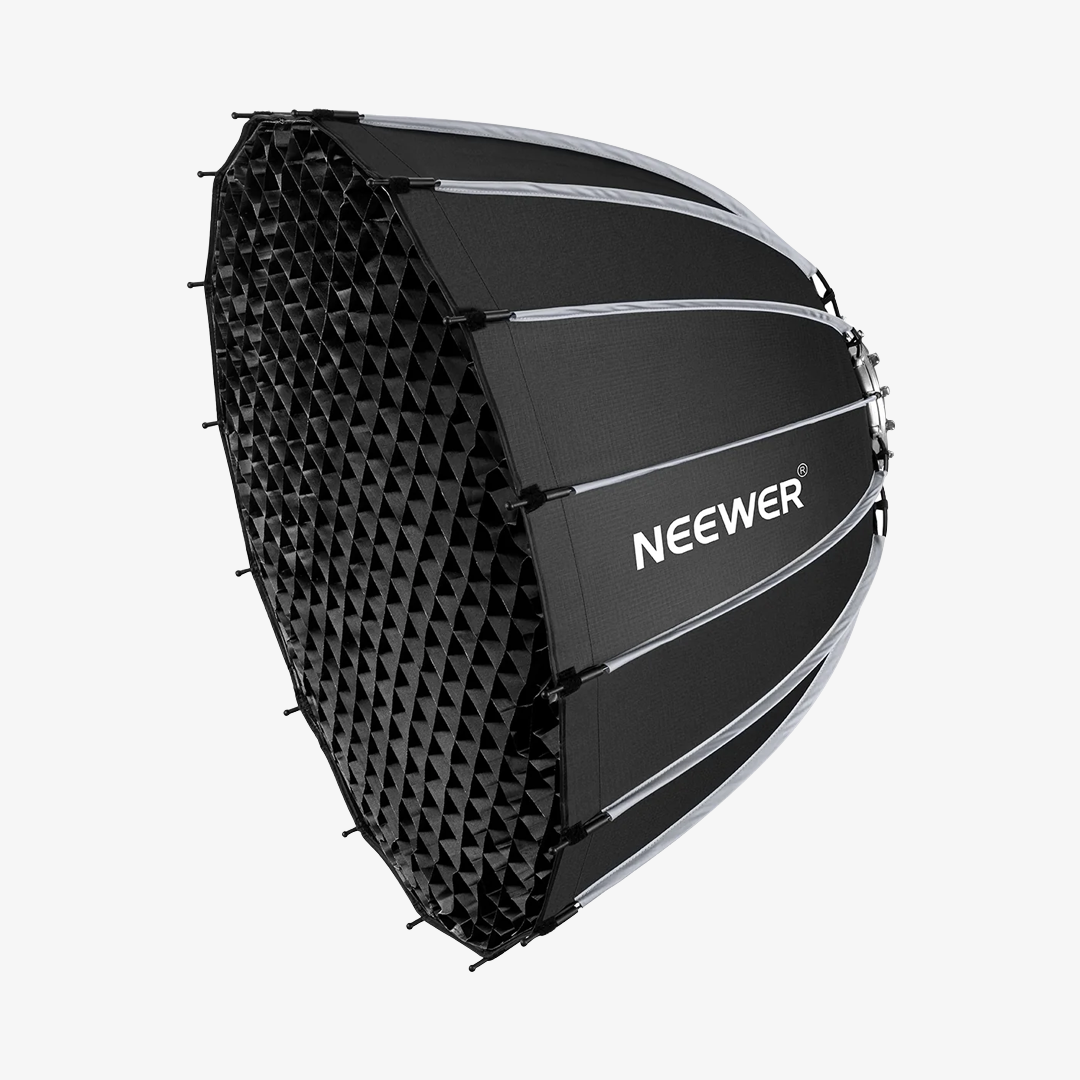
Parabolic softboxes have a deeper dish shape that concentrates light toward the center and extends throw distance — useful when you need a brighter key in a larger room or want a slightly harder falloff edge.
For a tiny home studio, a full parabolic is often more than you need at 2–3 ft working distances. They come into their own in rooms with higher ceilings or when you want a brighter, more contrasty key. The NEEWER SF85Q is a parabolic option in the NEEWER lineup worth checking when room size allows.
Shape Comparison
|
Shape |
Light quality |
Spill control |
Best room size |
Common use case |
|
Octagonal |
Softest, |
Low — spreads widely |
Any; |
Portraits, |
|
Rectangular |
Directional, controlled |
Medium — guides along the long axis |
Small to medium |
Controlled portrait, product, |
|
Parabolic |
Bright center, longer throw |
High — concentrated beam |
Medium to large |
Fashion, |
|
deeper rooms, contrasty key |

For a tiny home studio portrait setup, a square 60×60 cm softbox is the practical starting point — it shares the even-light qualities of an octagonal in a format that fits small rooms and beginner budgets.
NEEWER Softbox Kits and Modifiers
a. NEEWER NK103: Best Beginner Softbox Lighting Kit for Tiny Home Studio Portraits
If the square 60×60 cm format fits your setup — and for most beginners in a tiny room, it will — the NK103 2-pack kit is the most direct way to get there: two softboxes, two bulbs, stands, and a remote in one box, sized exactly for the key + rim layout described above.

The Breakdown
The NEEWER NK103 ships as a complete two-light kit: two 60×60 cm square softboxes, two 45W bi-color LED bulbs, two light stands, a 2.4G remote control, and a carrying bag — everything needed for the 45° key + rim portrait layout without sourcing parts separately. The silver-lined softbox interior reflects and diffuses the bulb output evenly, producing flattering light at close portrait distances. The 2.4G remote controls both bulbs independently within 65.6 ft, so you can dial the key-to-rim power ratio without walking back to each stand.
|
Spec |
Detail |
|
Type |
Complete softbox lighting kit |
|
Softbox size |
24×24″ / 60×60 cm per unit |
|
Shape |
Square |
|
Attachment |
E26 bulb socket (bulb included) |
|
Color temperature |
2900K–7000K |
|
CRI |
95 |
|
Beam control |
2.4G remote (up to 65.6 ft / 20 m); |
|
Light stand |
Up to 83" / 210 cm |
|
Price |
$119.99 (2-pack NK103) |
Pros
- Complete two-light kit covers the full beginner portrait layout (key + rim) out of one box — no separate sourcing needed
- 60×60 cm square softbox with silver lining produces even, flattering light at typical portrait distances
- 2.4G remote lets you adjust the power ratio on both bulbs from the camera position without walking to each stand
Cons
- Square softbox shape produces more spill than a rectangular box — less suited for tightly controlled backdrop work
- Bulb-based system (E26 socket); not compatible with Bowens-mount modifiers
Best for: Beginners building their first portrait softbox setup in a tiny home studio, bedroom, or small apartment who want a complete two-light kit without sourcing components separately.
b. NEEWER SF85Q: Best Parabolic Softbox Upgrade for Bowens-Mount Lights
The NK103 covers the full beginner layout. If you already own a Bowens-mount light and want more reach or a tighter beam, the SF85Q is the next step — a standalone parabolic modifier that attaches to the light head you already have.

The Breakdown
The NEEWER SF85Q attaches via Bowens mount and works with NEEWER CB and FS series COB lights, as well as other Bowens-compatible fixtures. The deep parabolic dish shape with silver internal lining concentrates light toward the center, extending usable throw distance compared to a flat-front softbox. The included honeycomb grid narrows the beam angle to approximately 45° for tighter, more dramatic light that defines facial structure. Two white diffusers can be used independently or stacked to adjust softness.
|
Spec |
Detail |
|
Shape |
Hexadecagon (16-sided parabolic) |
|
Diameter |
33.5" / 85 cm |
|
Attachment |
Bowens mount |
|
Grid beam angle |
~45° (with grid attached) |
|
Material |
Oxford cloth, aluminum alloy |
|
Softbox weight |
3.3 lb / 1500 g |
|
Setup time |
Under 15 seconds (quick-release design) |
|
Price |
$129.99 |
Pros
- A deep parabolic dish concentrates and extends light output — useful in larger rooms
- Honeycomb grid gives you precise beam control without gels or snoots
- Quick-release 16-rib structure sets up in under 15 seconds and collapses flat for storage
Cons
- Modifier only — requires a separate Bowens-mount light (not included, not compatible with NK103’s E26 system)
- 85 cm diameter needs more floor clearance
Best for: Photographers who already own a Bowens-mount COB light and want more directional output, a longer throw, or tighter beam control than a standard square softbox provides.
Note: the SF85Q is a modifier only — no light source is included. It is not compatible with the NK103’s E26 bulb-based system.
FAQs
What’s a simple softbox setup for portraits in a small bedroom?
One softbox at 45° as your key light, one opposite or behind your subject for rim or fill — that's the full beginner layout. The NEEWER NK103 two-pack covers both positions out of one box.
How do I build a 45° key + rim setup in a tiny home studio?
Key softbox at 45° front-side, just above eye level, 2–3 ft from your subject; rim at 135° rear-side at 20–40% of key output. No room for a rear stand? Aim the second softbox at the wall behind your subject instead — the soft background fill still adds enough depth for portrait work.
Should I use an octagonal or rectangular softbox for portrait photography?
Octagonal for soft, even wrap light and a natural circular catchlight — it's the default for portraits. Rectangular when you need to keep spill off a backdrop or use a strip as a controlled rim light.
What size softbox should I use in a small room?
60×60 cm (24×24″) hits the right balance: large enough to produce genuinely soft light at 2–3 ft, compact enough to position in a tight space without crowding the room.
Can I use a softbox lighting kit for product photography, too?
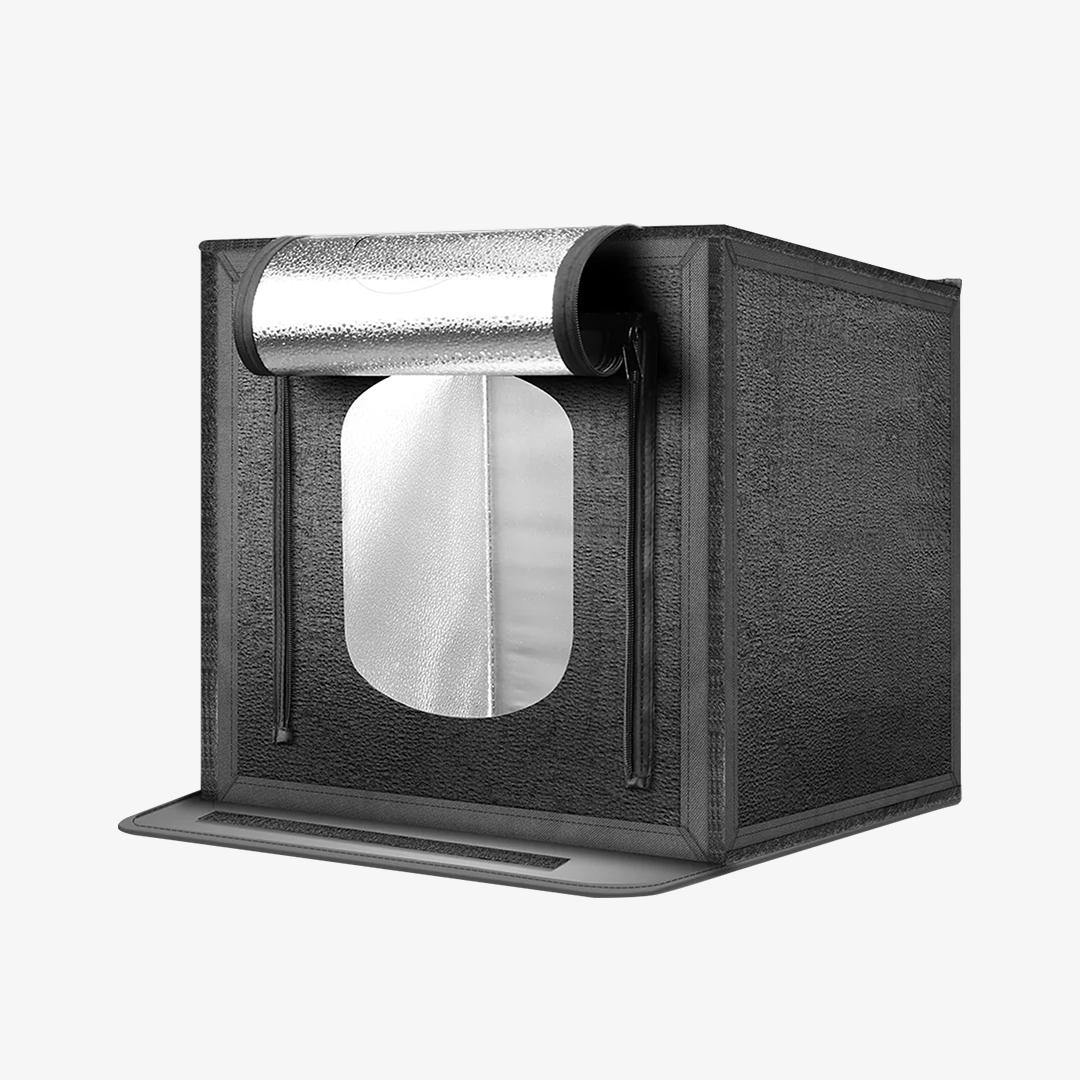
Yes — the NK103’s 60×60 cm square softboxes work at close range for small-to-medium products. For more directional control, a rectangular softbox is the better fit.
What’s the difference between a softbox and a parabolic softbox?
A standard softbox spreads light evenly through a flat diffusion panel. A parabolic has a deeper curved reflector that concentrates output toward the center — better reach and slightly punchier falloff, more useful in larger rooms or when you want a contrasty key.
How many softboxes do I need to start?
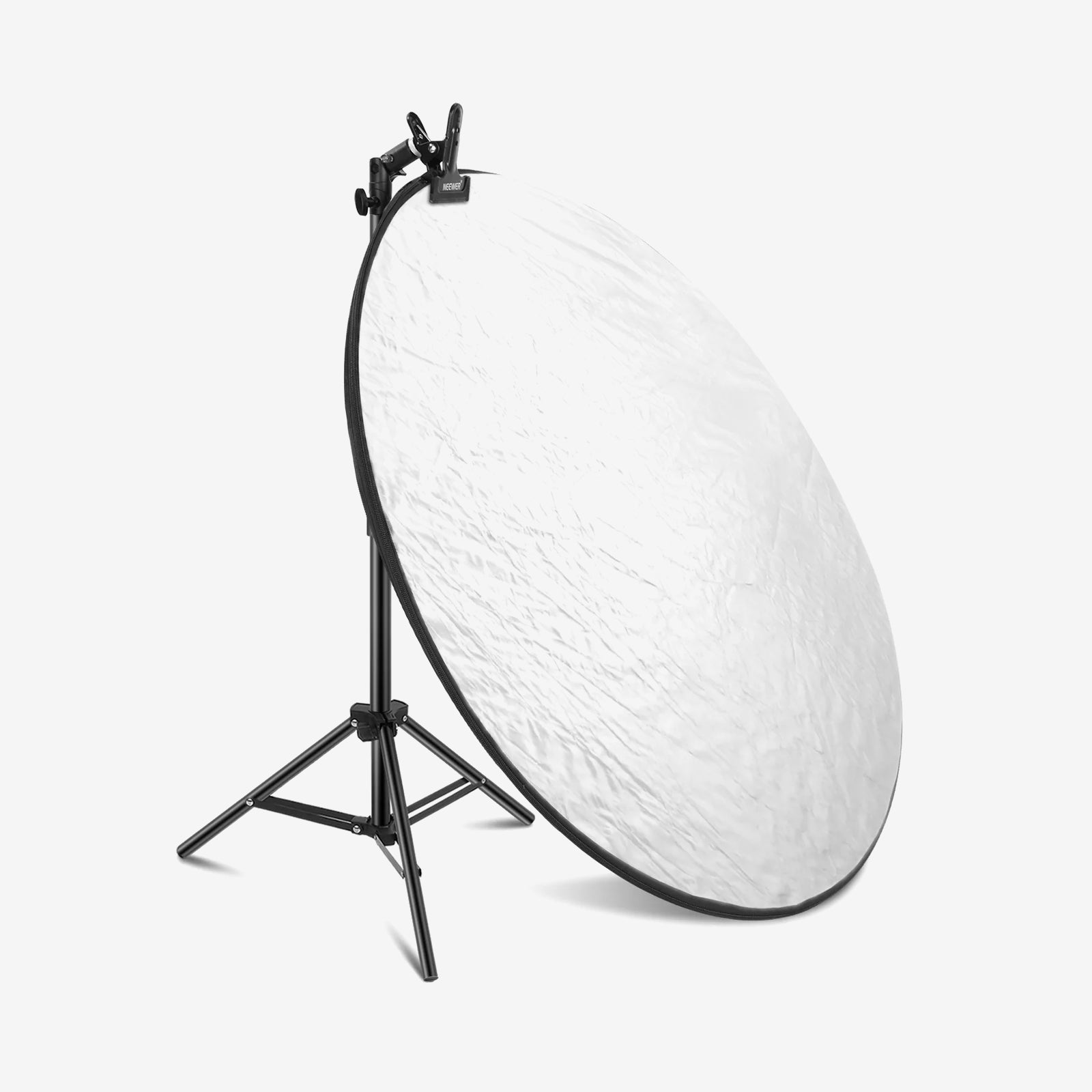
Two — one key, one rim or fill. A single softbox plus a reflector also works for basic headshots.
Final Takeaway
For a tiny home studio, start with a 60×60 cm softbox at 45° as your key light and a second softbox or reflector for rim separation — that covers the beginner portrait layout without extra complexity. Choose octagonal if softness and ease of use matter most; choose rectangular when you need tighter spill control. The NEEWER NK103 2-pack handles the full two-light beginner setup in one kit. As your setup grows or you move into a larger space, parabolic softboxes and larger rectangular panels give you more reach and control.