

Table of Contents
If you’re choosing lighting for portraits, product photography, YouTube videos, or a small home studio, the better option usually depends less on “strobe vs LED” and more on how you actually shoot: still photos, video, livestreaming, or hybrid content. Strobe lighting is useful when you need short bursts of high output for still photography - motion-freeze, peak power, or precise flash ratio control. Continuous LED lighting is easier for video, livestreaming, and beginners because you can see exactly how the light falls before you shoot.
Neither type is universally better. This guide also covers softbox kits, COB LEDs, and beginner setups - because modifier choice and room size often matter as much as the light source itself.
Quick Answer: Strobe vs Continuous LED vs COB vs Softbox Kit
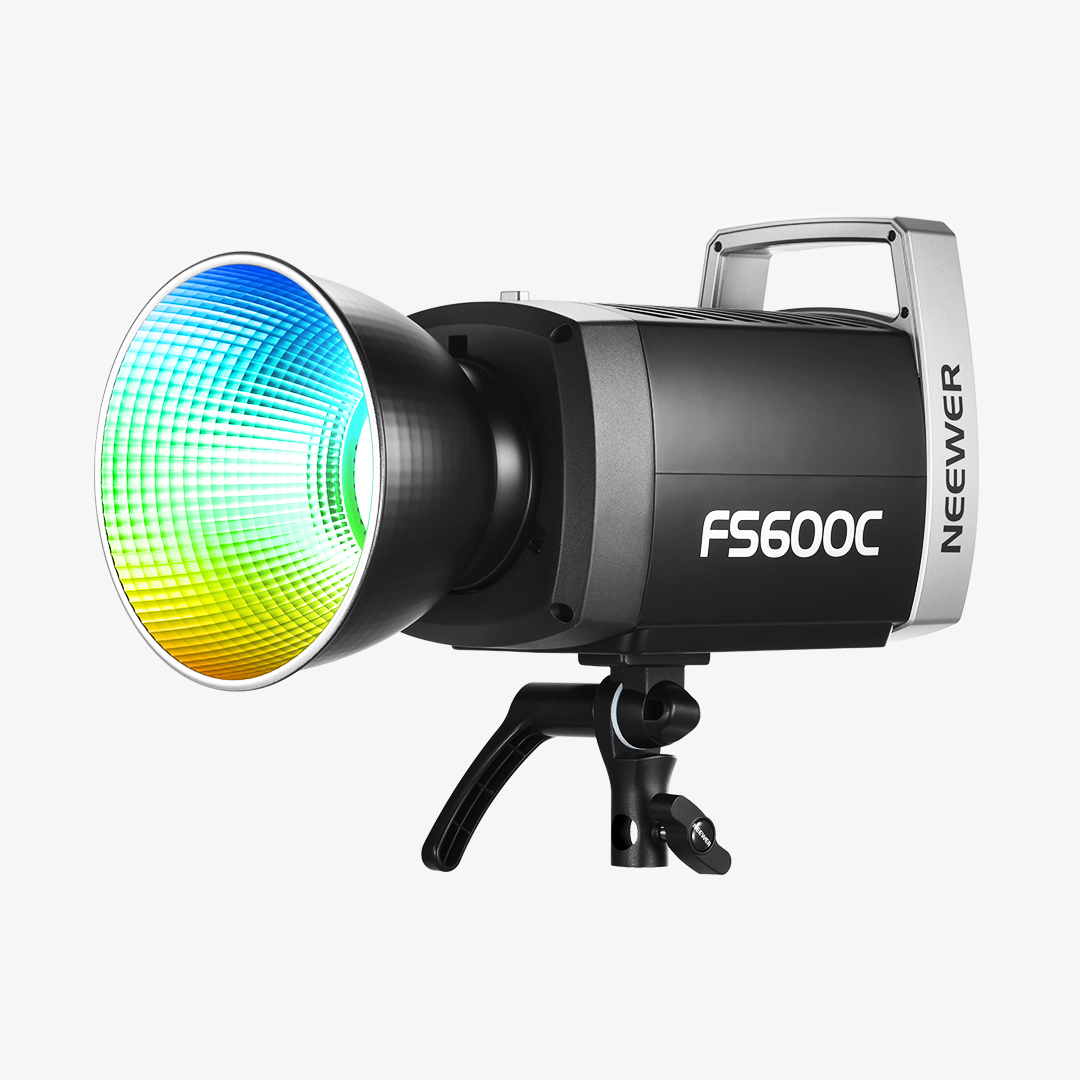
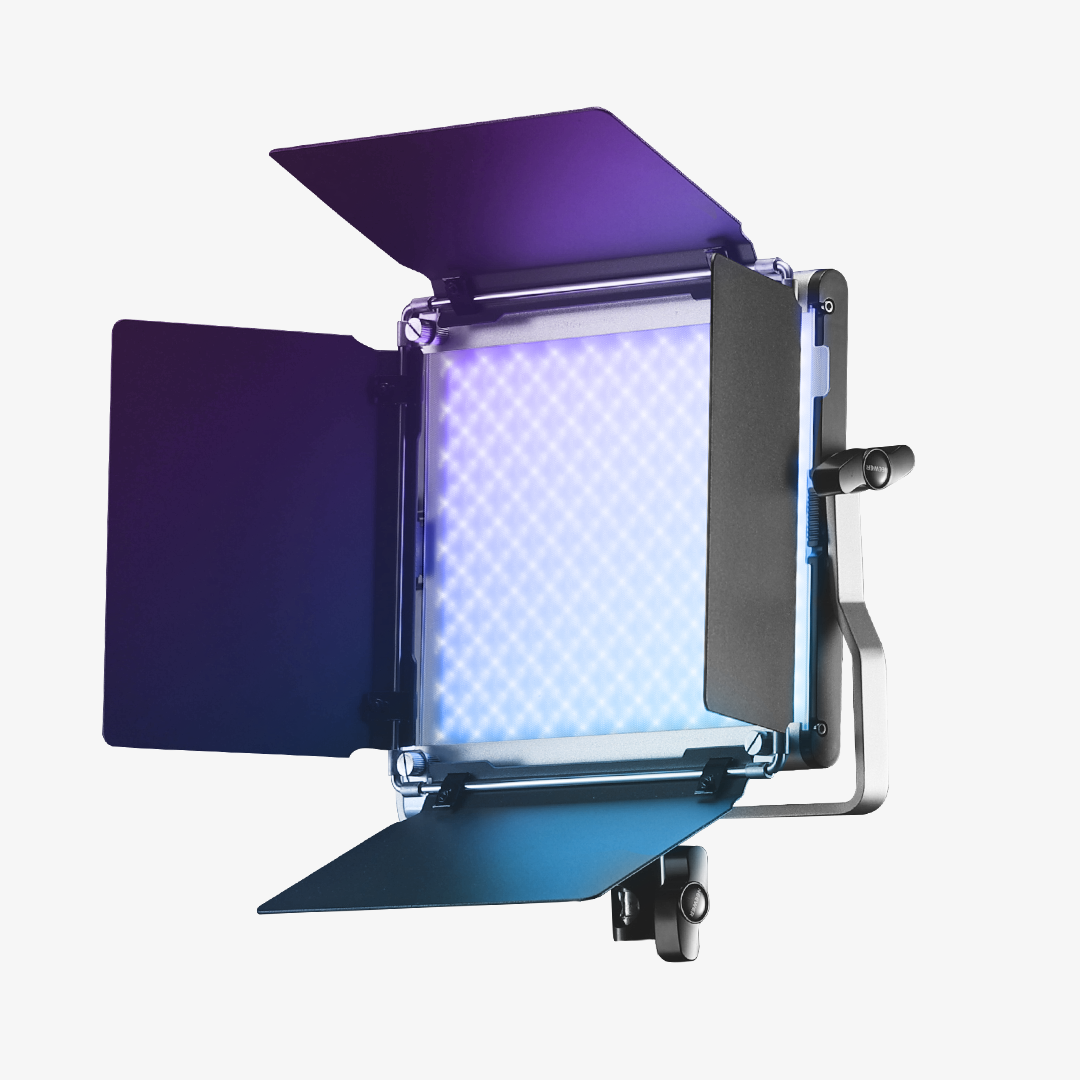
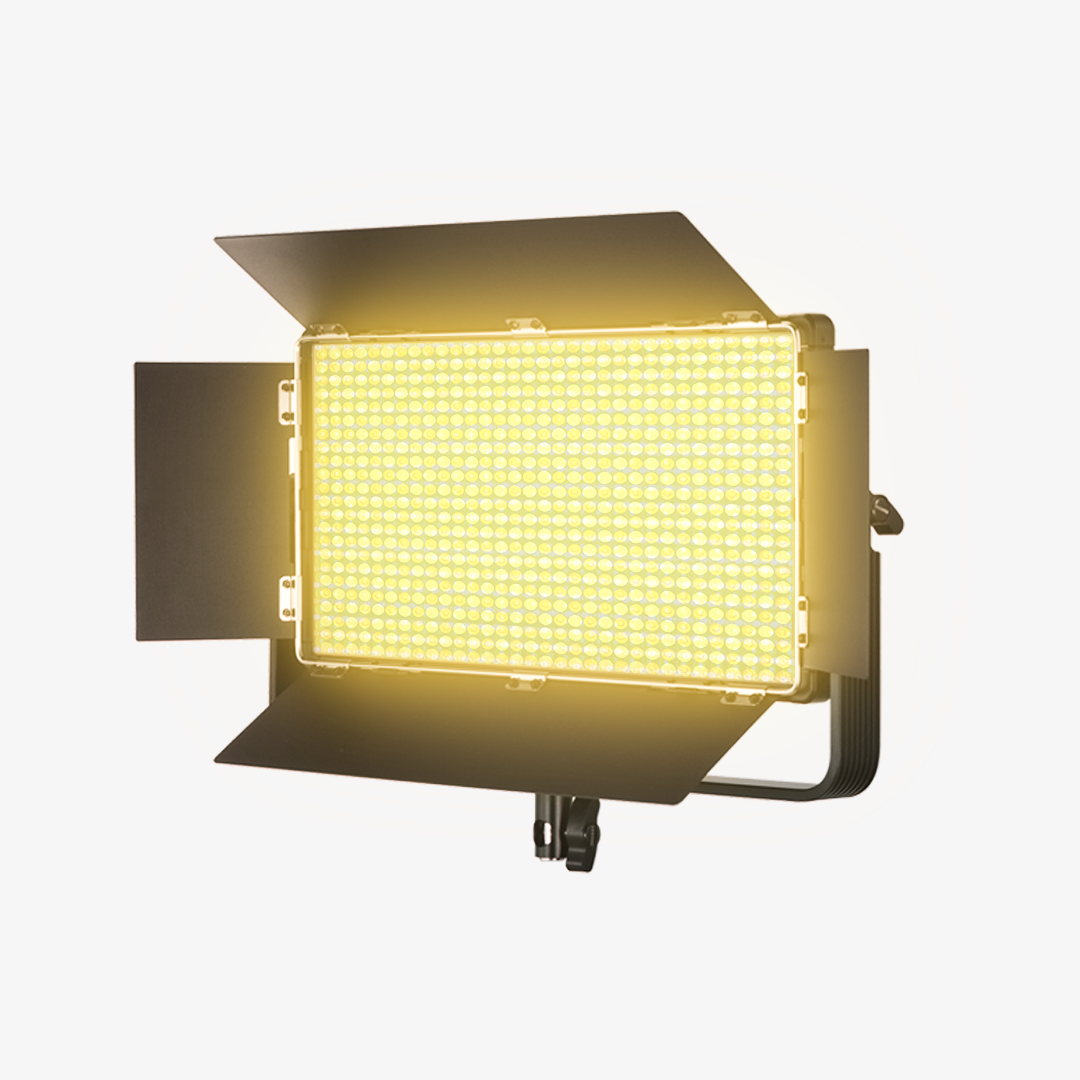
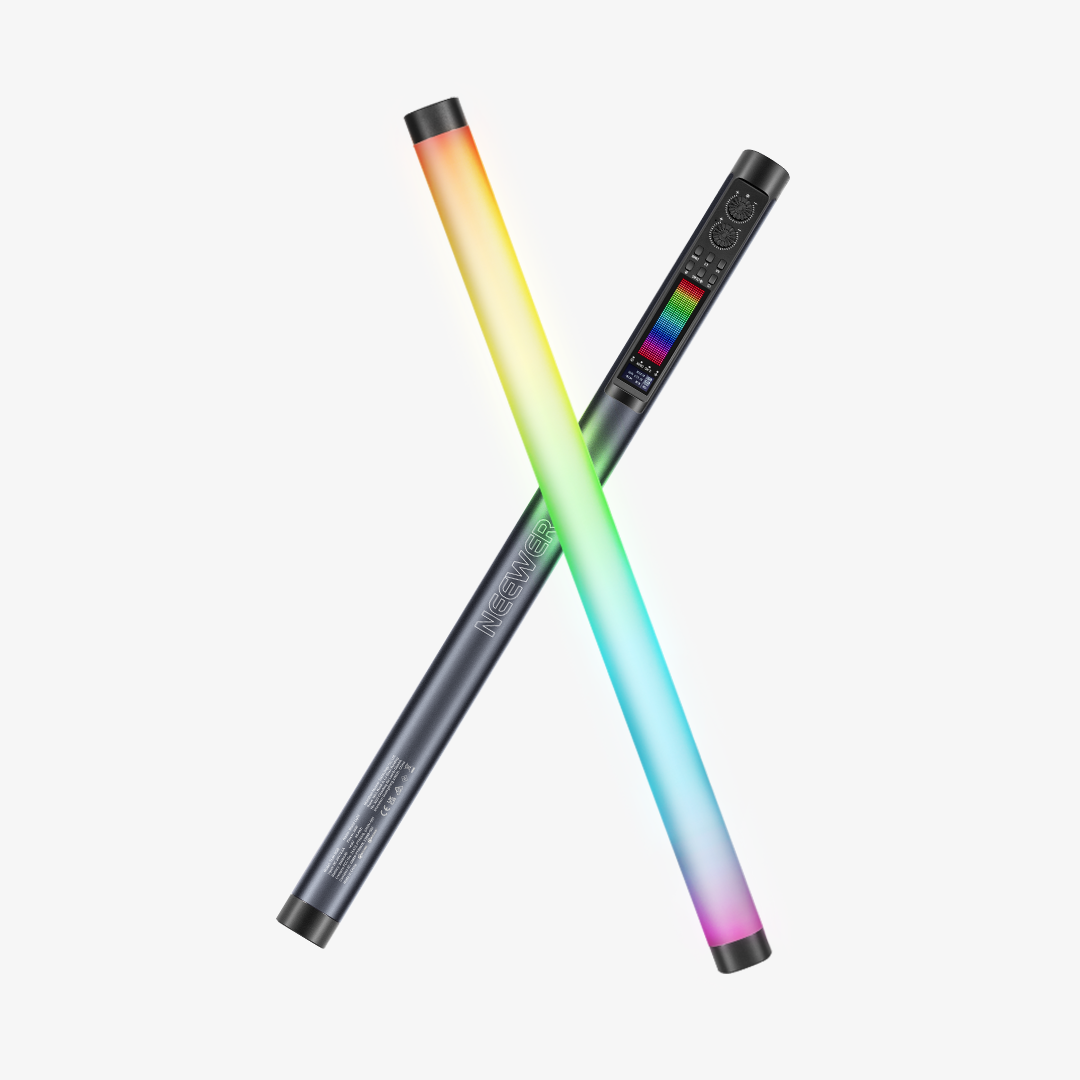
If you landed here searching for strobe lights, check the other columns — one may match your actual shooting scenario more directly.
|
|
Strobe / camera flash |
Continuous LED panel |
COB LED |
Softbox kit |
|
Example path |
Strobe flashes / |
|||
|
Light output |
Short burst |
Constant stream |
Constant stream |
Constant stream |
|
Preview before shooting |
No — test fire required |
Yes |
Yes |
Yes |
|
Video / streaming |
Low — sync issues |
High |
High |
High |
|
Beginner learning cost |
Higher — light invisible until flash |
Lower |
Moderate |
Lower |
|
Best for |
Still photos, |
Desk streaming, video |
Close-range portrait / product with softbox; portable |
Portrait, |
What strobe lights are best for
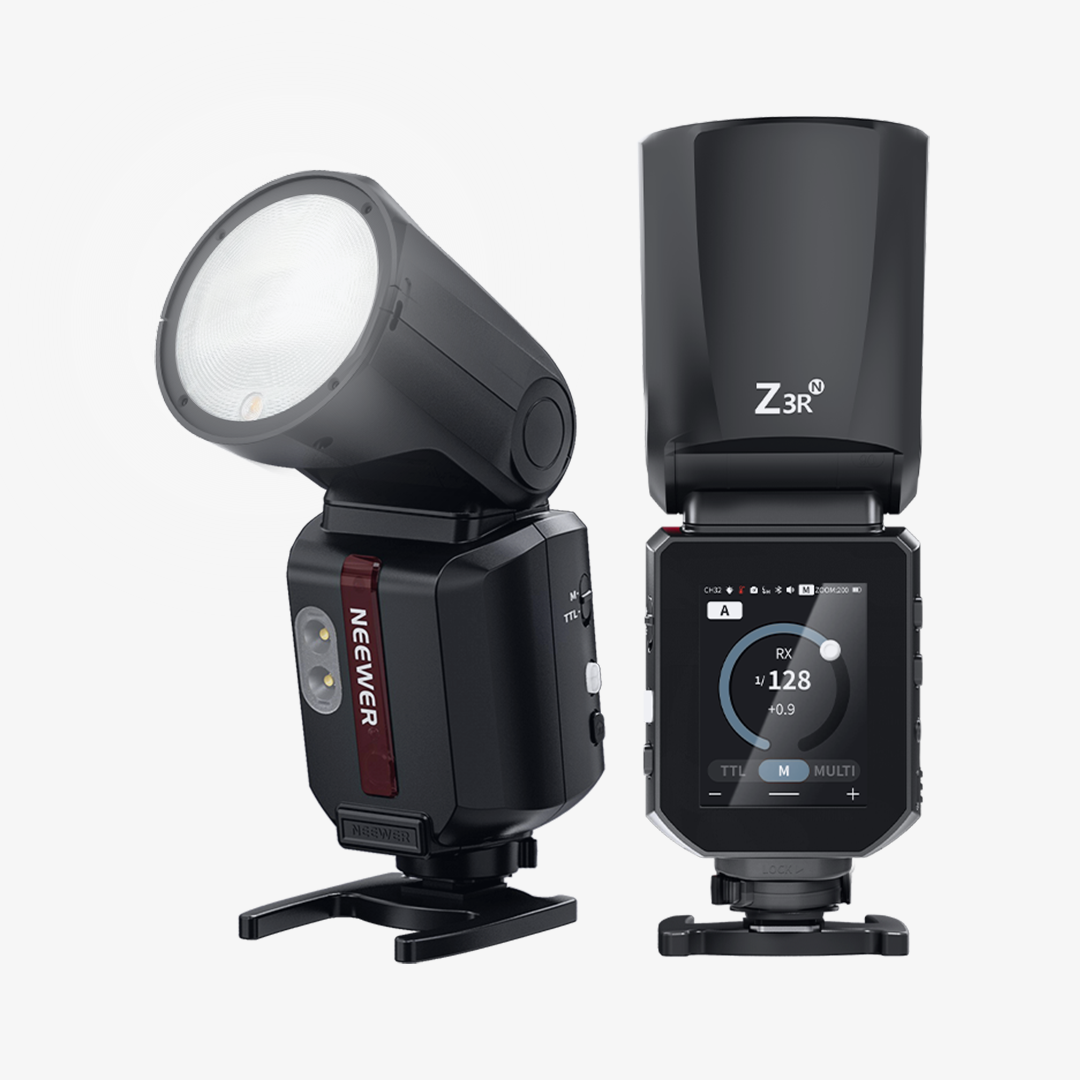
Strobe lighting fits still photography where peak instantaneous output, motion-freeze, or flash ratio control matter more than live preview.
A strobe fires a burst at 1/200 s to 1/8000 s — faster than most shutter speeds and capable of more peak lux than a continuous light at the same wattage rating. The tradeoff is no live shadow preview: you test-fire, review, and adjust.
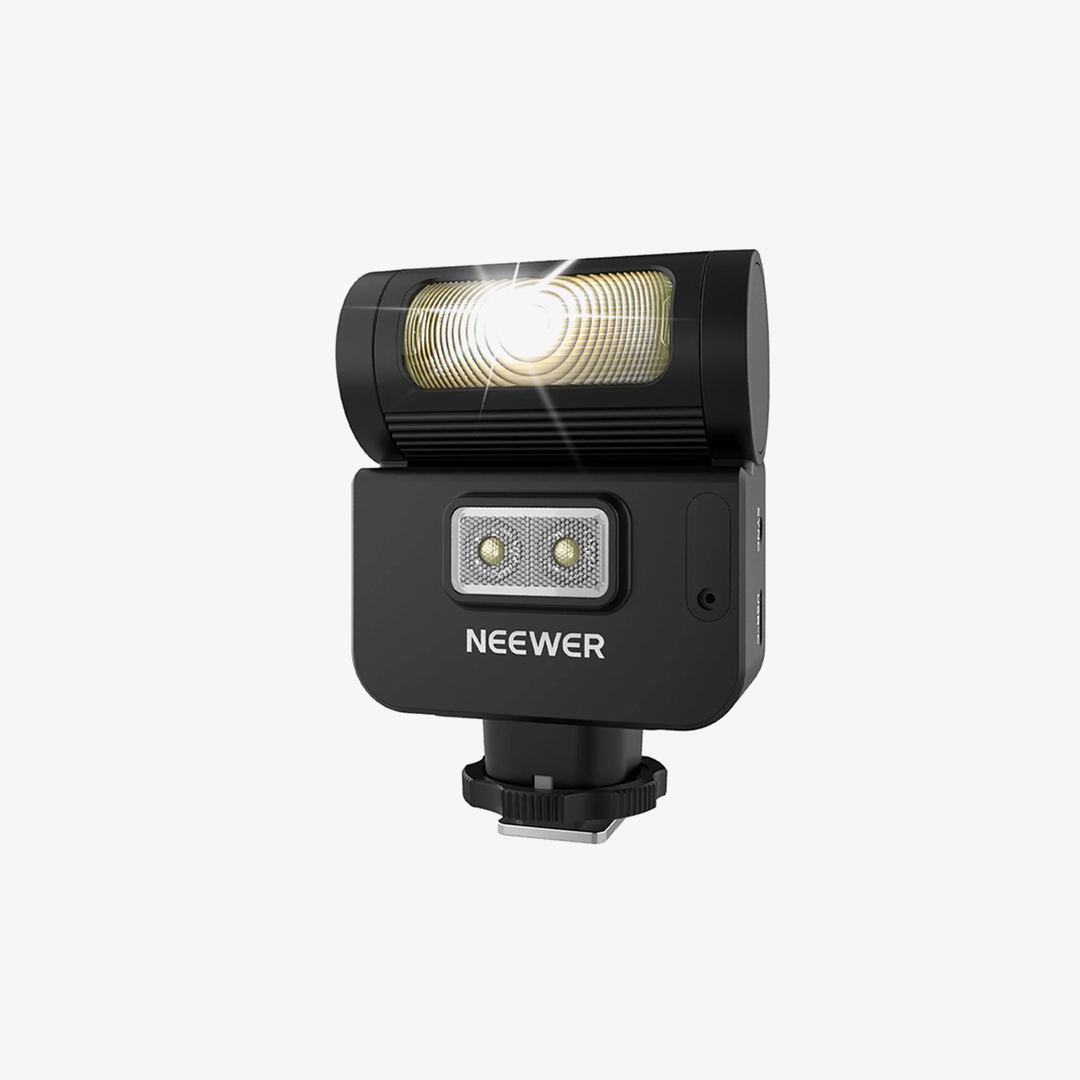
Strobe is practical for: commercial still photography, multi-light portrait studios, product shots with motion, on-camera camera flash for events.
Strobe is less suited for: video, livestreaming, beginners learning light placement, and hybrid photo-and-video sessions.
What continuous LED lights are best for
Continuous LED stays on throughout the shoot — the practical default for video, streaming, and anyone who needs to see shadows move in real time before capturing.
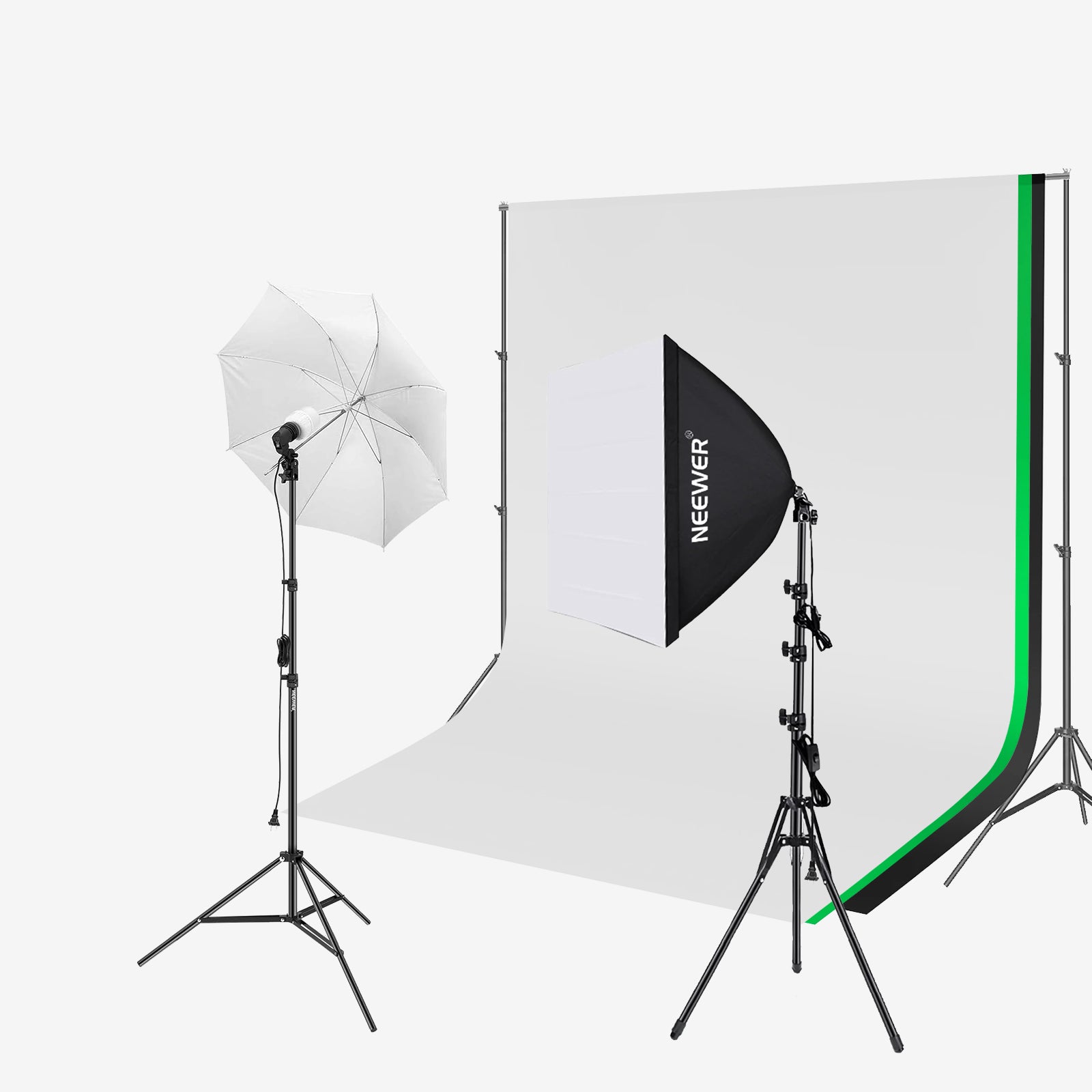
For portrait and product work at home, a continuous softbox kit gives soft, directional light with a complete two-stand setup. When you outgrow E26 bulbs, Bowens-mount COB lights pair with larger softboxes to scale up your setup.
a. NEEWER NK103: Best Bi-Color Softbox Kit for Beginner Portrait and Product Light

The Breakdown
The NEEWER NK103 is a two-light continuous LED softbox kit - not a strobe - with two 24×24 in / 60×60 cm softboxes, bi-color bulbs, stands, and a 2.4G remote. It covers key-and-fill for portraits, flat lays, and streaming without buying modifiers separately.
|
Spec |
Detail |
|
Softbox size |
24×24 in / 60×60 cm (×2) |
|
Bulbs |
45W bi-color LED (×2); 44 warm + 44 cool LEDs per bulb |
|
Color temperature |
2900K–7000K |
|
Max illuminance |
1,400 lux / m at 4400K |
|
CRI |
95 |
|
Stand height |
Up to 83 in / 210 cm; 210° vertical tilt |
|
Control |
2.4G remote (20 m); |
|
Socket |
E26 — also accepts compatible LED, fluorescent, or slave flash |
Pros
- Complete two-light setup out of the box — key and fill without extra purchases
- Live preview for stills and video in the same session
Cons
- Remote-only control — no app or RGB effects
- Needs floor space for two stands
Best for: beginner portrait and product photography, live streaming with bi-color matching, first home studio where previewable soft light matters more than flash peak output.
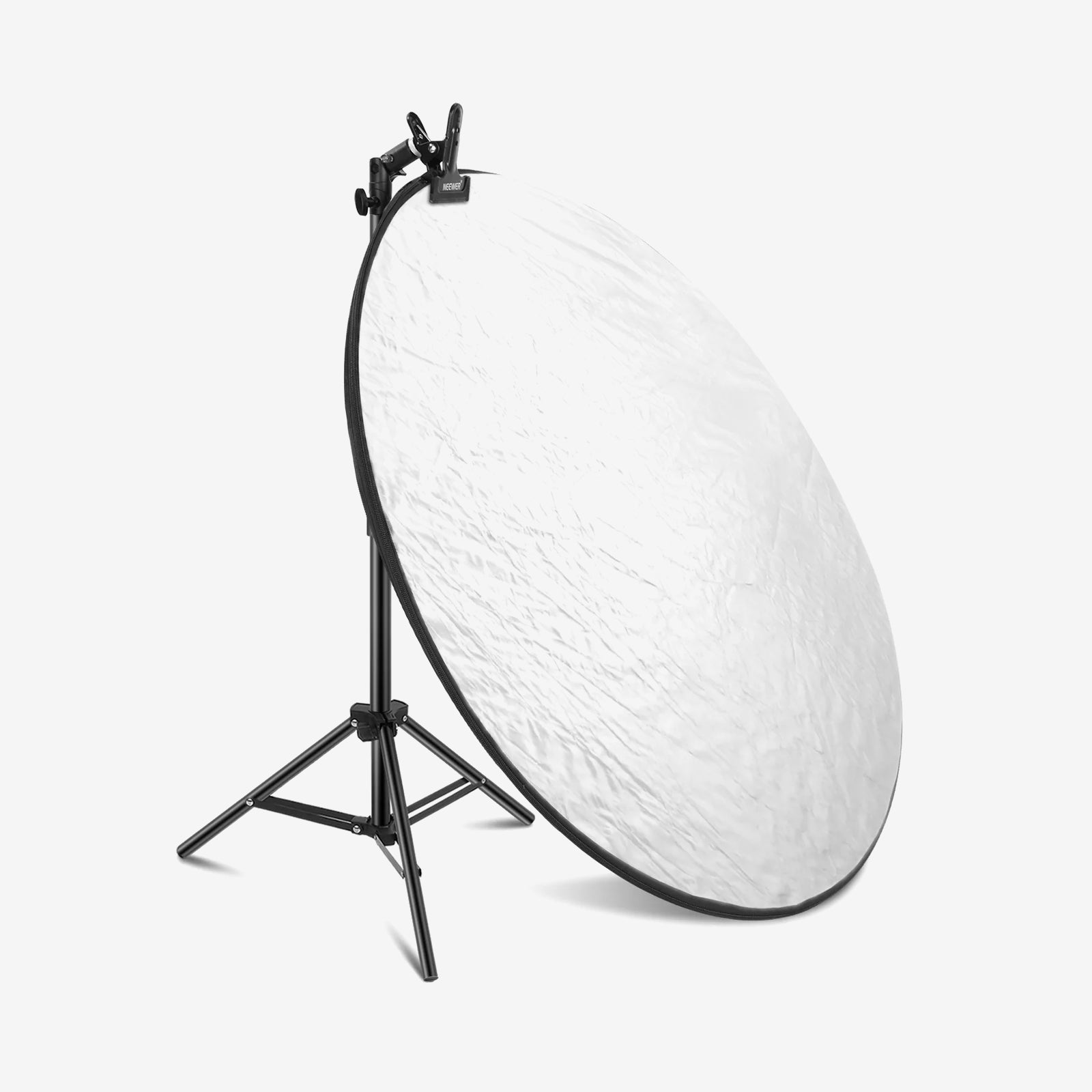
Also, pair with the NEEWER 5-in-1 Reflector - silver, gold, white, black, and translucent panels let you fill shadows or add warmth without a second stand.
For creative portraits or streams that need app-controlled color, the NEEWER NK800 RGB softbox kit adds 26W RGB bulbs (400 lux / m, CRI 93+, app control within ~49 ft) on the same 24" form factor — best as accent or rim, or paired with NK103 as neutral key plus RGB fill.
Softbox vs umbrella vs bare light: which creates softer light?
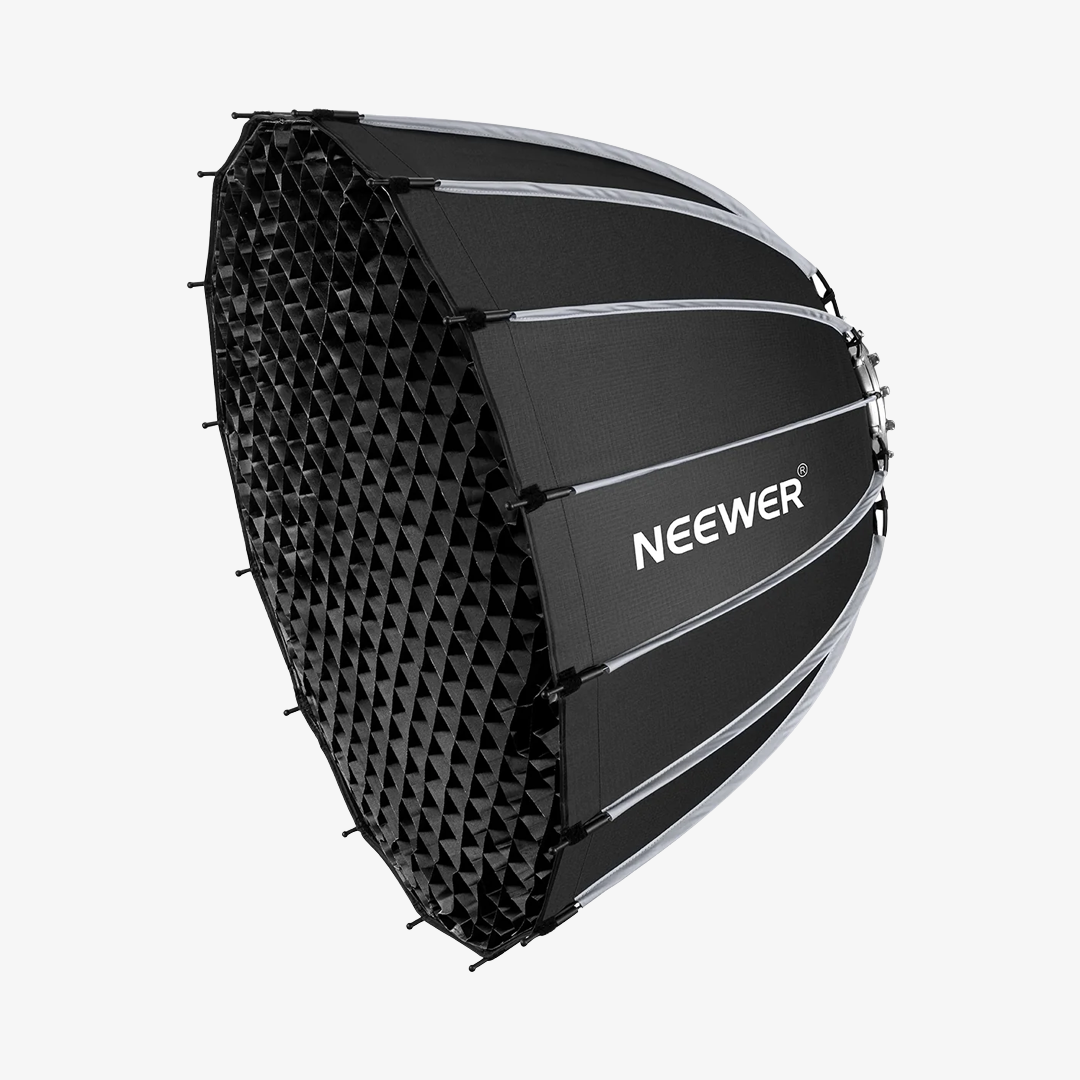
Whether you use strobe or continuous LED, the softbox itself shapes how the light falls. Here’s how the three main modifier types compare.
A softbox produces the softest, most controlled shadows of the three options — because it turns a small bulb into a large diffusion surface that wraps around the subject.
|
Modifier |
Shadow character |
Typical use |
|
Bare bulb / reflector |
Sharp, |
Rim light, |
|
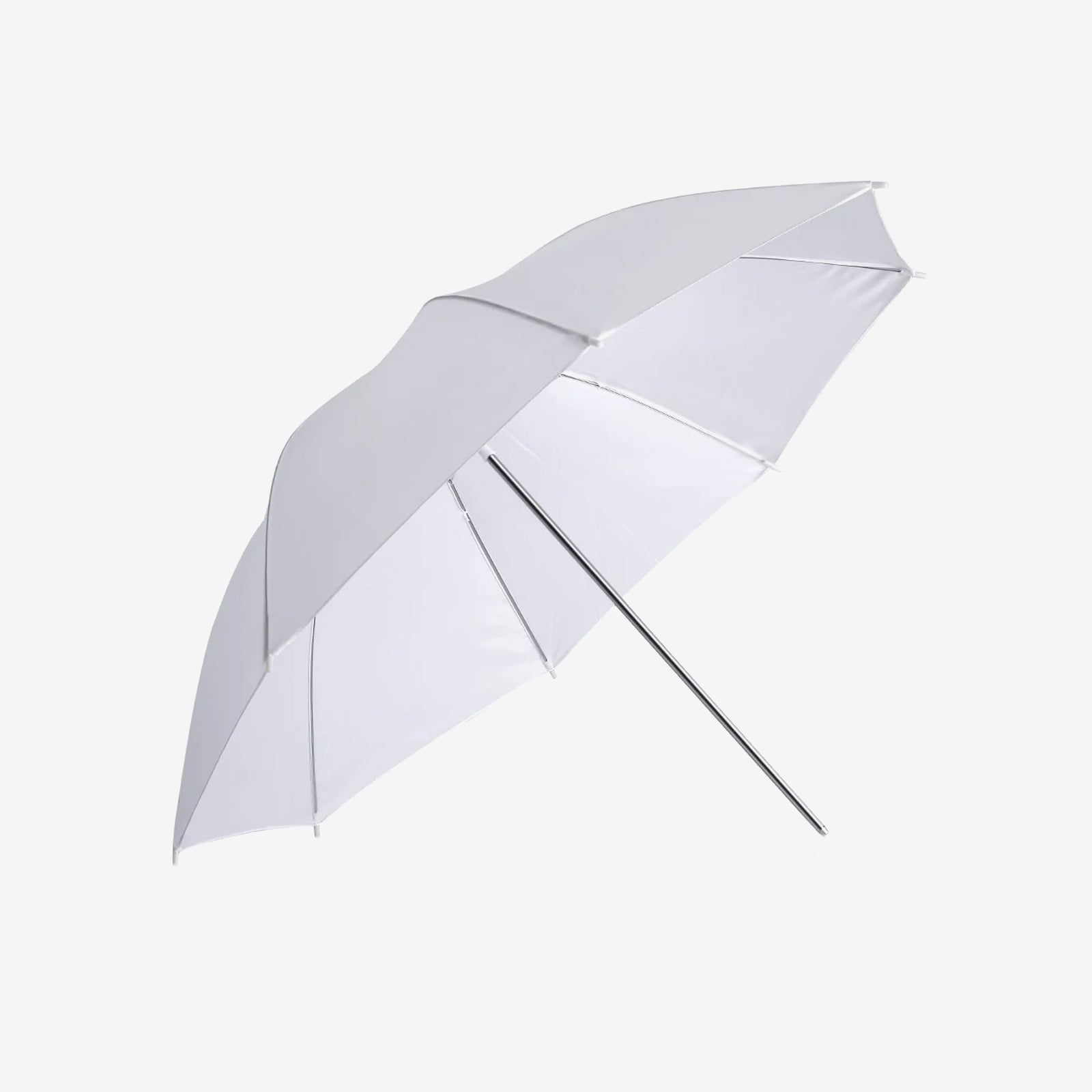
Umbrella |
Softer than bare; wider spill |
Fast portrait fill, |
|
Softbox |
Softest gradual shadow transitions |
Portrait, |
The underlying principle: the larger the light source appears relative to the subject, the softer the shadows. A 24" softbox placed 50–70 cm from a face is physically large compared to a nose or cheekbone — light wraps around the subject with gradual falloff instead of cutting a hard edge. An umbrella spreads light across a wider area but with less directional control and more spill into the room. Bare output — whether from a strobe head or a continuous bulb — stays hard because the source is small. This is why photographers often say, “the closer and larger the light source, the softer the light.”
Which should beginners choose?
Beginners should start with a continuous LED softbox kit — not just because of output, but because of how differently the two workflows feel day to day.
When you move a continuous softbox, shadows shift in real time on your subject. With a strobe, every change needs a test flash and a review cycle. Continuous feedback builds light intuition significantly faster.
Start with continuous softbox if: you shoot portraits, flat lays, or video at home, or you want a setup that works equally well for stills and recording.
Consider strobe from the start if: still photography is your exclusive use case, you genuinely need motion-freeze or high peak output, or you already understand flash exposure basics and want studio strobe power.
How to build a beginner portrait setup with softboxes in a small home studio
A workable portrait corner needs about 2 m / 6.5 ft of depth and around 1.5 m / 5 ft of width, plus two light stands — not a dedicated studio room.

Step 1: Pick a corner and set your backdrop
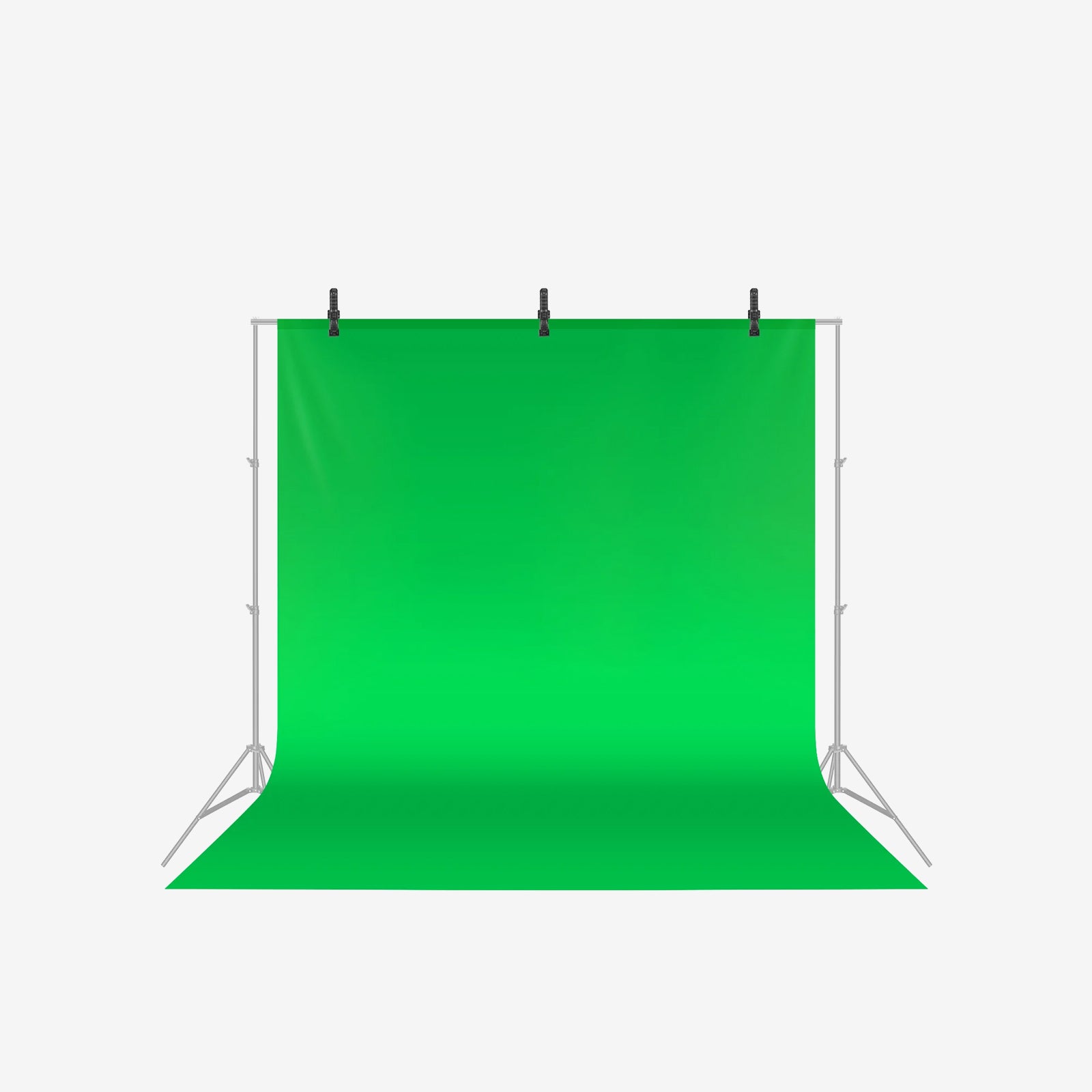
Clamp a white or gray paper sweep to the wall, or use a plain wall as a starting point.
Step 2: Position the key softbox
Place it 45° to the subject’s face, slightly above eye level, 0.8–1.2 m away. Closer = softer shadows.
Step 3: Set up the fill
Opposite side, 30–50% of key output. A white foam board or reflector works if floor space is tight.
Step 4: Position the camera
Shoot from the open side of the triangle, 1.5–2 m back for a head-and-shoulders frame.
Step 5: Set exposure in the right order
Lock in light position and brightness first, then set aperture and shutter speed. With continuous light, there’s no sync speed constraint — raise ISO only if the exposure is still short.
Space-saving tips:
- One softbox plus a white reflector on the fill side saves a stand and 0.5 m of floor width.
- Fold stands flat against the wall between sessions; they store in under 10 cm of depth.
- Bi-color bulbs (2900K–7000K on the NK103) let you match warm room light without gels.
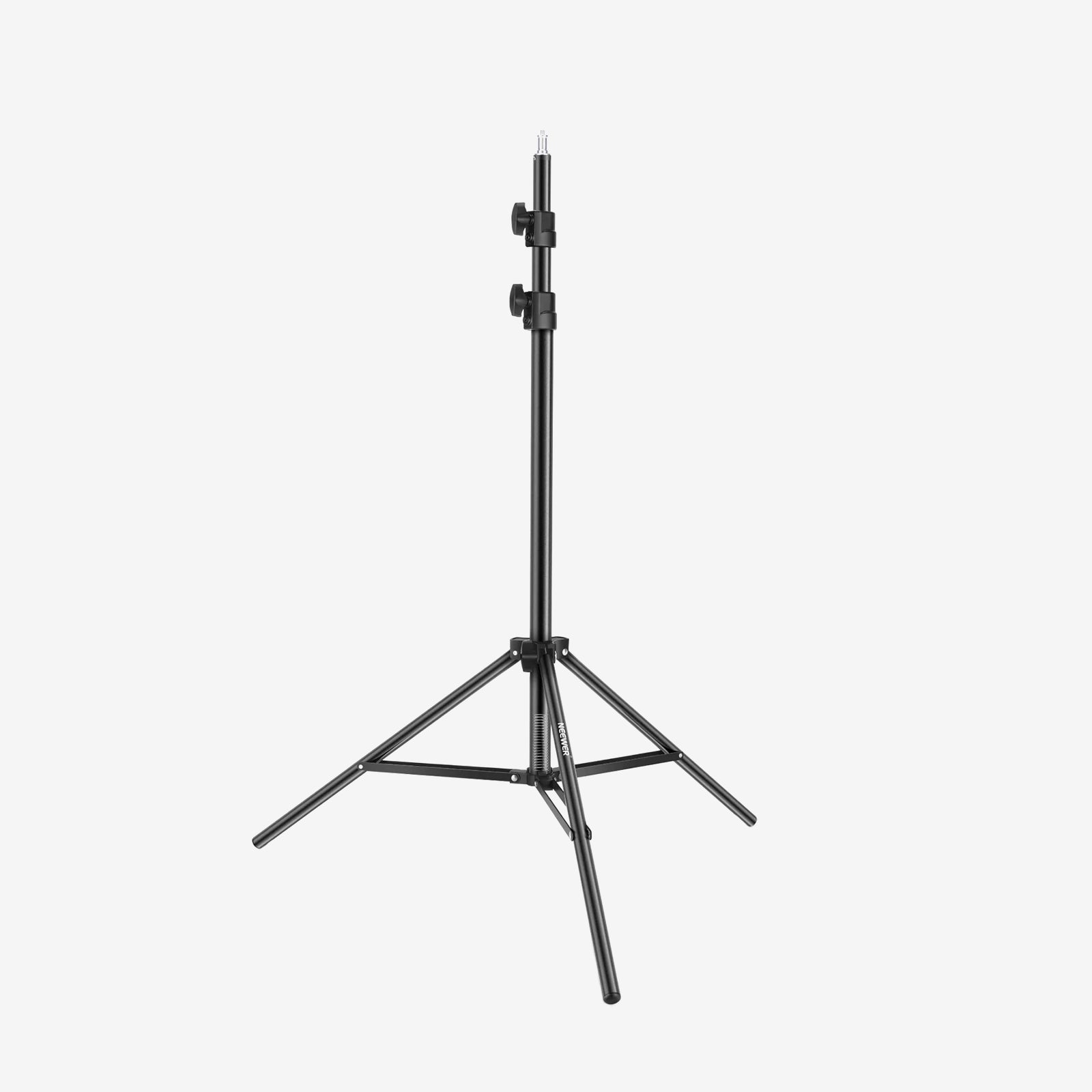
For taller overhead angles or a third light position, use the NEEWER ST-400SP Light Stand — adjustable from 4.5 to 13 ft / 1.37–4m, rated for up to 22 lb / 10kg, and compatible with softboxes, COB heads, and reflectors.
Common softbox mistakes beginners make — and how to fix them
Most softbox frustration comes from one of seven setup errors, not from buying the wrong kit.
1. Placing the softbox too far from the subject
Moving the light back reduces output and hardens shadows at the same time.
Fix: bring the softbox face to within arm’s length of the subject (50–80 cm for headshots) before touching the brightness dial.
2. Running key and fill lights at identical power
Equal output from both sides produces flat, dimensionless portraits.
Fix: set fill to 30–50% of key brightness, or replace the fill light with a white reflector for a gentler bounce.
3. Aiming the softbox at the floor or ceiling
The panel center should face the subject, not point straight forward from an untilted stand.
Fix: loosen the tilt knob, angle the panel down slightly, then re-tighten.
4. Mounting the softbox too high above the subject
A softbox positioned directly overhead creates deep eye shadows and harsh lines under the nose and chin.
Fix: keep the softbox slightly above eye level — typically 30–45° above the subject’s face — rather than pointing straight down.
5. Allowing colored wall bounce to add a color cast
Light still bounces off nearby colored walls even with a softbox.
Fix: use a white or gray backdrop behind the subject, or reposition so colored walls are behind the camera, not beside the light.
6. Adjusting camera settings before fixing light position
ISO and aperture fix brightness, but can't fix shadows in the wrong place.
Fix: get light position right first, confirm the shadow shape looks correct, then dial in exposure.
7. Skipping stand ballast on carpet or uneven floors
A stand weighted only by a softbox head can tip over if nudged, especially with the head extended high.
Fix: add a sandbag to the base of each stand, and extend stands only as high as the shot requires.
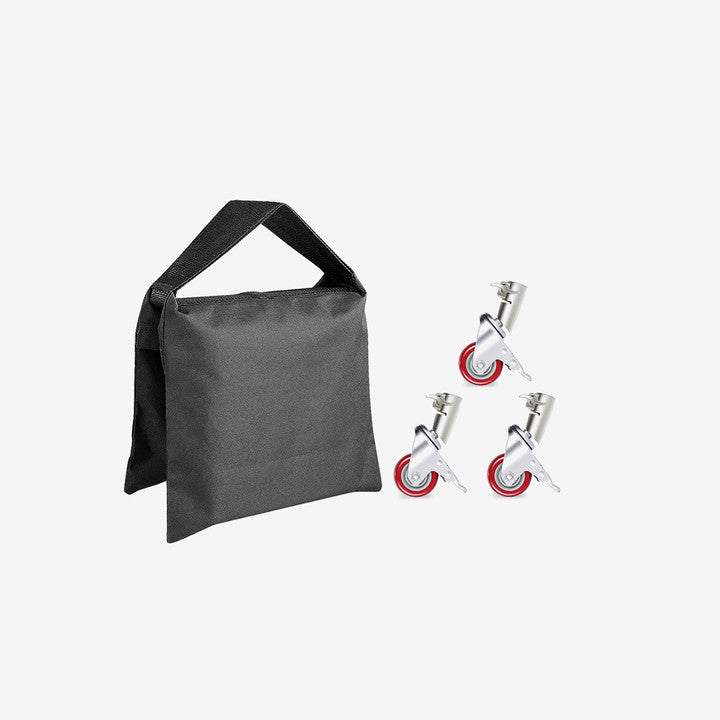
Also pair with NEEWER Heavy Duty Sandbags — drape one over each stand base to prevent tipping when the head is extended high.
Product photography: strobe, softbox, or LED panel?
For product photography, the right choice depends on whether the product moves during capture and whether you also need to record video.
|
Scenario |
Works well with |
Why |
|
Moving product |
Strobe |
Flash duration freezes motion in one frame |
|
Static flat lay, |
Continuous softbox |
Live shadow preview speeds positioning |
|
Product video + stills in one session |
Continuous softbox or COB |
Same rig stays on — no re-lighting between formats |
|
Small reflective objects, tight desk |
LED panel |
Compact footprint, adjustable angle |
Video and livestreaming: why continuous light usually wins
Continuous LED is the practical default for video because it stays on for every frame — no sync timing, no single-frame flash blowout.
|
Use case |
A better fit for |
Notes |
|
YouTube, |
Continuous softbox or COB |
Always-on light means live composition and |
|
Desk streaming, |
LED panel |
Compact, |
|
Creative RGB background or rim |
NK800 or HB80C |
Accent roles; |
When to upgrade from a softbox kit to COB
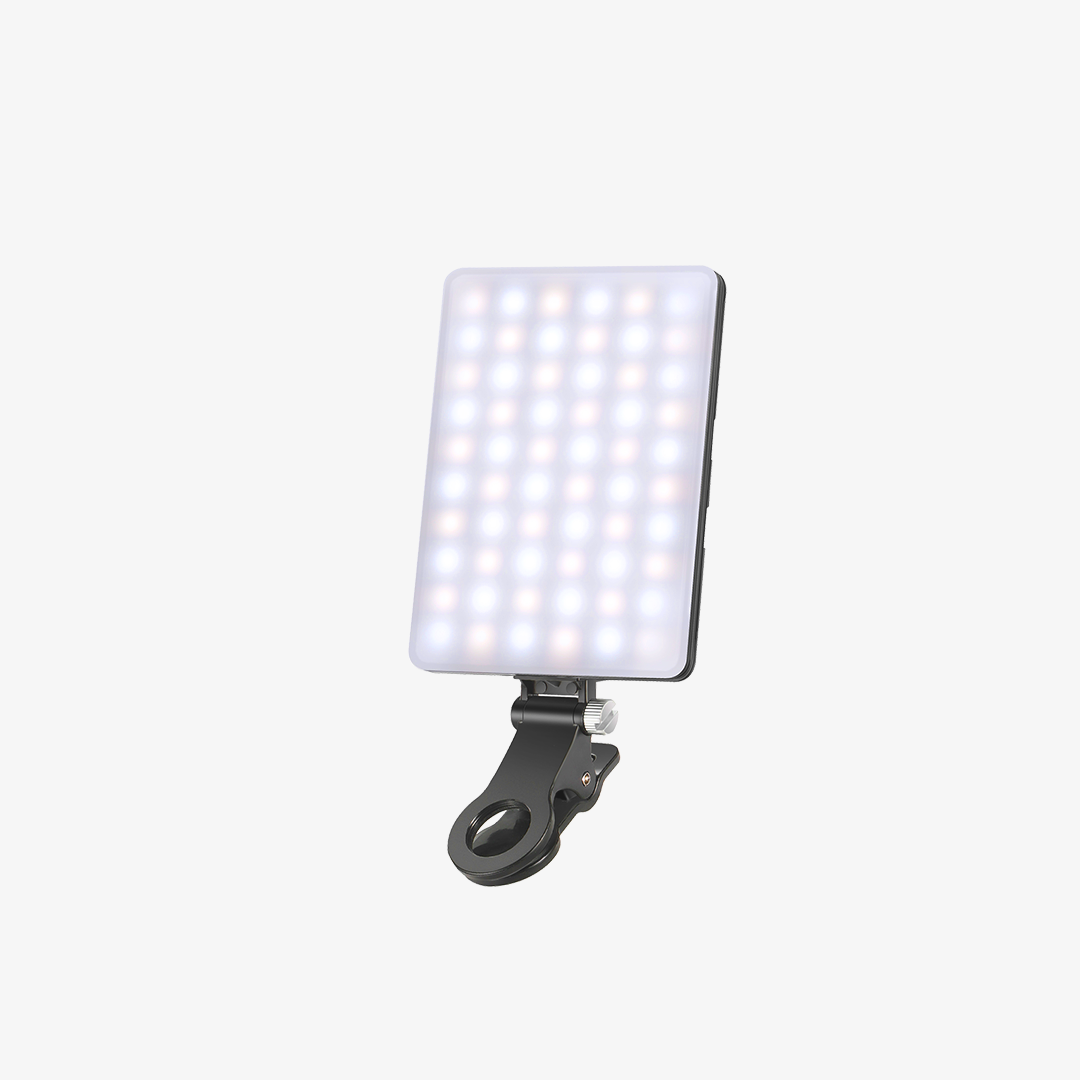
All-in-one softbox kits cover most beginner portrait and product work. When you need more output through a larger Bowens softbox, or battery-powered portability on location, a continuous COB head is the upgrade path — neither the HB80C nor the MS150C is a strobe.
b. NEEWER HB80C: Best Portable 80W COB for Softbox at Close Range
The Breakdown
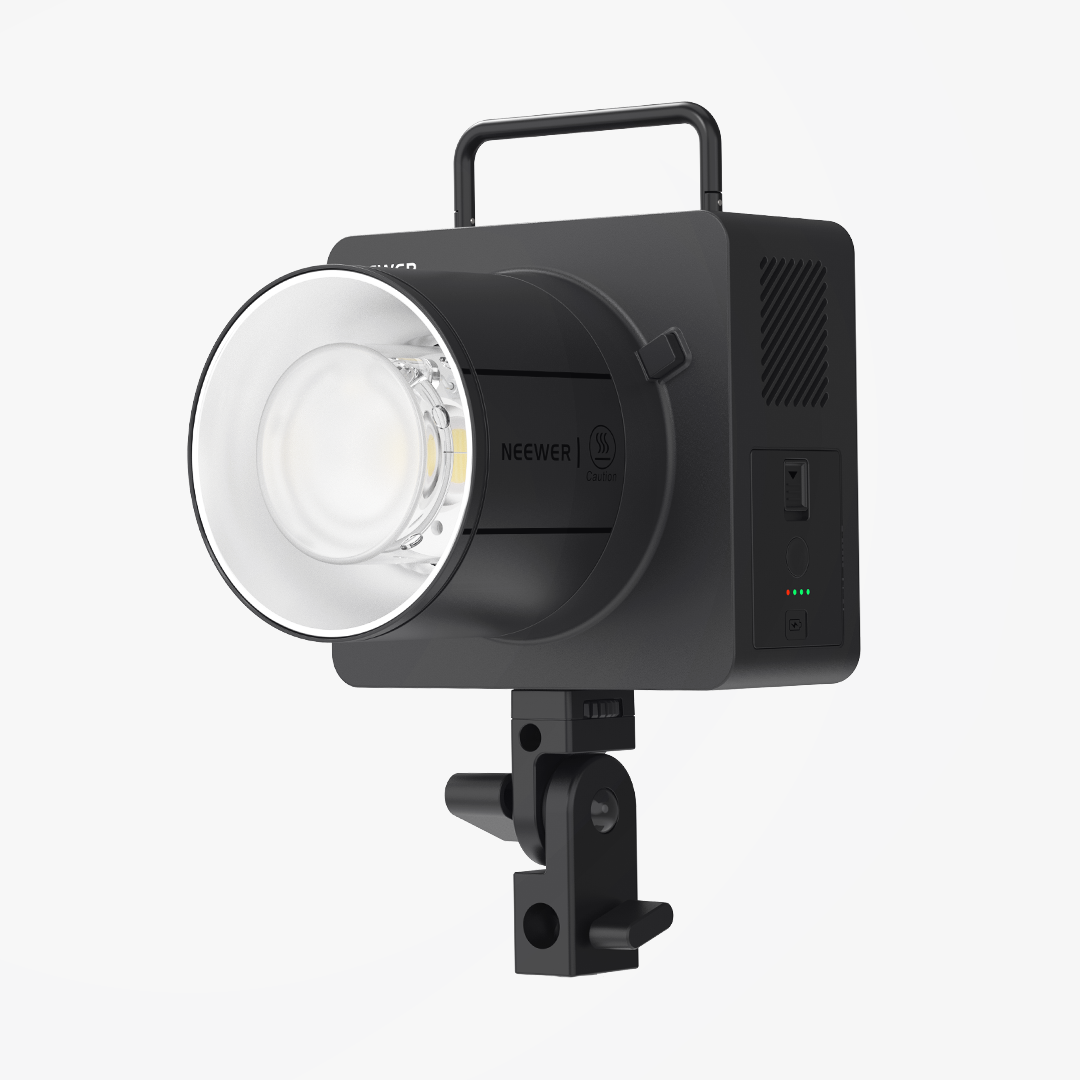
The NEEWER HB80C is an 80W RGBWW continuous COB - not a strobe - with a built-in 72Wh battery, Bowens mount, and umbrella socket. At close range with a softbox, 80W is usually bright enough for beginner talking-head videos, webcam framing, tabletop product photography, and indoor portrait setups. The most common mistake is placing the softbox too far away and trying to compensate with wattage alone.
|
Spec |
Detail |
|
Max power |
80W booster / |
|
Max illuminance |
10,400 lux / m at 4400K with reflector |
|
Color temperature |
2500K–7500K |
|
CRI / TLCI |
95+ / 97+ |
|
Battery |
1h 10min (regular mode); |
|
Mount |
Bowens + umbrella socket |
|
Control |
NEEWER Infinity App + 2.4G |
Pros
- Built-in battery for location shoots and small rooms without AC
- Bowens softbox compatibility — natural upgrade from E26 kit setups
Cons
- Less output headroom than MS150C through large softboxes at working distance
- Booster mode (80W) requires a PD 100W charger for full output
Best for: close-range portrait and product with softbox, portable accent or fill, upgrading from an E26 kit without going full studio COB.
Also pair with the NEEWER 65CM / 90CM Octagonal Softbox - Bowens mount fits the HB80C directly; the 65cm version handles close-range portrait and product work, the 90cm gives a larger, softer spread.
For fixed studios needing more lux through a medium or large Bowens softbox, the NEEWER MS150C is a 150W continuous RGBWW COB (16,600 lux / m per spec table, CRI 97+, Bowens adapter included) — also not a strobe. Stand and softbox sold separately.
FAQs
What is the difference between strobe and continuous lighting?
Strobe fires a short burst when the shutter fires; continuous stays on for live preview throughout the shoot. Strobe suits still photography needing peak output or motion-freeze; continuous suits video, streaming, and beginners learning light placement.
Can you use continuous light for product photography?
Yes — continuous softbox kits like the NK103 handle static products well, where live shadow preview speeds setup. Strobe has the advantage when a product moves during capture, or you need to overpower strong ambient light in a single frame.
Are strobe lights good for beginners?
Usually not as a first light. Continuous softbox kits let you watch shadows shift in real time as you reposition the light, which builds intuition faster than the strobe test-fire cycle. Consider strobe once still photography becomes your primary focus, or when on-camera TTL flash becomes part of your workflow.
Do video creators need strobe lights?
No — standard video recording requires continuous light because the sensor reads every frame. Use continuous LED panels, softbox kits, or COB heads that stay on across the full recording.
What softbox lighting kit works for portrait photography beginners?
The NEEWER NK103 2-pack covers key-and-fill for portrait and product work out of the box — 45W bi-color bulbs, CRI 95, 2.4G remote, two 24" softboxes, and two stands included. Add the NK800 RGB kit when you need app-controlled color accents.
Are softboxes better than ring lights for portraits?
Usually, yes for portrait depth and natural-looking facial shadows. Ring lights create flatter, front-facing illumination that works well for beauty close-ups and webcams, while softboxes produce more directional light and softer facial contour transitions — a better fit for portrait and product work where shadow shape matters.
Final Recommendation
Start with a continuous softbox setup if you're learning portraits, product photography, video, or livestreaming in a home studio. A kit like the NK103 keeps the workflow simple because you can see shadows and light placement in real time. For desk streaming with limited floor space, an LED panel works better — compact and always-on without taking up stand space.
Upgrade to a COB light later if you need more output, larger Bowens softboxes, or battery-powered portability. Move to strobe lighting only when still photography, flash duration, or advanced flash control becomes the priority.