

Table of Contents
A desk light is usually better for everyday Zoom meetings when you want soft, screen-friendly light without a visible ring reflection. A ring light can still work for beauty, makeup, or front-facing creator videos, but it is not the best answer for every desk setup.
The key difference is output shape and placement: a desk light or monitor-mounted fill light sits above the screen at a natural angle, while a ring light positions directly in front and creates a circular catchlight that reflects in eyewear and on polished surfaces. For most home-office and professional call setups, the softer and less distracting format is the right starting point.
Quick Answer: Desk Light vs Ring Light
For Zoom calls and professional meetings, a desk light gives softer, more natural output without a ring catchlight on camera. Ring lights are the right format when the catchlight is part of the content style — beauty tutorials, creator videos, and front-facing setups where even front fill matters most.
How the four formats compare:
|
Format |
Output type |
Desk footprint |
Ring catchlight |
Best for |
|
Desk light |
Diffused, soft, panel |
None (monitor-clip) |
No |
Zoom calls, video meetings, home-office desk use |
|
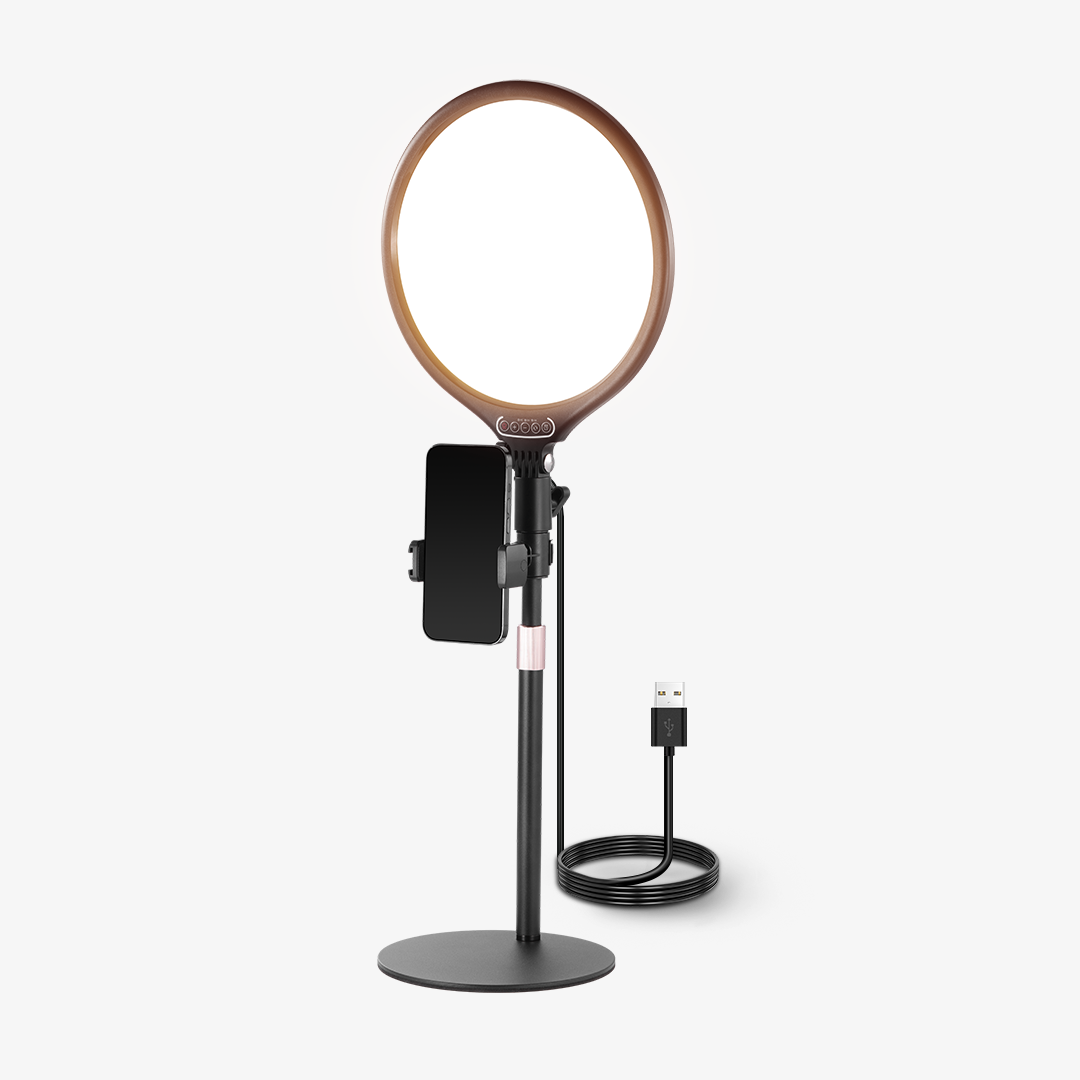
Ring light |
Circular, even front fill |
Stand required |
Yes |
Beauty tutorials, makeup content, front-facing video |
|
LED panel |
Adjustable, directional |
Stand required |
No |
YouTube, desk streaming, studio key light |
|
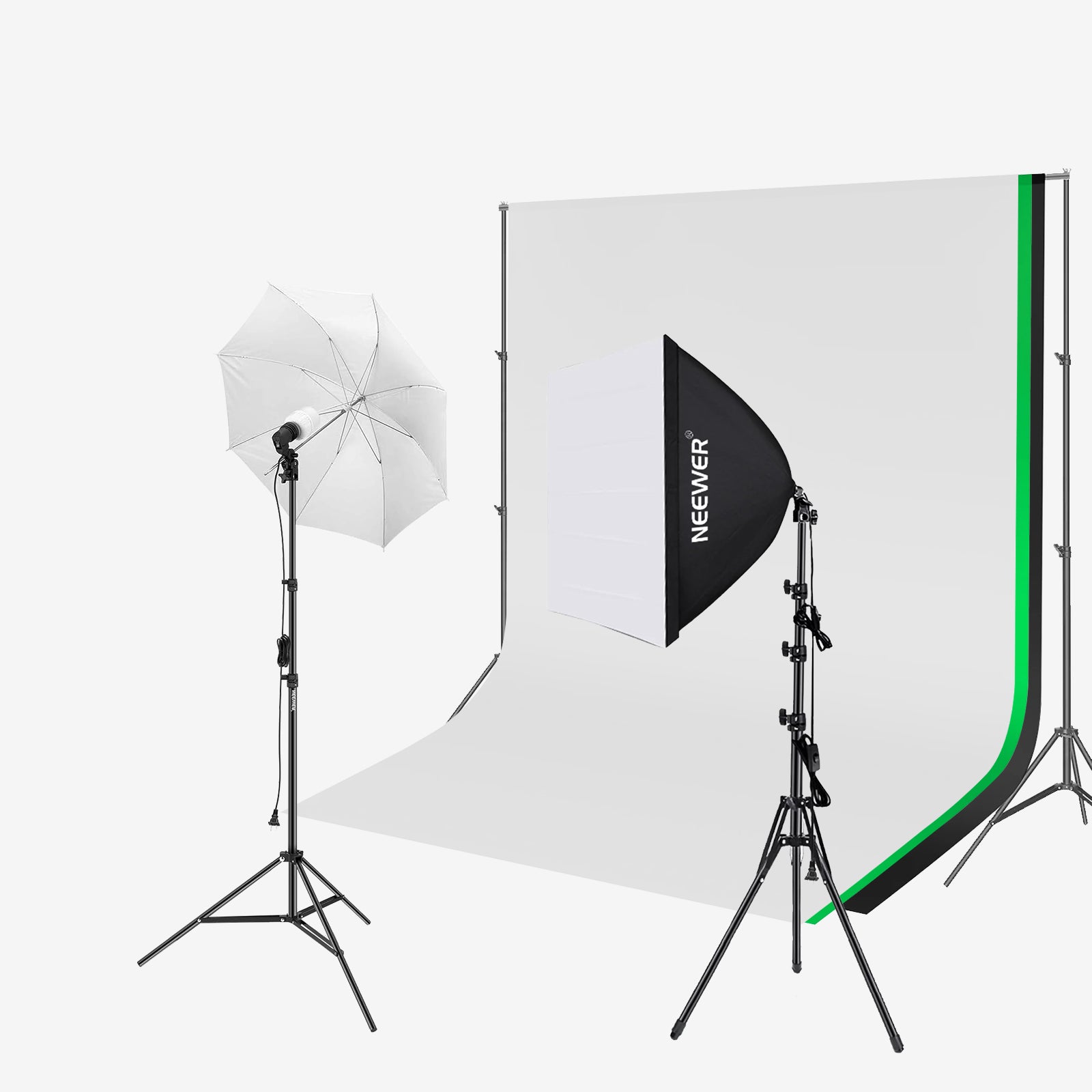
Softbox |
Large, soft, diffused |
Stand + modifier |
No |
Product photography, portrait, studio fill light |
NOTE: In this article, “desk light” refers to monitor-clip or screen-mounted panel lights —designed to sit above the screen with no stand or floor footprint. “Ring light” refers to stand-mounted circular lights where the ring output and front catchlight are the defining features. Some compact ring lights can technically sit on a desk, but the output format, placement angle, and use case are fundamentally different.
For a deeper look at the ring light and softbox comparison, see Ring Light vs Softbox.
Which format fits your scenario:
|
Scenario |
Better choice |
Why |
|
Everyday Zoom and remote video calls |
Desk light |
Diffused output; no ring catchlight |
|
Video calls with glasses |
Desk light |
Avoids ring reflection on every lens surface |
|
Professional or corporate video meetings |
Desk light |
Natural angle, no visible rig on camera |
|
Small desk or monitor arm, no stand space |
Desk light |
Monitor-clip format, no floor or desk footprint |
|
Makeup tutorial or skincare creator content |
Ring light |
Circular catchlight is part of the look |
|
Front-facing TikTok or Reels at desk |
Ring light |
Even front fill, consistent catchlight for beauty format |
|
YouTube streaming with dedicated camera |
LED panel + stand |
Directional control, softbox-compatible |
What Makes Zoom Lighting Look Natural?
Natural Zoom lighting depends on angle and diffusion — brightness alone does not solve the problem. A desk light used as a soft fill light, placed slightly above eye level at roughly 30–45 degrees, produces gentle facial shadows that read naturally on compressed video, rather than the flat look from a direct front source.
Two specs that matter most on a desk setup:
- Color temperature: 5000K–5600K (neutral daylight) matches most office environments. Warm room light mixed with a mismatched desk light creates a color cast that video compression exaggerates.
- CRI: CRI 95+ renders skin tones accurately on camera without the greenish or orange shift that lower-CRI sources introduce at high compression.
When a Desk Light Is the Better Choice
A desk light is right for Zoom when natural output and a clean desk are the priority. Monitor-mounted lights clip above the screen at a natural angle, leave the desk surface clear, and produce diffused fill without a circular catchlight — the correct format for home offices, multi-monitor setups, and professional calls.
Choose a desk light when:
- You wear glasses and want to avoid circular reflections on your lenses
- Your desk has no room for a floor stand
- You need consistent, set-and-forget output across back-to-back calls
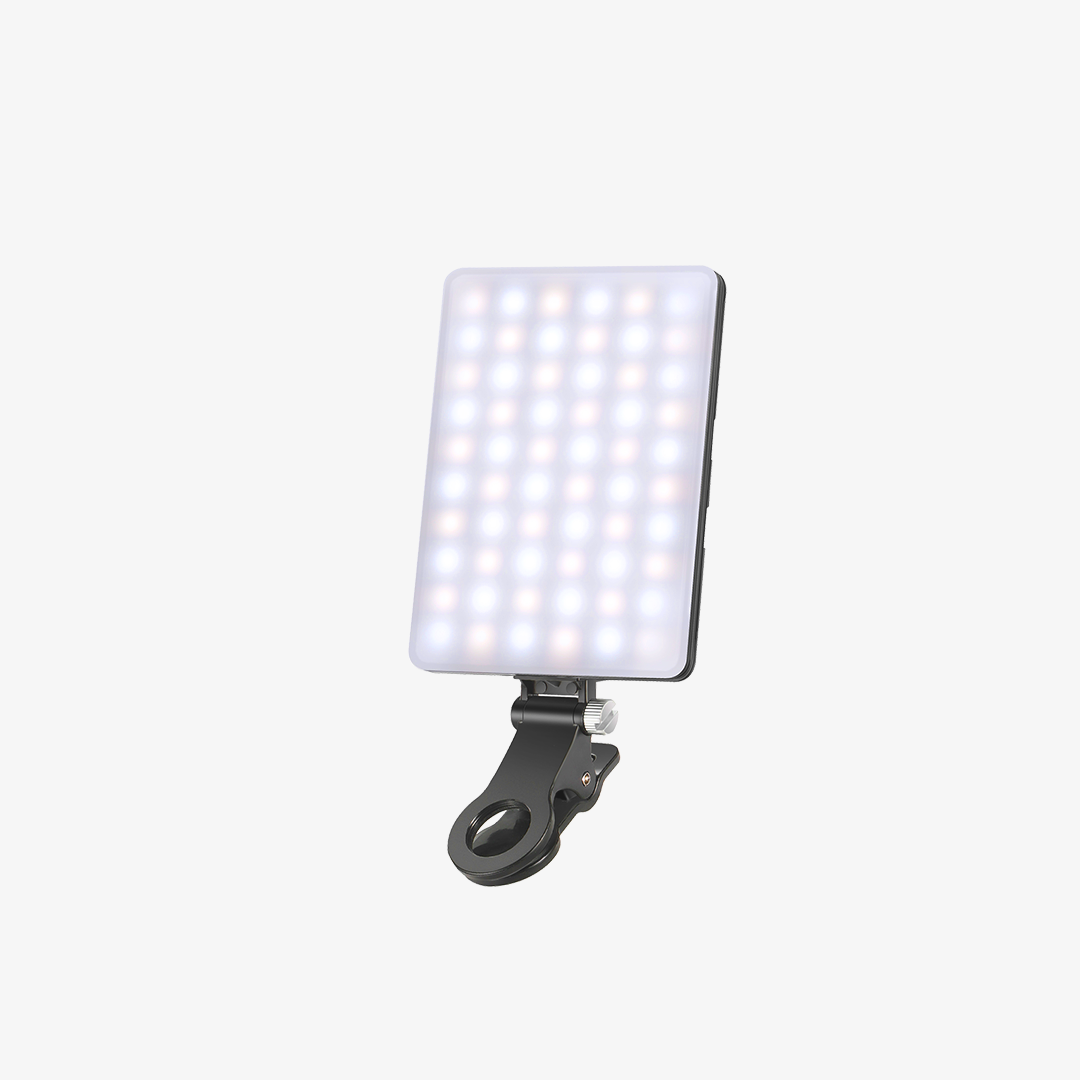
NEEWER NL10: Best Screen-Friendly Desk Light for Video Calls
The NEEWER NL10 is the monitor-clip desk light built for this role — it clips above the screen, produces diffused output at a natural face angle, and occupies no desk surface. At 5–10W adjustable power, it covers standard desk working distance without the harsh output or ring catchlight that makes other formats distracting on professional calls.

The Breakdown
|
Parameter |
Value |
|
Power |
10W |
|
Color temperature |
3000K / 3500K / 4300K / 5600K / 6000K |
|
CRI / TLCI |
95 / 98 |
|
Max illuminance |
656 lux at 0.5 m |
|
Brightness |
10 levels |
|
Light dimensions |
5" × 5" / 12.7 × 12.7 cm |
|
Stand height |
11"–13.7" / 28–34.7 cm |
|
Mounting |
Monitor clip + 1/4" threaded hole |
|
Power input |
USB-A (USB-A to USB-C adapter included) |
Pros
- Monitor-clip format: no stand, no desk footprint
- Edge-lit full-screen output delivers soft, even fill — no ring catchlight, no harsh shadows at desk distance
- CRI 95 / TLCI 98 renders skin tones accurately on compressed video
- 5 CCT modes + 10 brightness levels with memory function
Cons
- 10W output is optimized for desk distance (0.5 m); not a substitute for a stand-mounted key light at 1–2 m
- Does not produce ring catchlight — not the right format for beauty or makeup creator content
Best for: Everyday Zoom meetings, professional video calls, home-office desks, and glasses wearers who want clean, natural-looking light without a visible rig on camera.
When a Ring Light Still Makes Sense
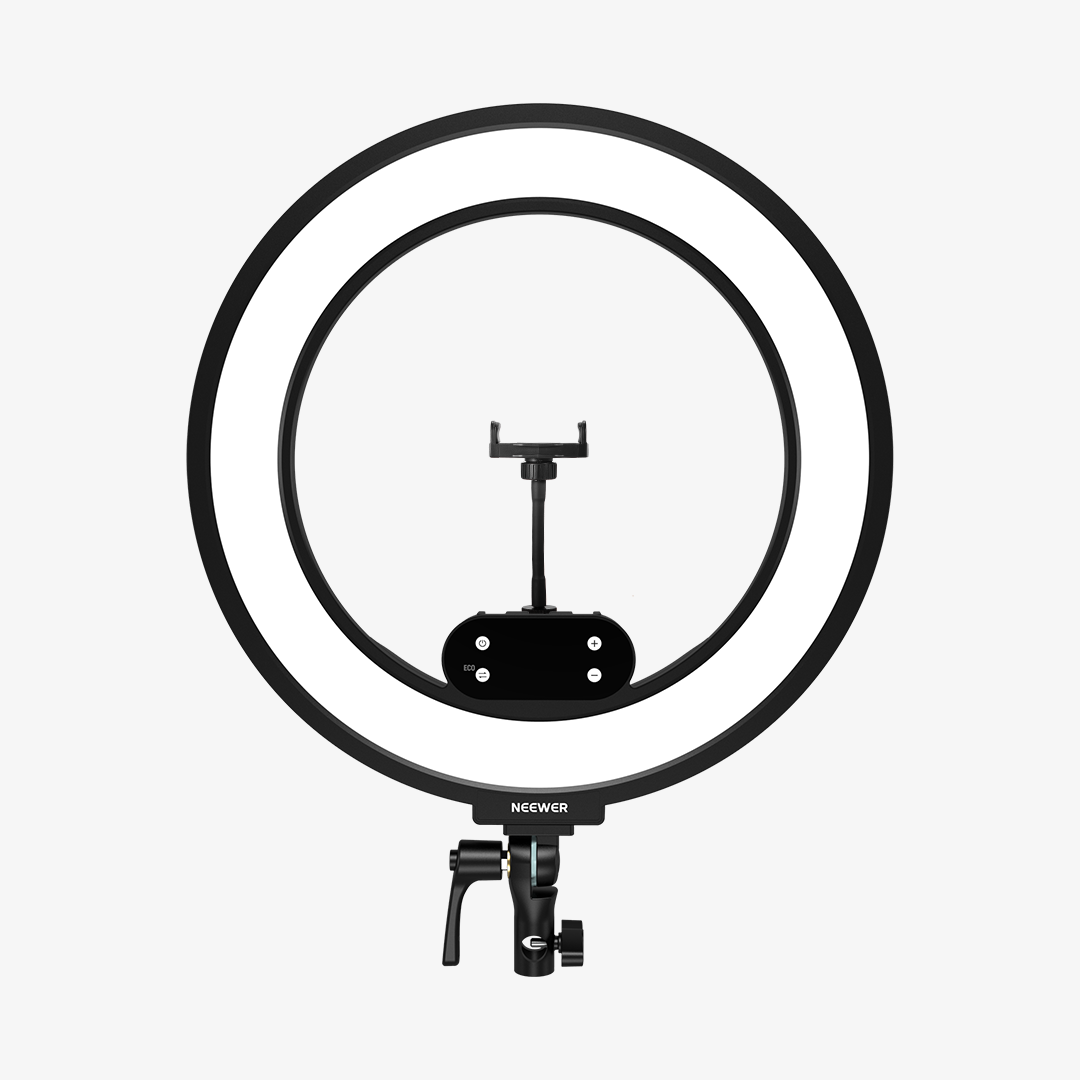
A ring light is the right format when the circular catchlight is part of the content style. For beauty tutorials, skincare content, and front-facing TikTok, the ring catchlight defines the look — audiences expect it. At close working distances, a ring light delivers the most even front fill with minimal facial shadowing.
Consider a ring light when:
- You record beauty or makeup content where the ring catchlight is a deliberate visual element
- You shoot a front-facing TikTok or short-form creator video without glasses in the shot
- You need a cordless setup for outdoor or travel creator use
If you have confirmed a ring light is the right format, the NEEWER RB18B is an 18-inch bi-color cordless option with a built-in battery — no wall outlet required, and the adjustable stand is included in the kit.
|
Parameter |
NEEWER RB18B |
|
Power |
45W, bi-color |
|
Color temperature |
2900K–7000K |
|
Diameter |
18 inches |
|
Stand height |
19.3"–69.7" / 49-177cm |
|
Battery |
Built-in (cordless) |

Browse the ring lights collection if you create beauty, skincare, or front-facing short-form video and want a stronger ring catchlight effect on camera.
NOTE: For color effects and background atmosphere in creator content, a compact RGB panel adds what a bi-color ring light cannot — though for Zoom and professional calls, colored output is rarely appropriate.
Setup Examples for Laptop, Monitor, and Dual-Screen Desks
1. Single monitor or laptop
Mount the NL10 at the top of the monitor so the light and camera share the same sightline — this avoids the “looking away from the light” effect that happens when light and camera are not aligned. In a small room, one diffused desk light at 30–45 degrees fills the harsh overhead shadows from the ceiling without requiring you to move furniture.
2. Upgrading to YouTube or streaming
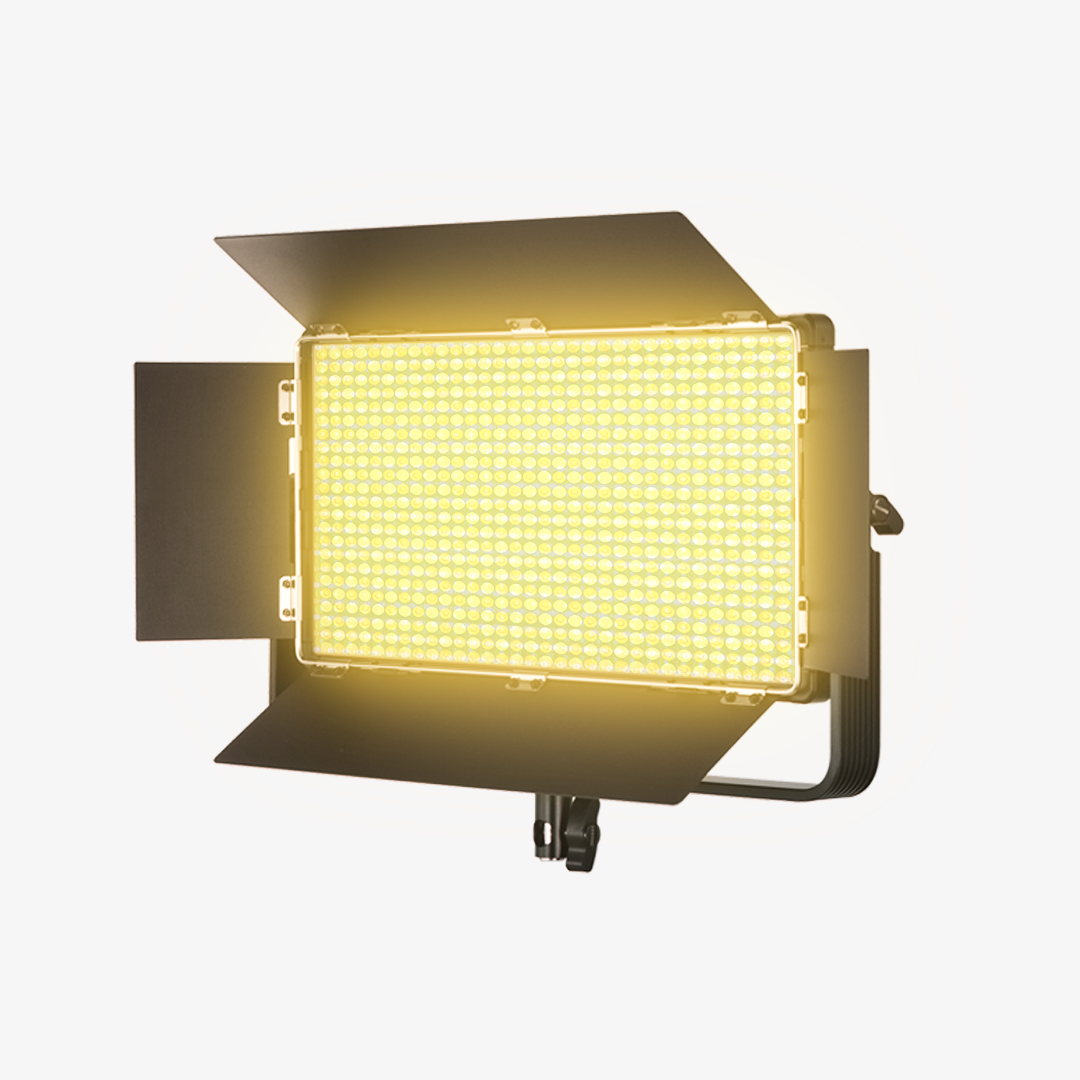
For streaming setups, a stand-mounted LED panel works better as a dedicated key light because it provides stronger directional control, softbox compatibility, and enough output for 1–2 meter shooting distance. For tighter desk setups, a compact panel like the NEEWER NL480 fits more easily while still providing adjustable output and directional control; for higher output, softbox modifier compatibility, or multi-camera YouTube production, the NEEWER NL660 LED panel is the higher-output upgrade. Verify current kit contents and accessories on the official product page before purchasing.

Common Mistakes: Glare, Glasses Reflections, and Harsh Front Light
1. Ring catchlight on glasses lenses
A ring light placed directly in front creates a circular reflection on every lens surface in the shot — a visible glare point that reads as a content creator rig even on a professional call. A desk light or small panel at a 30–45 degree angle eliminates the reflection without reducing face brightness.
2. Light placed behind the monitor
A light behind your monitor aimed at your face creates a high-contrast frame where the camera meters the full frame, and the face ends up underexposed against a bright background. Keep the primary light in front of you, between the camera and your face.
FAQs
What light setup works best for Zoom meetings, beauty content, and YouTube streaming?
A desk light for Zoom — soft front fill, no ring reflection. A ring light for beauty tutorials where the circular catchlight is part of the visual style. A stand-mounted LED panel for YouTube or streaming, where directional key light control and softbox compatibility matter.
Is a ring light good for Zoom meetings?
It works if you do not wear glasses and are comfortable with the circular catchlight, but a desk light or LED panel light is the cleaner option for professional calls.
What light is best for video calls with glasses?
A diffused desk light above the monitor at a 30–45 degree angle — it eliminates the circular reflection a front-facing ring light creates on every lens surface.
Where should I place a desk light for Zoom?
At the top of the monitor, angled toward your face at roughly 30–45 degrees. Aim for eye level to slightly above; directly overhead creates top-down shadows that darken the eye sockets on camera.
Is the NL10 a ring light alternative?
No — it is a screen-mounted desk light for diffused fill at monitor distance, with no ring catchlight and no stand footprint. For beauty tutorials where the ring catchlight is part of the look, a ring light is still the correct format.
How do I light a small room for video without harsh shadows?
Most small rooms need softer placement, not more brightness. One diffused desk light at 30–45 degrees fills the overhead ceiling shadows without moving furniture — a single soft source at the right angle is enough.
Final Thoughts
For Zoom and professional meetings, the NL10 solves the lighting problem without adding a visible rig to the shot. A ring light like the RB18B is the right answer when beauty content is the actual use case — and only then. For streaming or YouTube, choose between the NL480 for tighter desks or the NL660 for higher output and softbox compatibility. Still deciding? The scenario table in the Quick Answer section above is the fastest way to confirm which format fits your setup.