

Table of Contents
A softbox is your go-to for controlled, directional softness in portrait and product photography. While an umbrella also softens your light, it scatters it over a wider area, creating more ambient spill. Bare light is the hardest until you add diffusion, a modifier, or bounce it off a larger surface. For headshots and glossy packaging, prioritize a softbox over an umbrella when you need tighter spill control and more predictable shadow edges.
Softbox vs umbrella vs bare light at a glance
This light modifier comparison ranks the three shapes for photography soft light on the subject, not just brightness in the room.
|
|
Bare light |
Umbrella (+ diffuser) |
|
|
Softness on the subject |
Hardest |
Softer than bare; less wrap than a deep softbox |
Softest, most gradual shadow edges |
|
Spill control |
Fair — directional beam, |
Poor — light scatters; walls and ceiling pick up spills easily |
Strong — directional panel keeps light focused on the subject |
|
Setup |
Fastest |
Fast |
Slowest (frame + fabric) |
|
Glossy products |
Hard specular spots |
Broad reflections |
Clean, defined |
|
Best role |
Rim / separation |
Fast fill, small groups |
Portrait & product key |
Umbrellas can make the room feel bright; softboxes make the face or product look soft because the diffusion surface sits closer and stays more directional.

Why softness and spill are not about wattage
Photography soft light comes from a large source close to the subject — apparent size beats wattage on the label.
A bare bulb or COB chip acts as a point light source, meaning shadows will stay harsh and crisp at normal portrait distances. A softbox or umbrella turns that pinprick of light into a massive surface. When you move it closer, shadows soften beautifully; if you pull it back, those shadow edges immediately harden. Softboxes keep more light aimed at the subject; umbrellas bounce into walls — fine with neutral paint, risky with strong color beside the set. Larger octagonal softboxes spread light more evenly than a small square panel; a single umbrella cover softens light but scatters more than a boxed panel.
Portrait vs product: which modifier fits
Portraits favor a close softbox; glossy products need off-axis softboxes; umbrellas fit fast, wide fills when you can manage spill.
1. Portraits and headshots
Place a 24 in or 33 in softbox about 2–4 ft from the face at 30–45°, with the panel aimed at the eyes. Use an umbrella with a diffuser for two-person setups; keep bare light off the key unless you want a hard, dramatic look.
|
Goal |
Modifier |
|
Single headshot, |
Softbox |
|
Two people, |
Umbrella + diffuser |
|
Tight room, need bi-color matching |
Softbox kit with adjustable bulbs |
|
Rim / hair |
Bare light or reflector only |
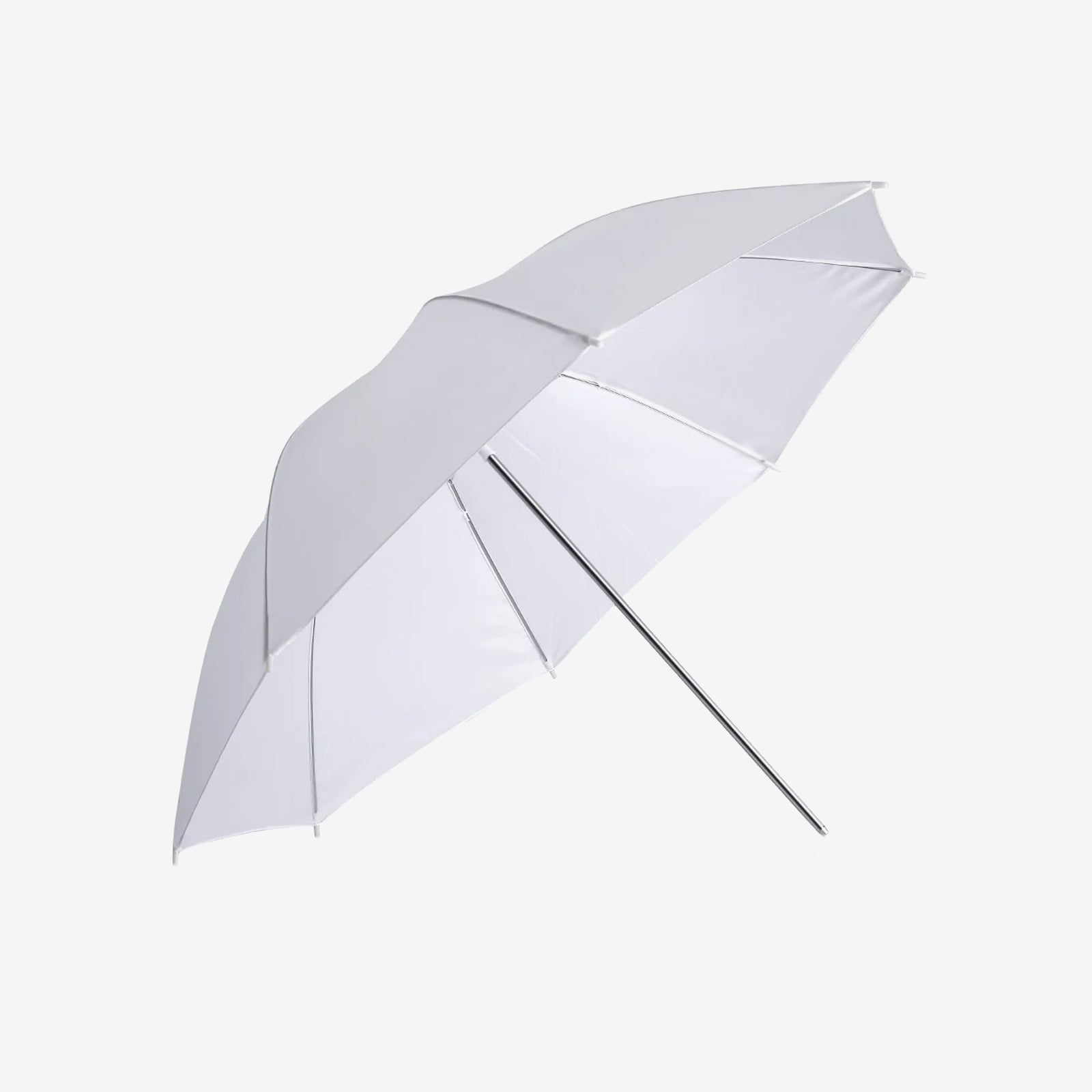
For the two-person and fast-setup rows above, also worth considering is the NEEWER NS1U — a 41" / 104 cm parabolic umbrella with a detachable white diffuser that mounts on any compatible strobe or continuous head with an umbrella socket. It opens like a standard umbrella for wide, soft fill in minutes, though the spill is higher than a boxed softbox key.
2. Product photography
Place a softbox at 45° for glass, metal, and glossy boxes, so reflections leave the frame. Umbrellas work on matte cosmetics and fabric if the walls are white or gray. Softbox vs bare light on shiny goods usually means blown highlights on bare keys.
|
Product |
Modifier |
|
Glossy / reflective |
Softbox off-axis |
|
Matte / textile |
Softbox, |
|
Flat lay |
Two softboxes at 45° |
Which modifier should you choose?
Start with what you shoot, then how much spill you can tolerate — pick the modifier type first, not a specific kit.
|
If you need |
Choose |
|
Controlled soft key, |
Softbox |
|
Fast wide fill, |
Umbrella + diffuser |
|
Glossy or reflective product |
Softbox off-axis — avoid bare key |
|
Matte products, |
Softbox preferred; umbrella acceptable |
|
Rim, |
Bare light or reflector — not the face key |
For more sizes and accessory options, browse our softboxes.
NEEWER modifiers that match common setups
a. NEEWER NK103: Best Bi-Color Softbox Kit for Portrait and Product Key Light

The Breakdown
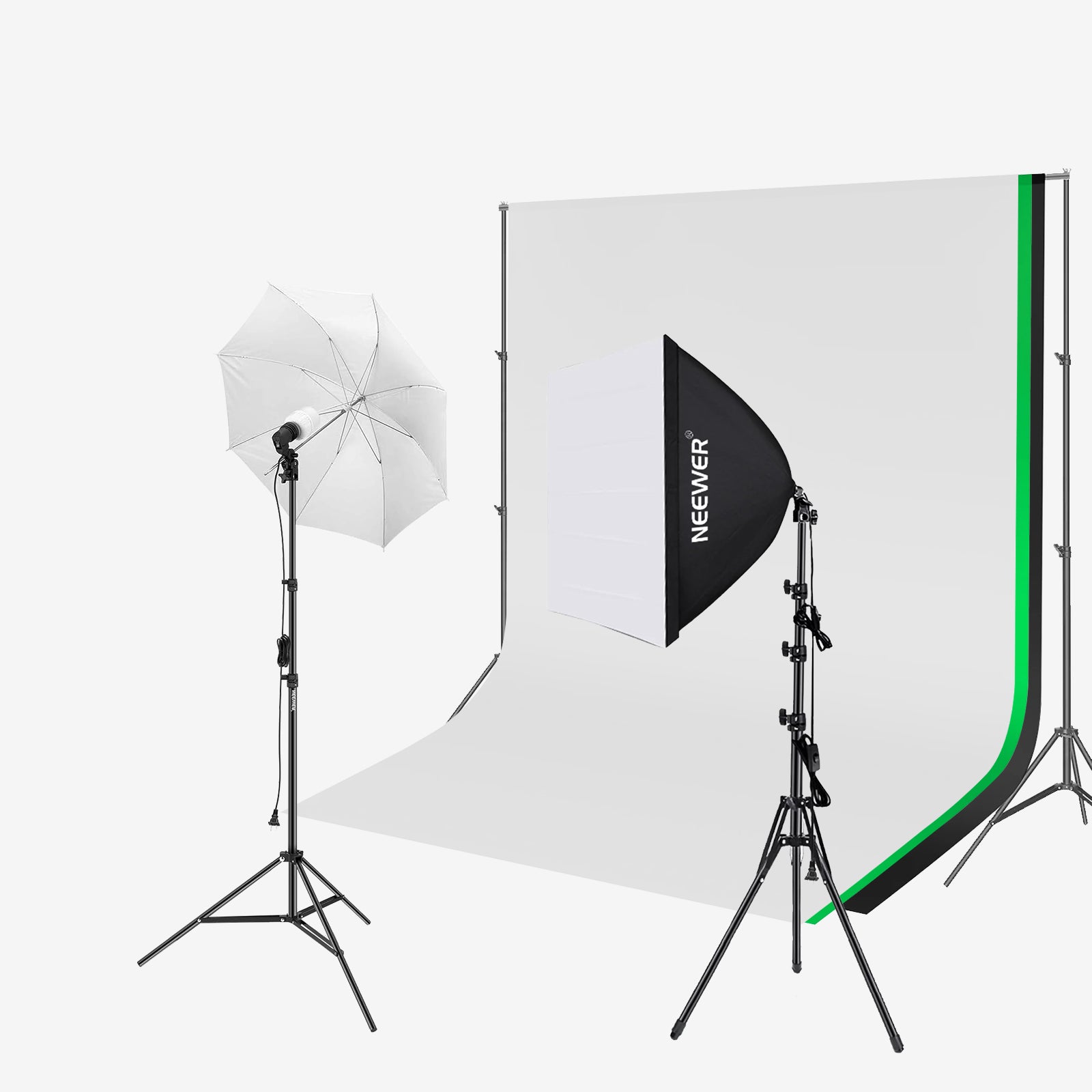
The NEEWER NK103 is a two-light continuous kit: 24×24 in softboxes, bi-color E26 bulbs, stands, and 2.4G remote — live shadow preview for photo and video.
|
Spec |
Detail |
|
Softbox |
24" × 24" / 60×60 cm (×2) |
|
Bulb |
45W bi-color LED (×2), |
|
Control |
2.4G remote, up to 66 ft / 20 m; |
|
Stand |
Up to 83" / 210 cm; |
|
Socket |
E26 |
Pros
- Key + fill in one purchase; bi-color for mixed room light
- Continuous output for hybrid portrait and product sessions
Cons
- Traditional rod assembly required for each shoot; 24 in panel means moving it closer for maximum softness
- E26 kit — not for Bowens-only heads without a listed adapter
Best for: home portraits, flat lays, talking-head video.
b. NEEWER NK200: Best Budget Softbox Kit for Daylight Portrait and Product Practice

The Breakdown
The NEEWER NK200 uses the same 24" × 24" softbox shape as the NK103 with 35W 5700K LED bulbs — softness still comes from panel size and distance, not the wattage number on the box.
|
Spec |
Detail |
|
Softbox |
24" × 24" / 60×60 cm (×2), |
|
Bulb |
35W LED, |
|
Kit options |
2-pack or 3-pack bulbs |
|
Stand |
Up to 83" / 210 cm, |
|
Socket |
E26 |
Pros
- Lower kit price for daylight-balanced stills and video practice
- Same diffusion concept as NK103 for learning soft light placement
Cons
- No bi-color range or 2.4G remote in the kit listing — adjust at the bulb
- Same frame-and-rod assembly time as other softbox kits
Best for: budget product flats, static portraits, and shooters who color-correct in post.
c. NEEWER 65CM / 90CM Octagonal Softbox: Best Bowens Modifier for Larger Wrap

The Breakdown
The NEEWER 65CM / 90CM Octagonal Softbox is a Bowens-mount modifier only — octagonal shape with quick-release ribs for faster setup than a traditional rod-and-skirt box. Pair it with a compatible strobe or COB head when you have outgrown a 24" square kit or bare output.
|
Spec |
Detail |
|
Sizes |
26" / 65 cm; |
|
Mount |
Bowens |
|
Weight |
65 cm: 1.32 lb / 600 g; |
|
Material |
Plastic, metal, nylon |
|
Package |
1× octagonal softbox, |
Pros
- Larger, rounder diffusion face than 24" square kits — more wrap at a similar distance
- Quick-release design vs full rod assembly on entry kits
Cons
- Requires Bowens-mount light — not for E26 socket kits like NK103/NK200 alone
- No bulbs or stands in the box
Best for: portrait and product shooters upgrading from bare Bowens COB/strobe to a softer, wider key.
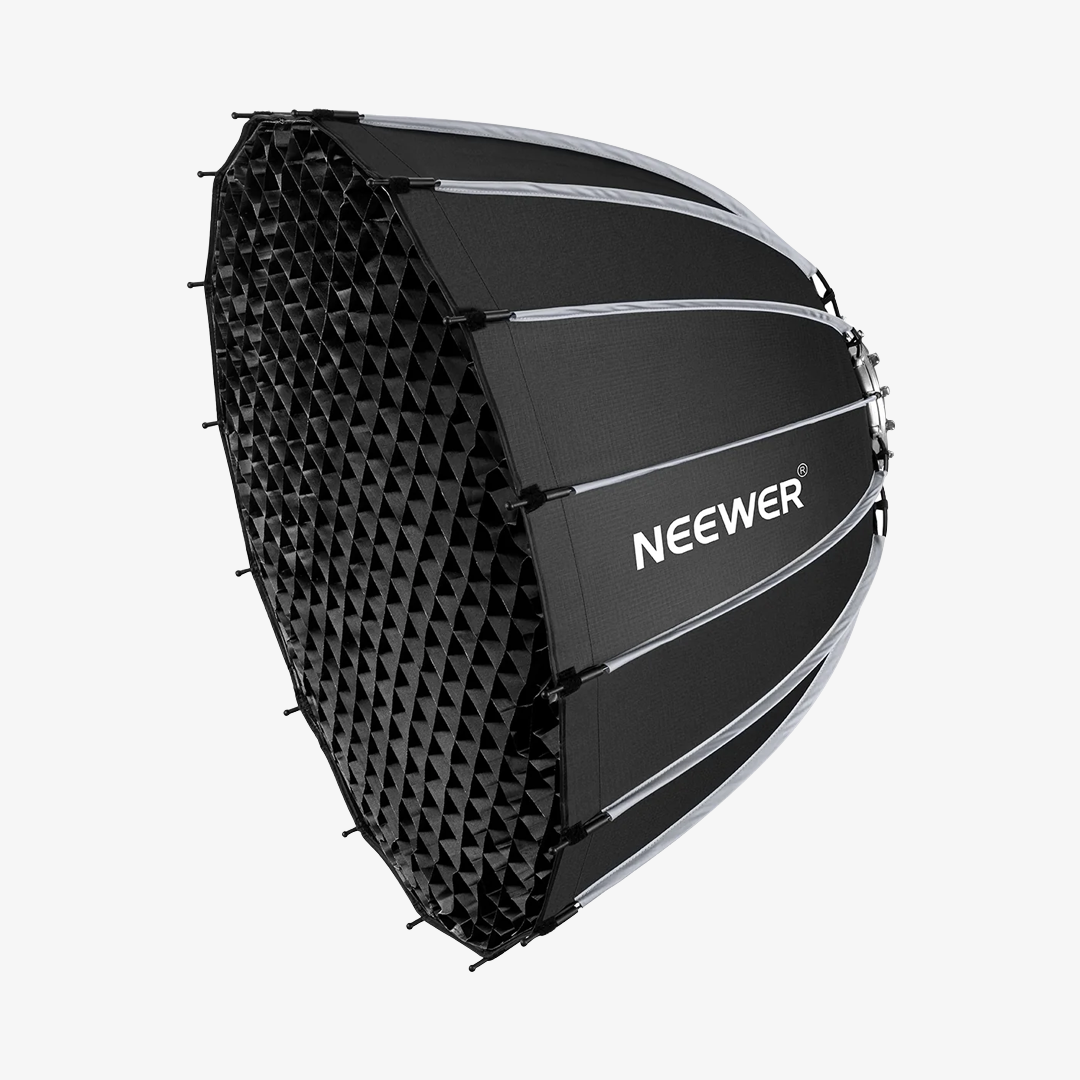
On Bowens-mount strobes or COB heads, you can also pair the NEEWER SF85Q — a 33.5" / 85 cm hexadecagon parabolic softbox (modifier only) with two diffusion layers and a honeycomb grid for more wrap and optional spill control after diffusion. It is also worth considering if you need a larger round key than the 65 cm or 90 cm octagonal softbox.
FAQs
Which is softer: softbox or umbrella?
A softbox usually looks softer on the subject because the panel is directional and can sit closer with less room spill. An umbrella softens over a wider area — helpful for groups, harder to control on glossy products.
For portrait and product shots, should I prioritize a softbox over an umbrella?
Yes, when you need spill control, off-axis reflections on shiny packaging, or a predictable headshot key at 2–4 ft. Choose an umbrella when setup speed and wide coverage matter more than background spill — and walls are neutral.
Does moving a bare light farther back make it softer?
No, it actually makes it harder. In photography, softness depends on the apparent size of the light source relative to your subject. Moving a bare light farther away makes the light source smaller in the eyes of your subject, resulting in even harsher shadow edges. To get a softer light, you need to bring a large modifier (like a softbox) closer, not farther away.
Should I use a softbox or an umbrella for product photos?
Pick a softbox for glossy or reflective products — place it off-axis so reflections stay out of the frame. An umbrella is fine for matte items when side walls are white or gray; spills on colored walls can tint the shot. Flat lays usually need two softboxes (key + fill), not a single umbrella key.
Can I use a softbox and an umbrella in the same setup?
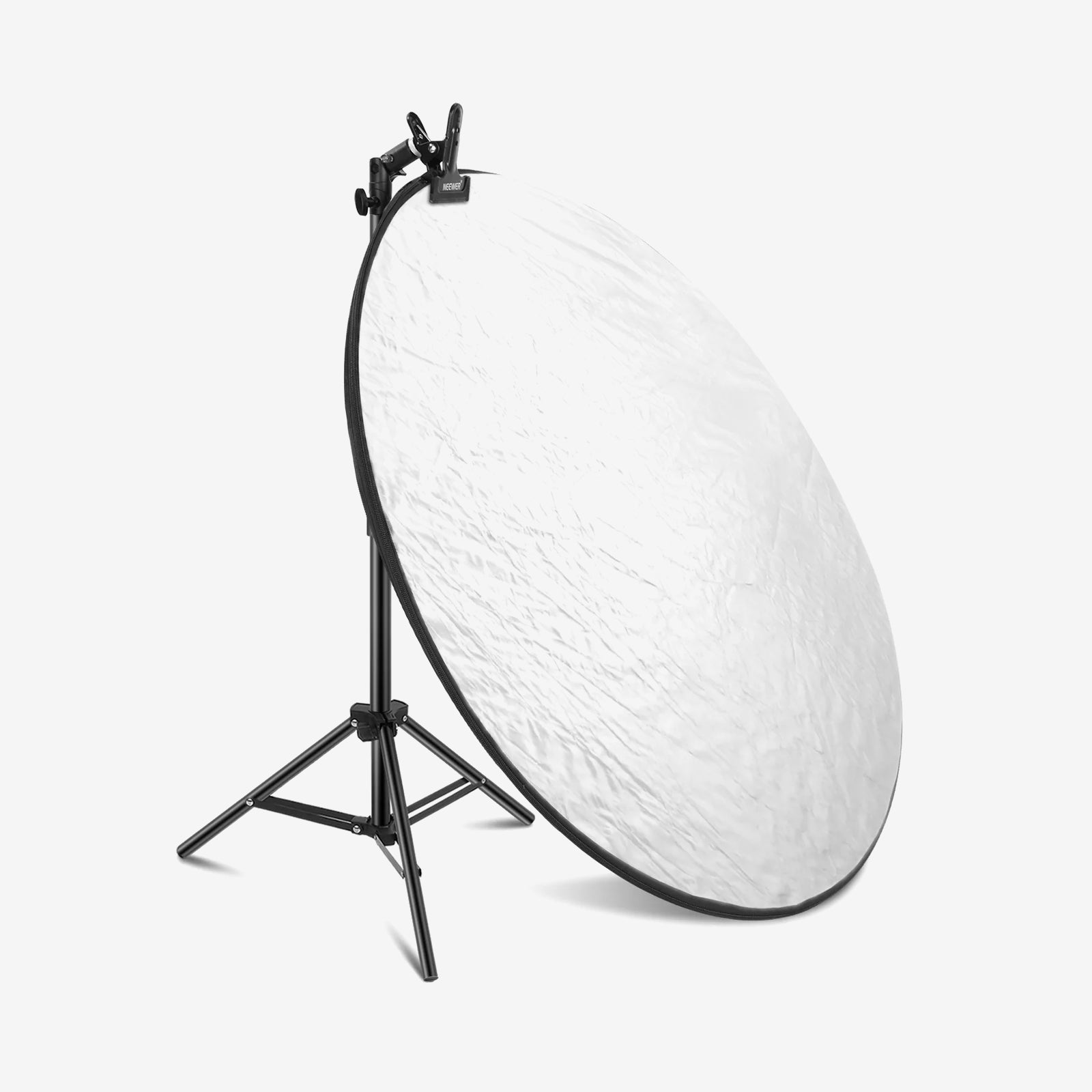
Yes — a common split is softbox as key and umbrella or reflector as fill. The boxed key controls spill and shadows on the face or product; the second source adds width without matching the key power (about 30–50% of the key or a reflector only). Putting the umbrella as the main key and the softbox as fill rarely works on reflective products. Because an umbrella scatters light everywhere, its uncontrolled spill will create chaotic, messy highlights across the entire setup.
Final takeaway
Softbox for controlled softness, umbrella for fast wide fill, bare light for accents only. Start with NK103 for a full bi-color kit, NK200 for a budget daylight setup, or the octagonal softbox if you already shoot Bowens — then adjust the modifier distance before you blame the light head.