

Table of Contents
In real-world use, ND filters are essential when you want shallow depth of field in daylight or natural-looking motion in video. For example, if you’re filming at 24fps and want to keep your shutter speed around 1/50 for smooth motion, bright sunlight will usually force you to overexpose. Instead of raising shutter speed or stopping down your aperture, you add an ND filter. It keeps your exposure balanced while preserving background blur and cinematic motion. Refer to our ultimate guide to ND filters to help you know everything about this lens filter.
What Is an ND Filter

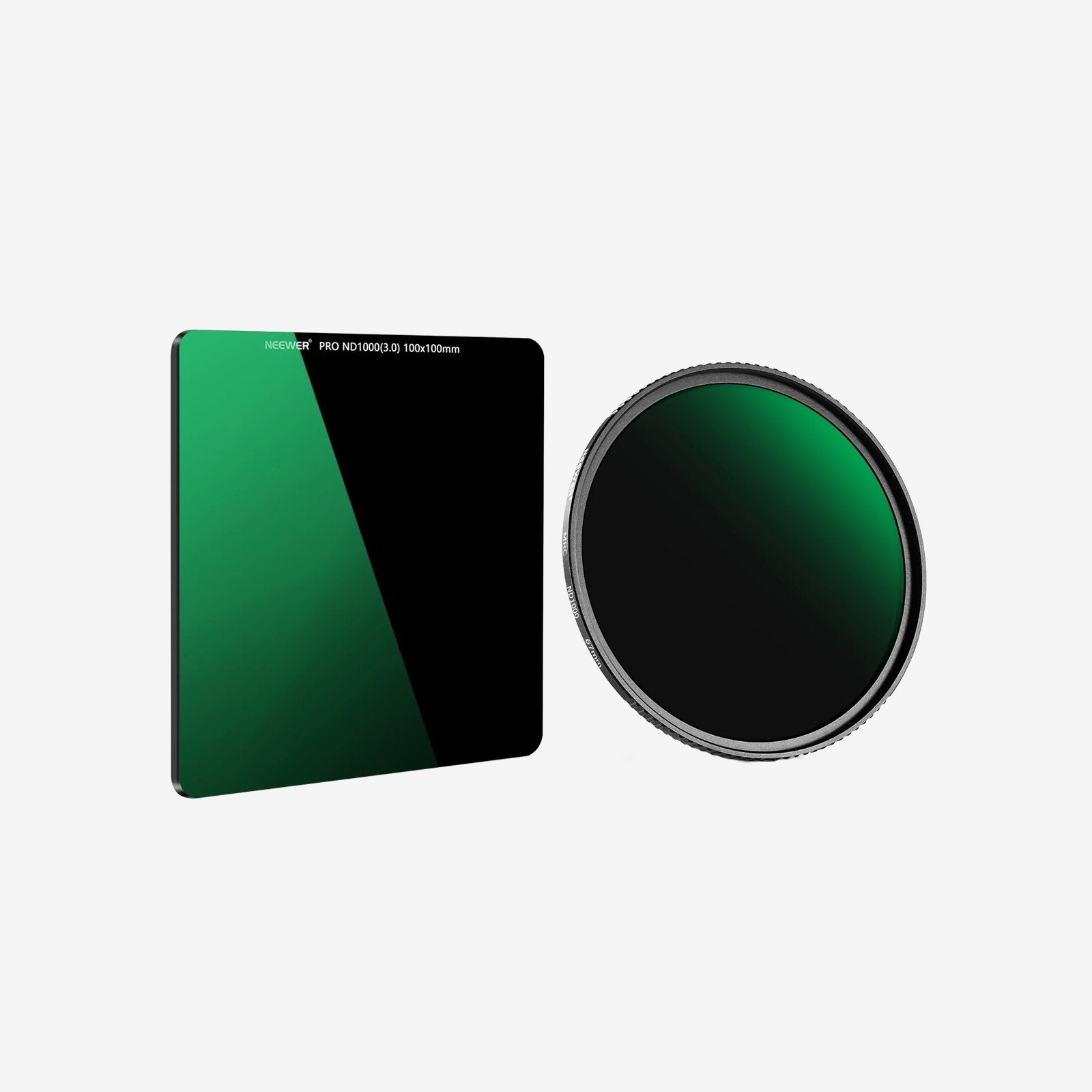
An ND filter (Neutral Density filter) is a darkened piece of optical glass that attaches to the front of your lens to reduce the amount of light entering the camera. It does not change color, contrast, or sharpness — it simply cuts light evenly across the frame. Think of it as sunglasses for your camera. When you’re shooting in bright conditions, and your image is overexposed, an ND filter lets you control exposure without changing your creative settings.
What Do ND Filters Do

1. Control Exposure in Bright Light
ND filters let you control how much light enters your camera, which is essential when shooting in bright conditions. Without an ND filter, your images or videos can easily become overexposed, especially on sunny days. By reducing the incoming light, you can keep your camera settings exactly where you want them — whether that’s a wide aperture for background blur or a slow shutter speed for motion effects. For example, if you’re filming a vlog outdoors at noon, an ND filter allows you to avoid blown-out highlights while keeping your footage looking natural and balanced, without fiddling with ISO or aperture.
2. Keep Natural Motion in Video
For video, the ND filter is almost always a must-have. Following the 180-degree shutter rule, a 24fps video requires roughly 1/50 shutter speed for natural-looking motion. In bright conditions, without an ND filter, you would have to either stop down your aperture, which reduces depth of field, or increase shutter speed, which moves look choppy. An ND filter lets you maintain correct shutter speed while keeping your chosen aperture, resulting in smooth, cinematic motion. Whether you’re filming action, interviews, or outdoor scenes, it ensures your footage looks professional without sacrificing creative control over focus and motion blur.
3. Enable Long Exposure Photography
ND filters are key for long exposure photography during daylight. Normally, long exposures are only possible in low light; otherwise, the image becomes overexposed. With a strong ND filter, you can slow your shutter for several seconds or even minutes while shooting waterfalls, rivers, clouds, or traffic. This creates dramatic effects like silky water, streaked clouds, or smooth light trails from cars, giving your images a dreamy, surreal look. Landscape photographers rely on ND filters to transform ordinary scenes into visually striking compositions, capturing movement over time while keeping exposure and colors perfectly balanced.
4. Maintain Shallow Depth of Field
One of the biggest challenges for photographers shooting outdoors is keeping a soft, blurry background while staying properly exposed. Wide apertures like f/1.8 or f/2.0 are ideal for portraits or cinematic shots, but in bright sunlight, they let in too much light. ND filters solve this by cutting light evenly, allowing you to keep that wide aperture and create a creamy background blur. This is especially useful for wedding, lifestyle, or portrait photography where you want your subject to stand out against a softly defocused backdrop, giving a professional, visually pleasing look without overexposing your shot.
5. Prevent Image Blowouts
Bright highlights in sunlight often lead to blown-out areas in your photos or videos where details are lost. ND filters reduce the overall light intensity, helping preserve details in both shadows and highlights. This is particularly useful when shooting reflective surfaces like water, snow, or metal, where glare can easily ruin your shot. By controlling light without changing color or contrast, ND filters let you maintain the natural look of your scene while protecting fine details. For creators who want clean, professional-quality images in high-contrast environments, ND filters are an essential tool to prevent exposure disasters and retain maximum dynamic range.
Types of ND Filters Explained

1. Variable Neutral Density Filter (VND)
- How it works: Uniform darkening across the frame; brightness adjustable by rotating the ring.
- Best for: Daytime video, vlogging, run‑and‑gun shooting, changing light conditions.
- Key pros: One filter for multiple scenarios; no need to swap filters constantly.
- Key cons: Low‑cost versions may show color shift or X‑shaped artifacts at high density.
2. Graduated Neutral Density Filter (GND)
- How it works: Dark on the upper part, clear on the lower part; transition between dark and clear.
- Best for: Landscape, seascape, cityscape – balancing bright sky and dark foreground.
- Key pros: Natural exposure, balance between sky and land.
- Key cons: Needs careful alignment; often requires a filter holder.
3. Reverse Graduated Neutral Density Filter (RGND)
- How it works: Darkest at the horizon line, lighter above and below.
- Best for: Sunset, sunrise, scenes where the horizon is extremely bright.
- Key pros: Fixes overexposure near the sun at dawn/dusk.
- Key cons: Highly specialized; only useful in limited lighting.
4. Center Graduated Neutral Density Filter (CGND)
- How it works: Darkest in the center, clearer toward the edges.
- Best for: Architecture, portraits with bright backgrounds, astrophotography.
- Key pros: Reduces center brightness or glare without darkening edges.
- Key cons: Very niche; not for general landscape or video.
What Do the Numbers on ND Filters Mean

The numbers on ND filters tell you how much light they block—and that directly controls how slow you can make your shutter speed. Here’s a clear, simple table you can reference at a glance.
|
ND Filter |
Optical Density |
Stops Reduced |
Shutter Speed Change (Example) |
Typical Use Case |
|
ND2 |
0.3 |
1 stop |
1/100s → 1/50s |
Slight light reduction, minor softening |
|
ND4 |
0.6 |
2 stops |
1/100s → 1/25s |
Mild motion blur in bright conditions |
|
ND8 |
0.9 |
3 stops |
1/100s → 1/12s |
Daytime video, gentle water blur |
|
ND16 |
1.2 |
4 stops |
1/100s → 1/6s |
Smoother water, stronger motion effects |
|
ND32 |
1.5 |
5 stops |
1/100s → 0.3s |
Dramatic waterfalls, cloud movement |
|
ND64 |
1.8 |
6 stops |
1/100s → 0.6s |
Most versatile for photo & video |
|
ND128 |
2.1 |
7 stops |
1/100s → 1.2s |
Bright sun, long exposure portraits |
|
ND256 |
2.4 |
8 stops |
1/100s → 2.5s |
Very bright conditions, heavy blur |
|
ND512 |
2.7 |
9 stops |
1/100s → 5s |
Extreme daylight long exposures |
|
ND1000 |
3 |
10 stops |
1/100s → 10s |
Extreme long exposures, surreal blur |
FAQs about ND Filters
1. Is an ND Filter the Same as a Polarizer?
No, an ND filter and a polarizer are not the same — they serve very different purposes, even though both attach to your lens.
An ND filter simply reduces the amount of light entering your camera without changing color, contrast, or reflections. It’s all about controlling exposure, letting you shoot wide apertures in bright light, slow shutter speeds for motion blur, or proper video shutter speeds in daylight.
A polarizer (CPL), on the other hand, selectively reduces glare and reflections from non-metallic surfaces like water, glass, or leaves. It can also deepen blue skies and increase overall color saturation. Unlike ND filters, polarizers change how light behaves, not just how much light enters.
2. Should You Get a CPL or an ND Filter?
If your goal is controlling exposure, keeping a wide aperture in bright sunlight, or shooting smooth motion in video, go with an ND filter. It doesn’t change color or reflections — it just cuts light evenly so you can stick to your creative settings. For example, filming a vlog at noon, shooting shallow depth-of-field portraits, or making waterfalls look silky all require ND.
If your goal is to reduce glare, reflections, or boost colors, get a CPL (circular polarizer). It’s perfect for outdoor photography where water, glass, or shiny leaves are causing distracting reflections, or when you want a deeper blue sky and richer colors. Many landscape photographers actually keep both: they use a polarizer to manage reflections and an ND filter to control exposure. Some advanced photographers even stack them for maximum effect — just be careful about vignetting or optical quality.
3. Can You Use an ND Filter All the Time?
Technically, you can leave an ND filter on your lens all the time, but it’s not always necessary or ideal. ND filters are designed to reduce light, so if you’re shooting in low-light situations — indoors, at dusk, or under cloudy skies — the filter can make your image too dark and force you to crank ISO or slow shutter speed unnecessarily. That can introduce noise or motion blur.
Most creators use ND filters only when needed: bright sunlight, outdoor video, or long-exposure photography. For indoor or low-light work, it’s better to remove the filter. Some shooters keep a variable ND on their kit lens for flexibility, but it’s more about convenience than always-on use. In short, ND filters are a tool for specific lighting situations, not a permanent addition to every shot.