

Table of Contents
Choosing a tripod head is less about finding one head that does everything and more about matching the head to the way you shoot.
If you mainly shoot travel and landscapes, a ball head can give you quick and flexible camera positioning. For video, a fluid head offers smoother pan and tilt movement. Wildlife photographers using long telephoto lenses may benefit from a gimbal head, while product and macro photographers often need the precise adjustments of a geared head.
The right choice depends on what you shoot most often, how much control you need, and how you move your camera during a shoot.
Why Your Shooting Style Matters When Choosing a Tripod Head
Different types of tripod heads are designed around different ways of positioning and moving a camera. A photographer who changes compositions quickly may value flexibility, while someone working on a carefully controlled product shot may need much finer adjustments.
A simple way to narrow down your options is to start with your most common shooting scenario:
|
Shooting Need |
Tripod Head to Consider |
|
Travel & everyday photography |
Ball Head |
|
Video & camera movement |
Fluid Head |
|
Wildlife & long telephoto |
Gimbal Head |
|
Product & precise composition |
Geared Head |
This doesn’t mean you can only use one type of head for each category. A ball head can still be used for landscapes, portraits, or other types of photography, while a fluid head can work for more than just video. The key is choosing the type of control that matches your workflow.
NEEWER Tripod Heads for Different Shooting Needs
GM36 — For Travel and Everyday Photography

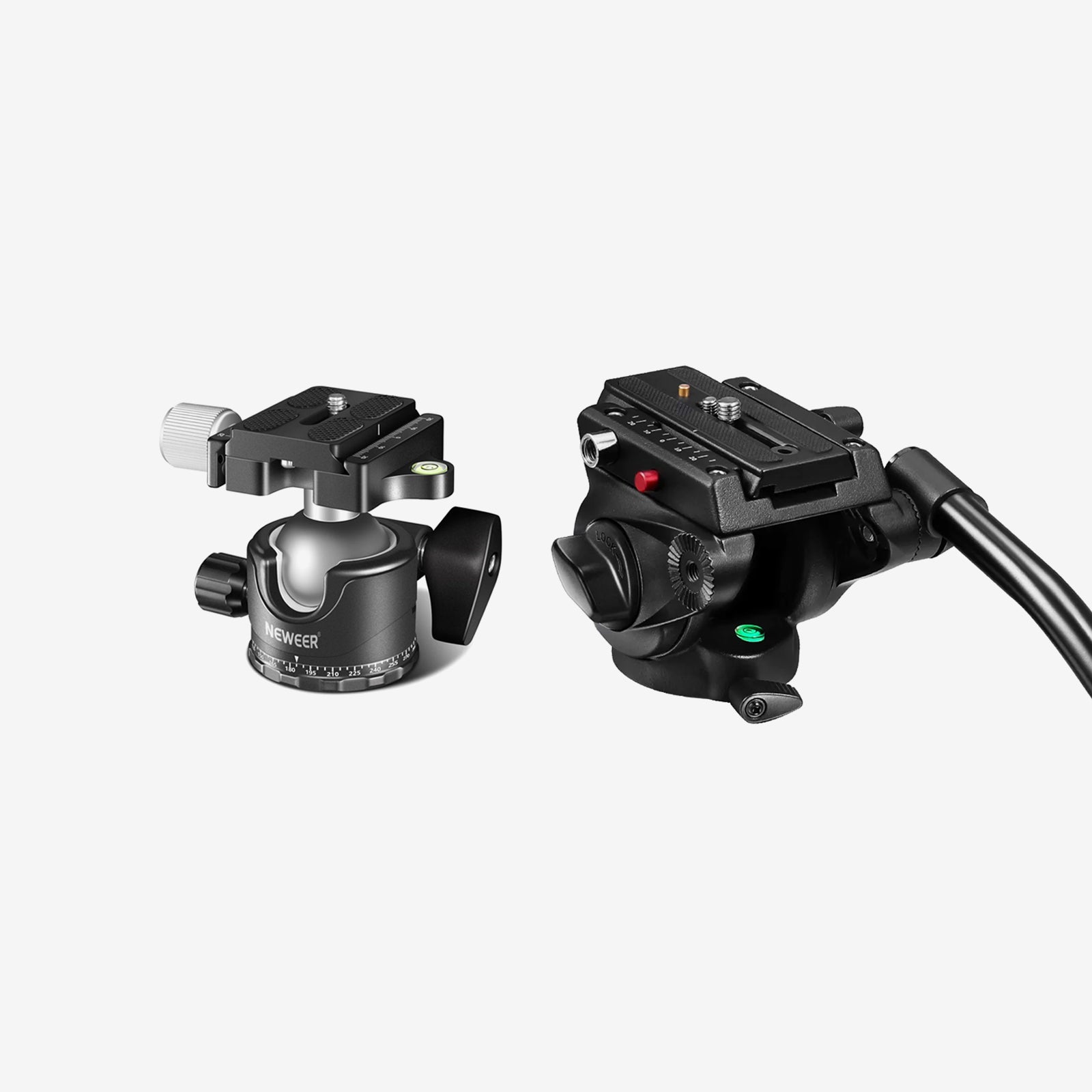
If you regularly move between locations or change your composition quickly, a ball head is a practical option. The NEEWER GM36 tripod ball head uses a 36mm ball design that lets you reposition the camera with a simple adjustment, making it useful for travel, landscape, and everyday photography.
The GM36 supports up to 33lb/15kg and has a 360° panning base for panoramic shooting. A 90° tilt notch also makes it easy to switch between horizontal and vertical orientations. At 10.9oz/310g, it adds relatively little weight to a portable camera setup.
Pros:
· Quick and flexible camera positioning
· 360° panning base and 90° tilt notch
· Compact 10.9oz/310g design for travel
TH45 — For Video and Smooth Camera Movement

If your camera needs to move during recording, the type of control matters more than simply being able to change the camera angle. A fluid head is designed to make pan and tilt movements more controlled and consistent.
The NEEWER TH45 tripod fluid head features adjustable horizontal and vertical damping, along with a six-level dynamic counterbalance system. It supports up to 17.6lb/8kg and provides 360° pan with +90° to -60° tilt adjustment. This makes it suited to larger video setups, interviews, vlogging, events, and other shots where smooth camera movement is important.
Pros:
· Adjustable damping for smoother pan and tilt
· Six-level dynamic counterbalance system
· Up to 17.6lb/8kg load capacity for larger setups
GM102 — For Wildlife and Long Telephoto Lenses

Long telephoto lenses can make camera positioning more difficult, especially when you’re tracking birds, wildlife, or fast-moving subjects. A gimbal head changes the way the camera and lens are supported, allowing the setup to move around a more balanced point.
The NEEWER GM102 tripod gimbal head is designed for DSLR cameras and telephoto lenses and supports up to 33lb/15kg. Its 360° pan base, swing arm, and three-axis adjustment give you more freedom to follow moving subjects while keeping the setup supported.
Pros:
· Designed for long telephoto lenses
· Up to 33lb/15kg load capacity
· 360° panning and three-axis adjustment for tracking
TH16 — For Product, Macro, and Precise Composition

For product, macro, architectural, and studio photography, small changes in framing can make a noticeable difference. Instead of quickly moving the entire camera into position, you may want to adjust one axis at a time.
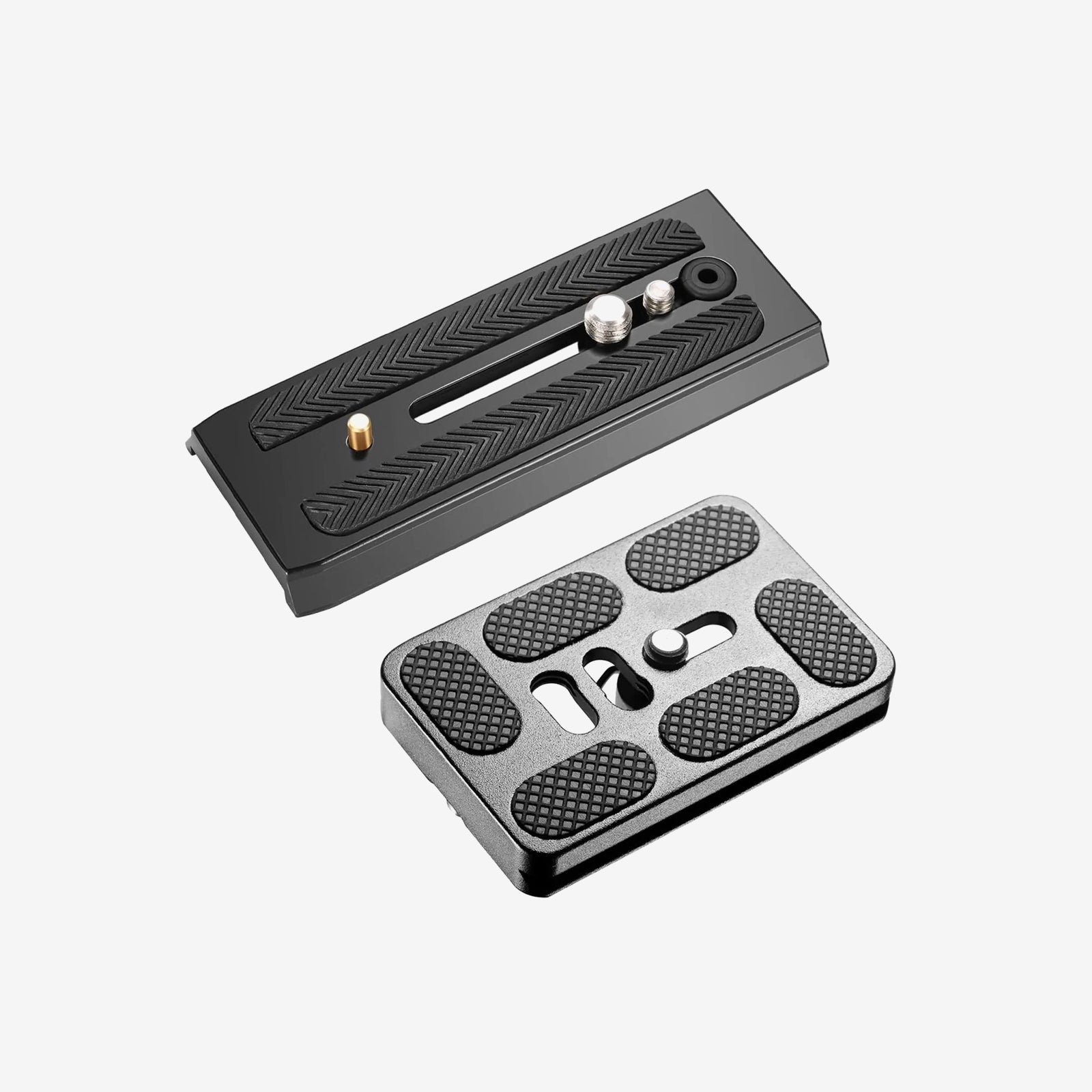
The NEEWER TH15/TH16 is a three-way geared tripod head designed for this type of controlled positioning. It provides separate pan and tilt adjustments, with large-adjustment and fine-adjustment modes for moving the camera into position and then making smaller corrections. The TH16 version also includes a quick-release plate.
Pros:
· Precise multi-axis adjustments
· Large and fine adjustment modes
· Useful for product, macro, studio, and architectural photography
Match Your Tripod Head to Your Shooting Scenario
Once you know the basic differences between head types, your actual shooting scenario can make the decision easier.
Travel and Landscape Photography
If you’re carrying your camera between different locations, you may want a tripod head that is quick to adjust and doesn’t add unnecessary weight.
A ball head is often convenient for this type of shooting because you can quickly change the camera angle and lock it into position. It’s useful when you’re moving from one composition to another rather than making small, incremental adjustments.
Video, Vlogging, and Interviews
Video requires a different type of camera movement from still photography. If you need to pan across a scene or tilt smoothly while recording, a fluid head gives you more control over how that movement starts, continues, and stops.
This can be especially useful for interviews, events, vlogging, and cinematic shots where abrupt camera movement can be distracting.
Wildlife and sports photography often involve moving subjects and long lenses. In these situations, you may need to reposition the camera quickly while keeping a heavy lens supported.
A gimbal head can make this easier by supporting the camera and lens around a more balanced point. This can be useful when following birds, wildlife, or athletes across the frame.
Product, Macro, and Studio Photography
Product and macro photography often involve carefully controlled compositions. You may need to move the camera slightly, check the frame, and make another small adjustment.
A geared head can be useful here because you can make independent adjustments to different axes instead of repositioning the entire camera at once. This is also useful for architectural and studio work where precise framing matters.
Panoramic and Multi-Angle Shooting
If you frequently shoot panoramas or switch between portrait and landscape orientations, look for a tripod head with a dedicated panning base and useful angle adjustments.
Ball heads can be particularly convenient for general panoramic shooting, while geared heads can provide more controlled adjustments when precise alignment is important. The best option depends on whether speed or precision matters more in your workflow.
What Else Should You Consider Besides the Tripod Head?
The tripod head is only one part of the setup. Before choosing one, consider how it will work with the rest of your equipment.
Camera and lens weight: Check the combined weight of your camera, lens, and accessories rather than looking at the camera body alone. Make sure the head’s load capacity is appropriate for the complete setup.
Tripod load capacity: The tripod and tripod head should both be able to support your equipment. A high-capacity head does not automatically make a lightweight tripod suitable for a heavy camera setup.
Mounting system: Check the mounting screw, quick-release plate, and tripod connection. If you already use an Arca-type system or another quick-release setup, compatibility can make switching between equipment much easier.
Portability: For travel photography, the size and weight of the head can matter almost as much as its load capacity. A heavier head may make sense for a large video setup but be unnecessary for a lightweight travel kit.
Movement and balance: If you’re shooting video or using a long telephoto lens, think about how you need the camera to move. The right head should make that movement easier rather than simply providing a place to attach the camera.
FAQs
1. How do I choose the right tripod head for my photography?
Start with what you shoot most often. Ball heads are useful for travel and general photography, fluid heads for video movement, gimbal heads for long telephoto and wildlife photography, and geared heads for precise product, macro, and studio work.
2. What tripod head is best for photography?
For general photography, a ball head is a flexible option because it allows quick changes to camera position and composition. However, photographers working in specialized areas such as wildlife, macro, or studio photography may prefer a gimbal or geared head depending on their needs.
3. What tripod head is best for video?
A fluid head is generally designed for controlled pan and tilt movement, making it suitable for video, interviews, vlogging, and other shots where smooth camera movement is important.
4. What tripod head is best for wildlife photography?
A gimbal head can be useful for wildlife photography, especially when using long telephoto lenses. Its design helps support and balance the camera and lens while allowing you to track moving subjects.
5. Is a ball head good for landscape photography?
Yes. A ball head can be convenient for landscape photography because it allows you to quickly adjust the camera angle and lock the composition. A model with a panning base can also be useful for panoramic shots.
6. Do I need a gimbal head for a telephoto lens?
Not necessarily. A gimbal head can be useful when you’re working with large telephoto lenses and need to track moving subjects, but the right choice also depends on the lens weight, shooting style, and type of photography.