

Table of Contents
A good video tripod does more than keep your camera steady. A fluid head allows for smoother pans and tilts, making it easier to create controlled camera movements when recording video.
In this guide, we’ve selected four NEEWER video tripods with fluid heads for different shooting setups and budgets.
Comparison Table of the Best Video Tripods with Fluid Heads
|
Product |
Max. Height |
Load Capacity |
Fluid Head |
Folded Length |
|
NEEWER LL27 |
76” / 192cm |
17.6lb / 8kg |
Yes |
37” / 94cm |
|
NEEWER TP75 |
74.4” / 189cm |
22lb / 10kg |
Yes |
36.6” / 93cm |
|
NEEWER TP37 |
73” / 187cm |
17.6lb / 8kg |
Yes |
35” / 89cm |
|
NEEWER TP73 |
65.4” / 166cm |
13.2lb / 6kg |
Yes |
32.3” / 82cm |
Best Fluid Head Tripods for Video
1. NEEWER LL27 76" Video Tripod with Fluid Head

The NEEWER LL27 is a professional video tripod with a fluid drag head, supporting cameras and other gear up to 8 kg. It extends from 35” to 76”, while the quick-lock buckles make it easy to adjust the height and set up the tripod quickly. The aluminum alloy construction and mid-level spreader provide additional stability for different shooting setups.
Its fluid head supports 360° panning and -75° to +90° tilting for smooth and controlled camera movements. The 75mm bowl base and built-in bubble level make leveling easier, while the dual QR system allows you to switch between tripod and gimbal shooting. The 1/4” and 3/8” mounting options also provide room for adding accessories such as monitors, microphones, and video lights.
Pros:
· 76” Maximum Height
· 8kg Load Capacity
· Fluid Drag Head with 75mm Bowl Base
· Dual QR System
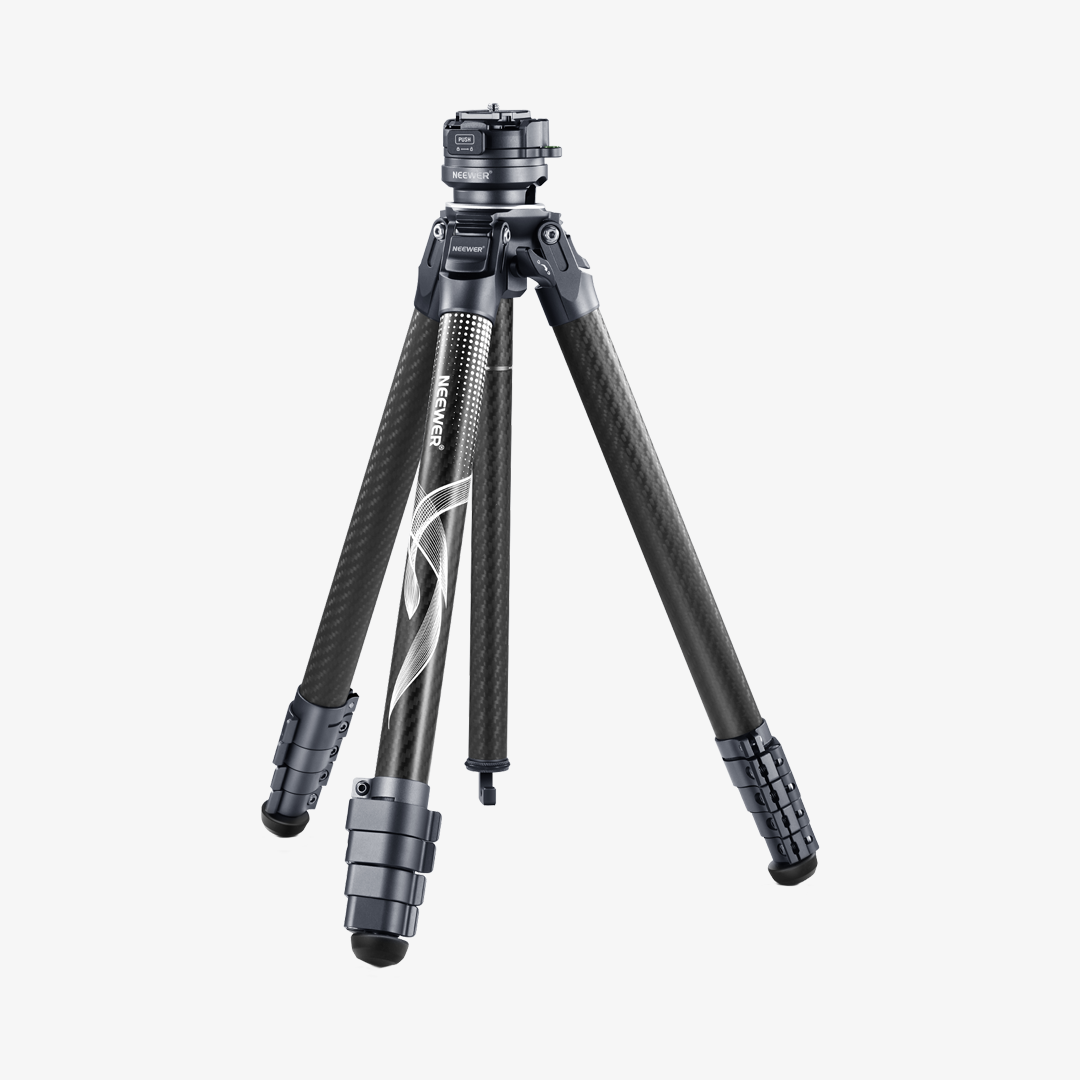
2. NEEWER TP75 74" Pro Video Tripod with Fluid Head

The NEEWER TP75 is a professional fluid head tripod designed for stable video shooting. It supports up to 10 kg and adjusts from 35” to 74”, making it suitable for cameras, camcorders, and larger video setups. The aluminum alloy legs and center spread lever help keep the tripod stable during shooting.
What sets the TP75 apart is its adjustable fluid drag system. Separate controls allow you to adjust the resistance for pan and tilt movements, giving you more control over the speed and smoothness of camera movement. Its quick-release system is compatible with DJI gimbals and 501PL plates, making it easier to switch between tripod and gimbal shooting.
Pros:
· 10kg Load Capacity
· Adjustable Pan & Tilt Fluid Drag
· 74” Maximum Height
· Quick-Release System
3. NEEWER BASICS TP37 74" Video Tripod with Fluid Head

The NEEWER TP37 Video Tripod is a practical option for everyday video shooting. As part of the NEEWER BASICS series, it focuses on essential functions while offering good value. The all-metal tripod supports up to 8 kg and adjusts from 33” to 74”, making it suitable for cameras, camcorders, video cameras, and other equipment.
The TP37 comes with a damped fluid head that supports 360° panning and -70° to +90° tilting for smooth and controlled movements. Its 501-compatible quick-release system lets you quickly attach or remove a camera, cage, or video rig. The included carrying bag also makes it easier to take the tripod between different shooting locations.
Pros:
· 8kg Load Capacity
· Damped Fluid Head
· 74” Maximum Height
· 501-Compatible Quick Release
4. NEEWER TP73 65" Heavy Duty Yet Lightweight Video Tripod

The TP73 combines a lightweight design with the stability of a heavy-duty tripod. It supports up to 6 kg while weighing only 2.7 kg and folds down to 32.3”, making it a convenient option for outdoor shoots, travel, and other mobile setups. Its three leg sections can be adjusted from 30.3” to 65”, giving you flexibility for different shooting heights.
The fluid drag head supports 360° panning and -75° to +90° tilting, while the 75mm bowl base and built-in bubble level make leveling quick and easy. The fluid head is removable and can be used with other compatible 75mm tripod bases, and the interchangeable feet provide additional flexibility for different shooting surfaces.
Pros:
· Lightweight at 2.7kg
· 6kg Load Capacity
· 75mm Bowl Fluid Head
· Compact 32.3” Folded Length
Fluid Head vs. Ball Head for Video
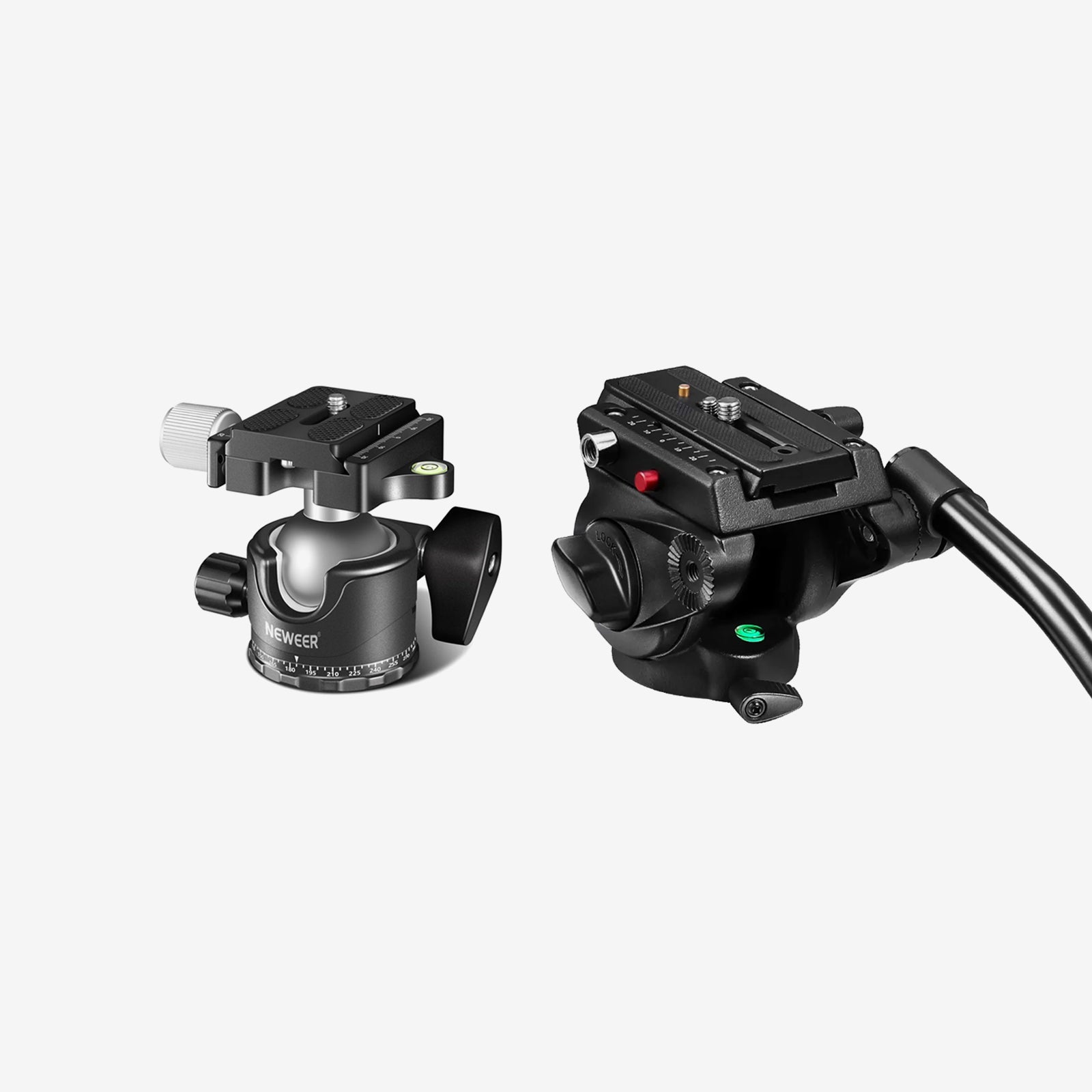
Fluid heads and ball heads are designed for different types of camera movement. A fluid head is generally better suited to video because it provides controlled pan and tilt movements, while a ball head is more commonly used for photography and quick camera repositioning.
|
Feature |
Fluid Head |
Ball Head |
|
Pan & Tilt Movement |
Smooth and controlled |
Quick and flexible |
|
Best For |
Video shooting |
Photography |
|
Camera Movement |
Controlled pans and tilts |
Fast repositioning |
|
Video Use |
Excellent |
Better for static shots |
For video recording, a fluid head is usually the better choice when smooth camera movements are important. The drag mechanism adds resistance to the movement, helping you make gradual pans and tilts instead of sudden changes in direction.
A ball head can still work for video when the camera mostly stays in one position. However, if you plan to follow a moving subject or create deliberate camera movements, a fluid head gives you more control.

How to Choose a Video Tripod with a Fluid Head
Check the Load Capacity
Consider the total weight of your camera setup, including the camera, lens, microphone, monitor, cage, and other accessories. Choose a tripod that can comfortably support the complete setup rather than only the camera body.
It’s also better to leave some capacity in reserve. A tripod operating close to its maximum load may not provide the same stability and smooth movement as one with enough capacity for the entire setup.
Consider the Fluid Head
Look at the head’s pan and tilt range, drag control, quick-release system, and mounting options. Adjustable fluid drag is especially useful when you want more control over the speed and smoothness of camera movements.
The quick-release system is also worth checking if you frequently move your camera between different supports. Compatibility with commonly used plates can make setup and switching much faster.
Choose the Right Height and Stability
A taller tripod can make it easier to shoot from eye level, while a shorter setup may be more convenient for low-angle shooting. Check both the maximum and minimum height instead of looking at the maximum height alone.
For stability, consider the tripod leg construction, spreader, feet, and bowl system. A sturdy setup can help reduce unwanted movement during pans and tilts, especially with heavier camera rigs.
Consider Portability
If you often shoot outdoors or move between locations, check the tripod’s weight and folded length. A lighter tripod can be easier to carry, while a heavier model may provide additional stability for larger camera setups.
Quick height adjustment and a carrying bag can also be useful when you need to set up and pack down frequently.

FAQs
1. Are fluid head tripods good for video?
Yes. Fluid head tripods are designed to provide smooth, controlled pan and tilt movements, making them well suited for video recording and moving shots.
2. Is a fluid head better than a ball head for video?
Generally, yes. A fluid head offers more controlled pan and tilt movements, while a ball head is better suited to quickly repositioning a camera for photography or mostly static shots.
3. How much weight can a fluid head tripod hold?
Load capacity varies by model. Always check the tripod’s rated capacity and make sure it can support your complete camera and accessory setup. Leaving some extra capacity can also provide a more stable setup.
4. What should I look for in a fluid head tripod?
Consider the load capacity, fluid head movement and damping, maximum and minimum height, tripod stability, and folded size. If you often travel with your gear, weight and portability are also worth considering.